
Lieferung heute & morgen

Qualitätsgarantie

Willkommens-Angebote freischalten: KOSTENLOSE Lieferung | Bis zu 80 % RABATT | Kostenlose 30-Tage-JoyPlus-Testphase
App herunterladen
A tool set should make repairs easier, not cause frustration after just a few uses. Whether you are a tenant, homeowner, DIY beginner or car owner, an important question arises before buying: which tools do you actually need, and which details in the product listing matter when making your choice?
As a Joybuy Product Recommendation Officer, I filter market information according to practical criteria and organise it around typical usage situations. Three common buying misconceptions stand out:
For a household tool set, it makes sense to start with tools for common tasks:
A DIY tool set for occasional projects can include a wider range of tools. If you only assemble furniture, however, you may not need a large assortment. For a car boot or small flat, a compact tool case with a clearly organised interior is often more practical than a large, heavy toolbox.
With hand tool sets, the material, build quality and intended use should work together. Heat-treated steel is used for pry bars that are exposed to higher forces when loosening or lifting objects. An oxide coating can provide an additional layer of protection against rust, but it does not replace dry storage.
With a ratchet screwdriver set, the right sizes and a secure fit are important. A poorly fitting bit can damage the screw head or slip. For more delicate work, hook tools with an ergonomic handle and slim tip are useful. The shape – for example, a straight, 45-degree or 90-degree hook – determines how accessible the tool is.
A tool case should hold the tools securely and make it easy to see the contents at a glance. Useful features include:
Only use each tool for its intended purpose. Safety goggles are advisable when working with materials that may produce metal shavings. Hand tools must not be used on live electrical systems. Keep small parts out of the reach of children.
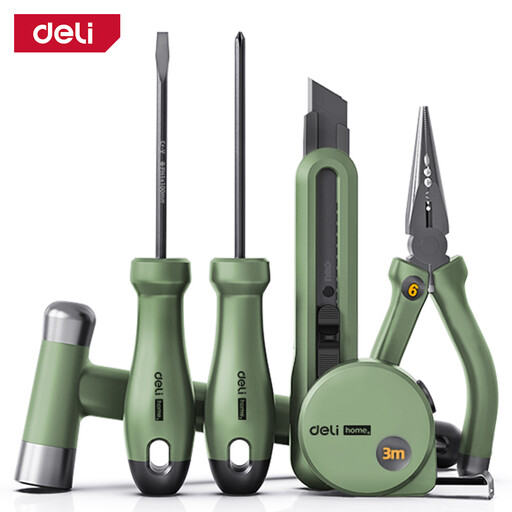
Why this product suits this profile: This six-piece set covers basic tasks around the flat and home while taking up very little storage space. It includes a hammer, tape measure, spanner, pliers and screwdriver, among other tools.
The selection focuses on frequently needed basic tools rather than a high piece count that may go unused.
Six tools for everyday repairs; compact storage and no assembly required.
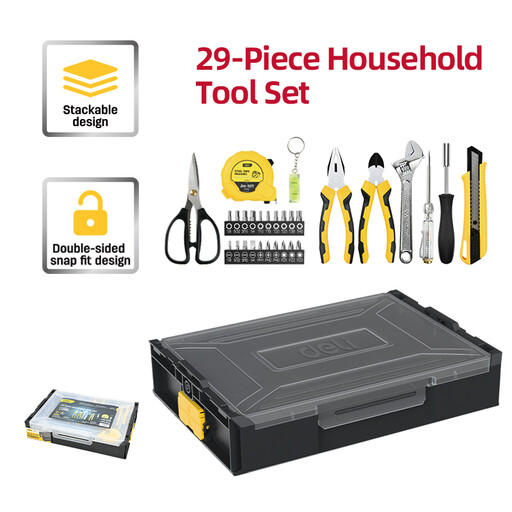
Why this product suits this profile: This 29-piece set is designed for households where furniture is regularly assembled, repairs are carried out or DIY projects are undertaken. The case has a transparent cover and organised storage areas.
Organised storage reduces the risk of tools being left loose or becoming difficult to find after use.
29 pieces; ergonomic handles with soft surfaces; portable case with transparent cover.
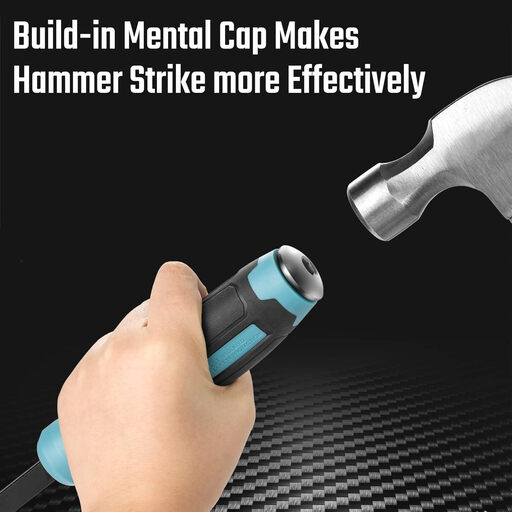
Why this product suits this profile: This pry bar set is designed for more demanding dismantling and loosening tasks, such as removing skirting boards, tiles or stuck components.
Three lengths of 8, 12 and 18 inches provide a more suitable choice for tight spaces and different levering distances.
Heat-treated steel; angled tips; striking caps for hammer blows; three different sizes.
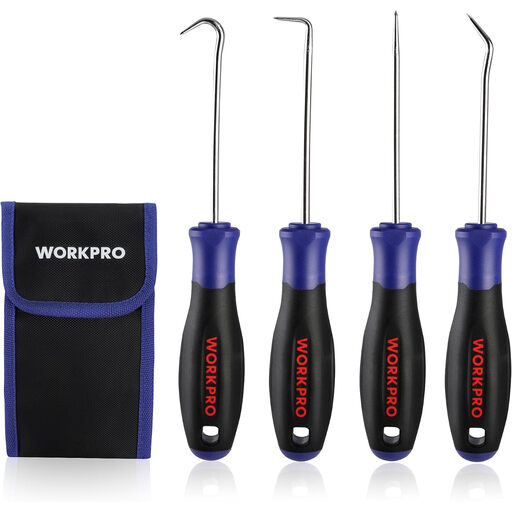
Why this product suits this profile: This mini pick and hook set is suitable for narrow gaps, seals, O-rings and certain repair tasks on vehicles or equipment.
The four different tips are designed for precision access and are not intended to replace a general hand tool set.
Straight, 45-degree and 90-degree hooks plus a full hook; ergonomic TPR handles; storage pouch.
We have put together a complete, regularly updated list of products that fully meet these strict selection criteria and the safety regulations applicable in the EU.
For a rented flat with occasional assembly tasks, a small household tool set containing a hammer, tape measure, pliers and screwdrivers is often sufficient. Homeowners or regular DIY enthusiasts are more likely to benefit from a larger tool case with a ratchet, sockets and additional pliers.
Car owners should also check whether the set is suitable for the intended area of the vehicle. A ratchet screwdriver set with a 1/4-inch drive, 11 bits and 9 sockets from 4 to 12 mm is compact and designed for certain fastening tasks. However, it does not replace specialist automotive tools for every repair.
For basic tasks, a hammer, tape measure, screwdriver, pliers and spanner provide a useful foundation. If you carry out repairs more frequently, a set with a ratchet, sockets and several bit profiles may be more practical. The key is to make sure the sizes match the screws and nuts you have.
The lifespan depends on the material, load, care and storage conditions. Tools should be cleaned and dried after use and stored in a dry room. Moving parts can be maintained during regular use in accordance with the manufacturer’s instructions. Excessive force or using the wrong tool size can cause damage.
The price is mainly determined by the number of pieces, materials, storage solution and level of specialisation. A small basic set is sufficient for occasional tasks, while a comprehensive tool case or specialist repair tool set offers more applications. So do not compare the price alone – also look at the tools actually included and their sizes.