
Lieferung heute & morgen

Qualitätsgarantie

Willkommens-Angebote freischalten: KOSTENLOSE Lieferung | Bis zu 80 % RABATT | Kostenlose 30-Tage-JoyPlus-Testphase
App herunterladen
A tool set with tool bag should keep everything organised, cover a range of repair tasks and be easy to transport. In practice, however, these sets vary considerably in scope, storage design and intended use. A large number of components does not automatically make a set useful if essential sizes are missing, the bag loses its shape or the tools are unsuitable for the job at hand.
This buying guide is aimed at DIYers, home-improvement enthusiasts, electricians, installers, technicians and vehicle owners in Germany. It explains which features matter before purchasing a tool kit or tool bag, and which product types are suited to different requirements.
Some offers focus primarily on the number of components included. What matters, however, is which sizes and tool types are actually included. A set with numerous bits but no suitable sockets or combination wrenches offers only limited help when dealing with a hexagonal nut.
Before buying, check the following:
A tool bag should not simply be as small as possible. Clearly arranged compartments, durable stitching and a wide opening that provides a quick overview of the contents are far more important. Without internal compartments, bits, screwdrivers and sockets can easily become mixed up during transport.
For regular use on construction sites, in workshops or at customers’ premises, a reinforced base, a non-slip handle and an adjustable shoulder strap are also practical features to consider.
Such claims should not be considered in isolation. With a tool bag, the key factors are the material used and the design of the base. For metal tools, the alloy, surface treatment and storage conditions all make a difference.
A bag with a water-repellent or reinforced base can provide better everyday protection against moisture and dirt. However, it is not a substitute for dry storage over longer periods.
Bags made from 500D polyester use a comparatively robust fabric suited to transport and storage solutions. Additional padding can help protect the contents when the bag is carried or set down. Look for:
The dimensions are also important. A bag measuring approximately 35.6 × 24 × 19 cm is easy to transport, but offers less space than a large tool case. Consider whether you need a compact daily toolkit or a comprehensive workshop setup.
A ratchet tool set should match the work you intend to carry out. A 1/4-inch drive is often suitable for smaller fasteners, furniture assembly, appliances and tasks in confined spaces. Larger automotive fasteners may require a heavier-duty drive.
Also check the following:
A compact case with bits and sockets is particularly useful as an addition to a larger tool bag. It does not necessarily replace a complete tool set for automotive repairs.
A double ring spanner set with offset ring ends can be useful for deep-set or hard-to-reach nuts. The DURATECH set includes sizes ranging from 6 × 7 mm to 20 × 22 mm. Its 75-degree offset and 12-point ring ends are specific design features intended for restricted working areas.
According to the product description, the set complies with DIN 838. This specification should always correspond to the actual product description and the stated scope of delivery. With a combination wrench set, also check the individual sizes available and the design of the open-ended side.
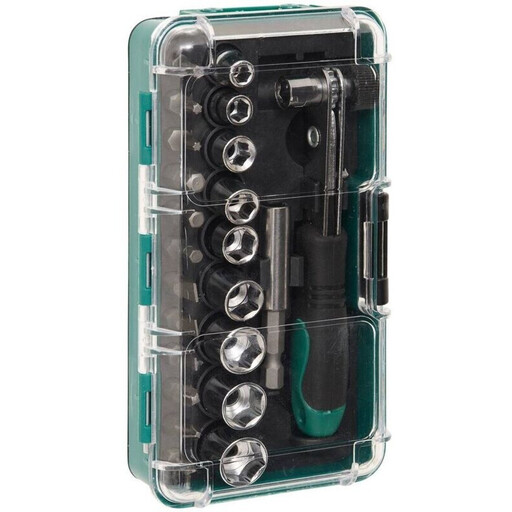
Why it suits this profile: This compact set is ideal as a starter kit for minor assembly work, furniture, appliances and household repairs.
The scope of delivery clearly specifies 11 bits, 9 sockets from 4 to 12 mm and a magnetic adapter instead of relying on a vague component count.
1/4-inch ratchet, ergonomic handle and compact hard-shell case measuring 8.5 × 3.5 × 15.5 cm.
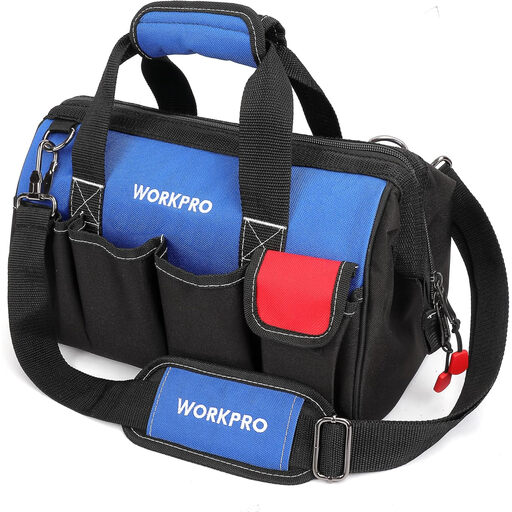
Why it suits this profile: As an electrician’s tool bag, it is also well suited to technicians and regular transport, with separate storage compartments for organised access.
The bag features 6 internal and 7 external pockets, a wide zip opening and a reinforced PE base plate.
500D × 500D polyester, 3 mm EPE padding, padded handle and detachable, adjustable shoulder strap.
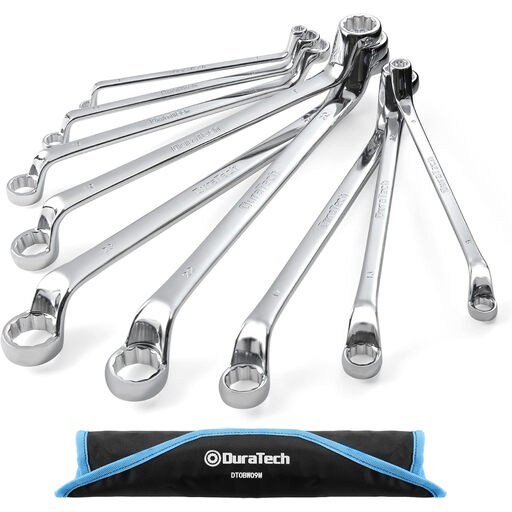
Why it suits this profile: The combination of offset ring ends and multiple spanner sizes is designed for vehicles, motorcycles and hard-to-reach nuts.
All eight included sizes are listed individually, from 6 × 7 to 20 × 22 mm. This makes it possible to assess the actual coverage before buying.
Chrome vanadium steel, matt chrome finish, 75-degree offset, 12-point ring ends and a roll-up pouch.
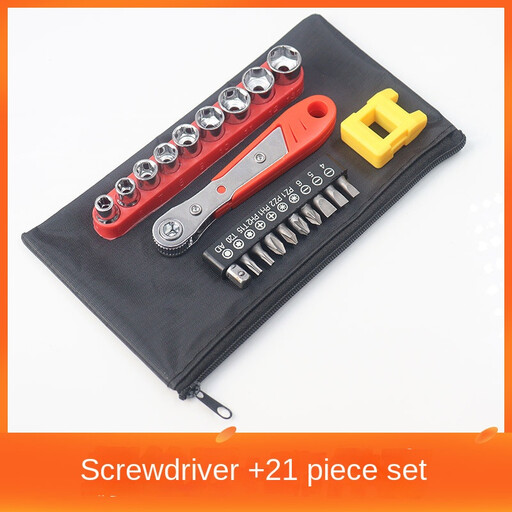
Why it suits this profile: For assembly, electronics, modelling and repairs where space is limited, this set provides angled access to fasteners.
The specification goes beyond a simple piece count: a 90-degree angle attachment and an angled screwdriver are designed specifically for confined spaces.
21-piece set with magnetic screwdriver bits and a design intended for hard-to-reach fasteners.
Explore the complete selection of tools and storage solutions for a wide range of assembly, maintenance and repair tasks in Germany.
A DIY tool set should include, at minimum, the most common screwdriver profiles, several sockets and a ratchet. For automotive use, add ring spanners, extensions and, where necessary, larger sockets. If you frequently work in confined spaces, look specifically for a tool set for tight spaces with an angle adapter or angled spanner ends.
For electrical work, remember that metal tools must not be used on live installations. The ratchet set mentioned above expressly states that it is not intended for use on live equipment. Before starting any work, follow the appropriate safety procedures and the relevant manufacturer’s instructions.
Care involves wiping the tools after use, storing them in a dry place and returning each piece to its designated location. Do not overload a tool bag, as this places additional strain on the seams, zip and shoulder strap.
For occasional household tasks, a compact ratchet tool set with bits and sockets may be sufficient. If you also plan to assemble furniture or carry out bicycle or automotive work, a combination of a ratchet, screwdriver set and ring spanners is worth considering.
It depends on how you intend to use it. A bag provides easy access and can often be carried comfortably over the shoulder. A tool case protects its contents with rigid inserts and keeps numerous small components neatly organised. For everyday mobility, a tool bag supplemented by a small hard-shell case can be an especially practical solution.
Service life depends on the materials, load, maintenance and intended use. Rust-resistant finishes can make storage easier, but they do not prevent damage caused by moisture or improper use. Choosing the correct spanner size, storing the tools in a dry place and avoiding excessive leverage will help extend the useful life of both the tools and the bag.