
Lieferung heute & morgen

Qualitätsgarantie

Willkommens-Angebote freischalten: KOSTENLOSE Lieferung | Bis zu 80 % RABATT | Kostenlose 30-Tage-JoyPlus-Testphase
App herunterladen
Cluttered drawers, loose small parts and cases that are difficult to carry all waste time. When choosing tool storage, however, the number of compartments isn’t the only thing that matters. Material, dimensions, load capacity and how often and where you use your tools are just as important.
A tool case can have lots of compartments and still be unsuitable for your collection. Long screwdrivers, sockets and hammers need more internal height than screwdriver bits and wall plugs. So check the internal dimensions and compare them with the largest tools you plan to store regularly.
A tool case with wheels or a tool trolley is easier to move around. But on uneven garage floors, the wheels need to be sufficiently robust and at least some should have brakes. Without braked wheels, a tool trolley may shift while you’re working.
Powder-coated steel can protect the surface from everyday wear and corrosion. That doesn’t automatically mean a tool cabinet is waterproof. If you’re using tool storage in a damp garage, store your tools dry and check the manufacturer’s guidance on water resistance.
Steel is a good choice for a stationary tool chest or tool cabinet if you regularly store heavy hand tools or machine accessories. Check the following:
For a tool roll bag, load capacity is usually less important than the fabric’s tear resistance, the quality of the seams and how securely the tools are held in place.
Drawers are useful for keeping different types of tools neatly sorted. Removable inserts or dividers help you store sockets, pliers and screwdrivers separately. A tool bag offers more flexibility if you’re heading to different sites or carrying out repairs in various locations.
Zipped pockets for small parts, removable pouches and loops for frequently used tools are all practical features. If you’re buying a tool set, also check that every item has its own secure place in the case.
Before you buy, measure the space available and the route you’ll need to take when moving your tools. Check:
A MAKPAC system case, for example, is designed to work with compatible system cases. A stackable tool case saves space, but it will only work reliably if it connects properly to the cases you already own.
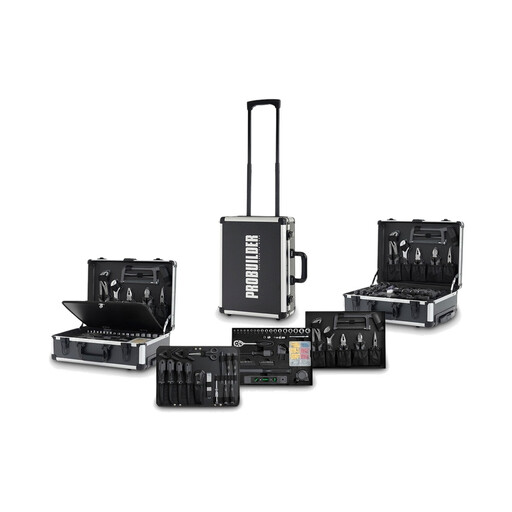
Why it suits this profile: This set combines a selection of essential tools with an aluminium case, trolley function and extra accessories for everyday jobs around the home and workshop.
The tools are kept together in a dedicated case rather than scattered loose in a large bag. Check that everything listed is included before using the set for the first time.
83 tools, a 135-piece accessory set, an aluminium case with wheels and a stated net weight of 7.8 kg.
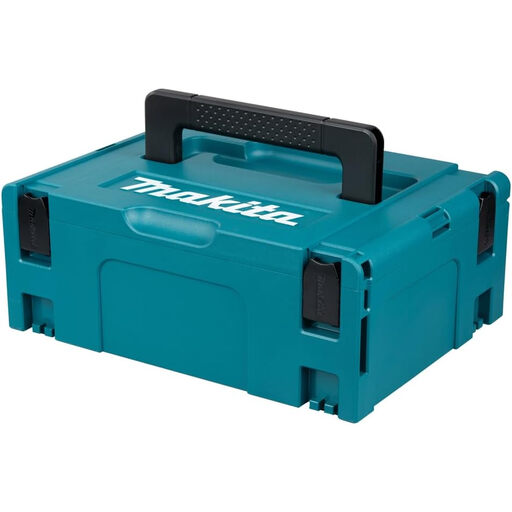
Why it suits this profile: This system case is aimed at users who already own compatible MAKPAC cases and want to transport their kit in a stackable format.
You can check whether it’s compatible with your existing system before you buy. The product information states that the deep insert is not included.
External dimensions of 395 × 295 × 163 mm, internal dimensions of 377 × 277 × 124 mm, an integrated carry handle and a stackable MAKPAC design.
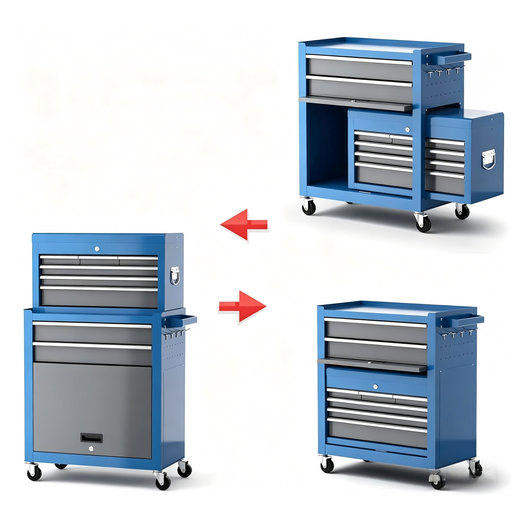
Why it suits this profile: This rolling tool chest is designed for workshops and garages where a large collection of hand tools needs to be kept organised and moved around the work area.
The product information lists four wheels, two with brakes, as well as drawer liners and organiser dividers. It also states that the unit is not water-resistant.
Cold-rolled steel, a stated load capacity of 550 lb, ten removable hooks and four wheels, including two locking brakes.
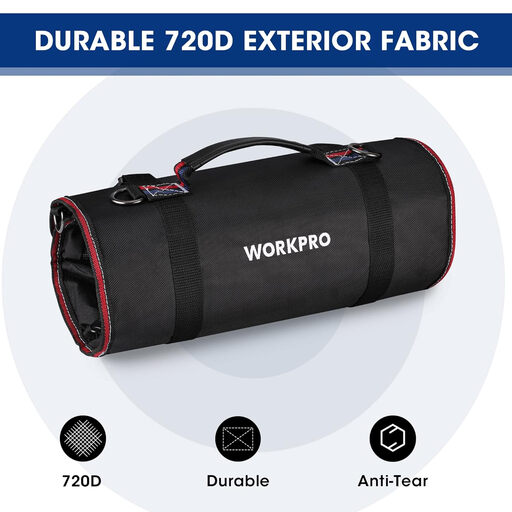
Why it suits this profile: This tool roll bag folds down compactly, making it easy to carry in a vehicle or rucksack, or store in a larger toolbox.
As well as open loops, it has six zipped pockets and two removable pouches. Before buying, compare your tool lengths with the stated pocket dimensions.
720D polyester, four large pockets, two removable pouches and an unfolded size of 57 × 36 cm.
We’ve put together a complete, regularly updated list of products that meet these strict selection criteria and fully comply with the safety regulations in force in the EU.
Sort your tools by how you use them, not just by size. Keep frequently used screwdrivers, pliers and tape measures close to hand or hang them on a pegboard. Spare parts you use less often can go in lower drawers or closed compartments.
For safe storage, it’s also a good idea to:
If space is limited, consider a stackable tool case, a system case or a compact tool bag. Before buying, compare the space available, the internal dimensions and the route you’ll need to take when transporting your tools.
A tool trolley with wheels makes it easier to reach your tools while you work and usually has several drawers. A tool chest is a good choice if you mainly store tools in one place and need a sturdy work surface. The key things to check are the wheel brakes, drawer dimensions and load capacity.
Keep the unit in a dry place, don’t overload it, and clean the wheels, runners and fasteners regularly. On metal models, check for damage to the coating as soon as possible. For a tool bag, storing it somewhere dry and handling sharp-edged tools carefully will help it last longer.