
Lieferung heute & morgen

Qualitätsgarantie

Willkommens-Angebote freischalten: KOSTENLOSE Lieferung | Bis zu 80 % RABATT | Kostenlose 30-Tage-JoyPlus-Testphase
App herunterladen
A well-organised workshop is the foundation for efficient and safe work. Lost tools, cluttered drawers, and damaged equipment don't just cost time—they cost you your peace of mind. The right tool storage protects your investment and ensures you have every part at your fingertips right when you need it.
This guide introduces various systems—from the mobile tool trolley to the compact tool roll bag—and helps you identify the perfect solution for your needs. We'll explore the key features that define excellent workshop tool storage.
Before you decide on a system, you should consider three key aspects. These will help you precisely define your needs and make an informed choice.
The primary place of use determines the type of storage.
The longevity and protection of your tools depend heavily on the material.
Furthermore, a lockable tool box is essential to protect tools from unauthorised access on construction sites or in shared workshops.
A well-designed system helps you organise your tools and maintain an overview. Drawers of varying heights, dividers, and a clear structure are crucial here. A modular tool system offers the advantage of growing with your tool collection. Individual modules can be combined and expanded as needed, creating a flexible and space-saving solution.
Here is a selection of products that cover different requirements for organisation, mobility, and capacity.

Why it stands out: This box is the core component of a flexible system. It can be used individually as a portable unit or combined with other LARBANKE modules to create a complete storage tower. The unified locking system, where one key fits all boxes in the same series, significantly simplifies management.
Features:
Who it's for: For tradespeople and DIY enthusiasts looking for a robust, portable, and expandable solution. Ideal as an entry point into a modular tool system or as a supplement to existing workshop tool storage.
View more details on the LARBANKE Tool Box

Why it stands out: This tool trolley combines high storage capacity with thoughtful details for professional use. The multifunctional worktop with compartments keeps frequently used tools within easy reach, while the quiet universal casters ensure smooth mobility.
Features:
Who it's for: For professional workshops, garages, and ambitious DIY enthusiasts who need a central, mobile, and high-capacity tool storage solution.
View more details on the LARBANKE Tool Trolley
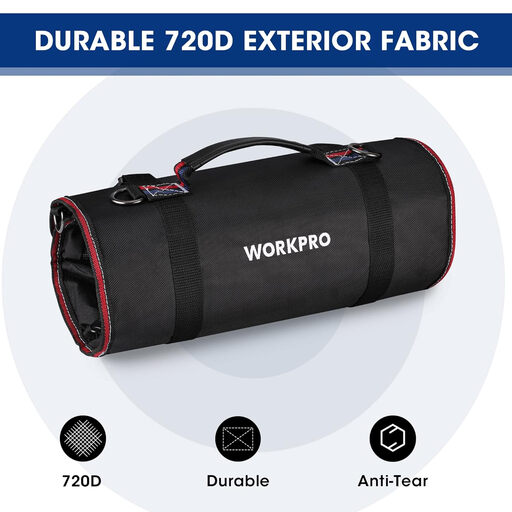
Why it stands out: This tool roll bag is an extremely lightweight and space-saving alternative for transporting hand tools. Unlike simple roll-up pouches, its zippered pockets securely hold even small items like screws or bits.
Features:
Who it's for: For technicians, electricians, or DIYers who need a specific selection of tools for off-site jobs. It is ideal for keeping the essentials organised and ready to go in a car, on a motorcycle, or in a backpack.
View more details on the WORKPRO Tool Roll Bag
Haven't found the right solution for your needs yet? There is a wide variety of other systems, from small parts organisers to complete workshop cabinets.
? Discover more tool storage products in our "Die Box" category
1. What is the difference between a tool box and a tool trolley? A tool box is primarily designed for portability. It is smaller, lighter, and meant to be carried. A tool trolley is a mobile but larger storage unit on casters for use within a workshop or garage. It offers significantly more storage space and often serves as a central tool station.
2. How do I organise my tools most efficiently? Efficient organisation is based on a systematic approach. Group tools by function (e.g., screwdrivers, pliers, measuring tools). Use drawers of different heights for different-sized tools. Small parts like screws or bits are best kept in organiser boxes or designated compartments. A modular tool system helps maintain order even as your collection grows.
3. Are modular tool systems from different brands compatible? As a rule, modular systems are brand-specific. The connection and stacking mechanisms are tailored to the products of a single series or manufacturer. If you plan to expand your system in the future, it is advisable to stick with one product line to ensure compatibility.