
Lieferung heute & morgen

Qualitätsgarantie

Willkommens-Angebote freischalten: KOSTENLOSE Lieferung | Bis zu 80 % RABATT | Kostenlose 30-Tage-JoyPlus-Testphase
App herunterladen
A well-organised workshop or a tidy service case is the foundation for efficient work. Constantly searching for the right screw, the correct bit, or a specific hand tool costs not only time but also patience. A well-thought-out tool storage solution is therefore not an afterthought, but a cornerstone for every DIY enthusiast, hobbyist, and professional craftsperson.
This article introduces various concepts for workshop organisation and helps you identify a suitable solution for your needs—whether for a stationary workshop in the garage or for mobile use on a construction site.
Before you decide on a system, you should consider a few fundamental criteria. The right solution depends heavily on your individual workflow and the items you need to store.
The most fundamental factor is where you'll use it. Do you need a solution for a fixed workstation, or do you need to transport your tools regularly?
The longevity of a tool storage solution is largely determined by its material. Look for sturdy construction that can withstand the weight and stress of your tools.
For comprehensive workshop organisation, modular systems are an option worth considering. So-called system cases from various manufacturers can be connected and stacked. This not only makes it easier to transport multiple cases at once but also ensures uniform, space-saving storage in the workshop or vehicle.
Here, we present three different products, each designed for specific use cases.
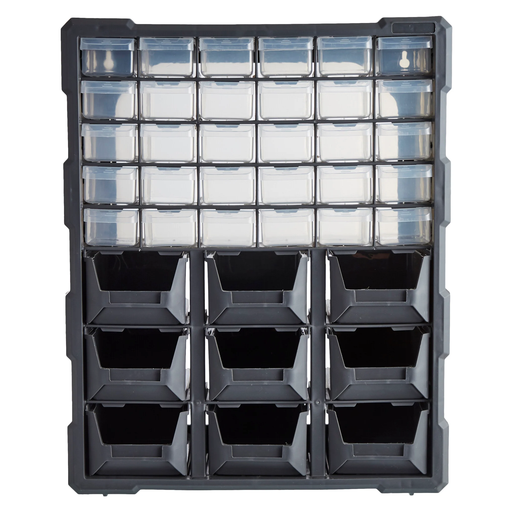
Why it stands out: This small parts cabinet is a classic solution for the stationary workshop. With 39 compartments of various sizes, it offers detailed sorting options for a multitude of small items, from screws and nuts to electronic components. The transparent drawers allow for quick identification of the contents without having to open each one.
Advantages:
Who is it for? Ideal for DIY enthusiasts, model builders, and electronics hobbyists who need structured storage for screws and other small parts directly at their workstation.
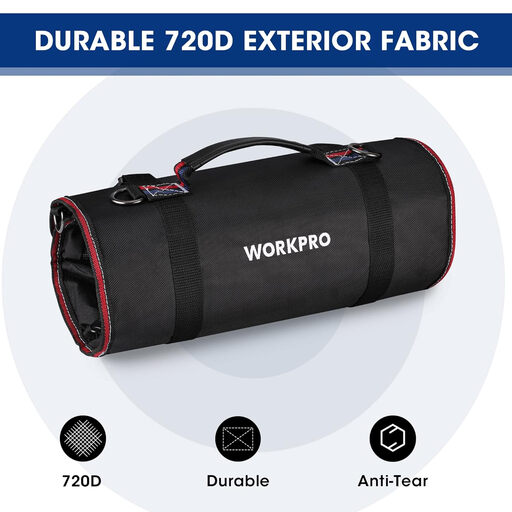
Why it stands out: The tool roll from WORKPRO is an extremely flexible and space-saving solution for mobile use. Unlike rigid cases, it adapts to its contents and can be rolled up compactly. The zippered pockets prevent tools or accessories from falling out, which can be an issue with conventional rolls that only have slip-in pockets.
Advantages:
Who is it for? Perfect for mechanics, technicians, or cyclists who want to transport a basic set of hand tools like screwdrivers, wrenches, and pliers in an organised, space-saving manner.
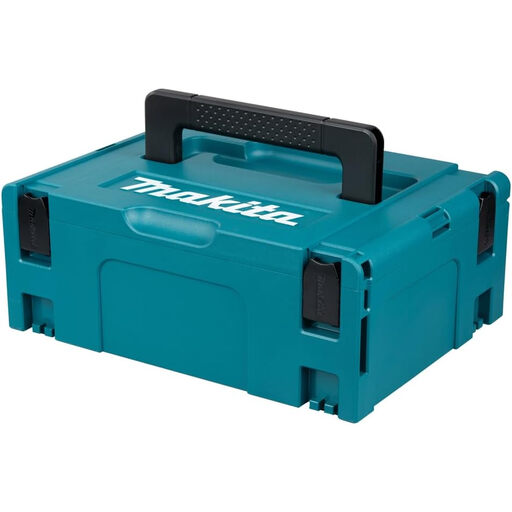
Why it stands out: The Makita MAKPAC is more than just a tool case—it's part of a well-designed system. It can be securely connected to other MAKPAC cases and compatible Makita products. This creates a modular and stackable transport and storage unit that maximises order and efficiency in professional environments.
Advantages:
Who is it for? An excellent choice for professional craftspeople and discerning DIY enthusiasts who already own Makita tools or want to build an expandable and uniform tool storage system.
The products featured cover a range of needs, but the market offers an even greater variety. If you are looking for more specific solutions or different sizes and formats, there are numerous other options to discover.
Discover more options in our Craft Tool Storage Organizers & Holders category.
1. How can I organise my tools most efficiently? Efficient tool organisation starts with categorisation. Separate hand tools, power tools, accessories, and consumables (like screws). Use the appropriate storage for each category: a tool roll for wrenches, a small parts cabinet for screws, and a system case for your cordless drill.
2. What is the difference between a tool case and a system case? A conventional tool case is a standalone transport box. A system case, like the Makita MAKPAC, is part of a modular system. Multiple system cases from the same manufacturer can be securely connected, stacked, and transported together, which improves organisation and mobility.