
Lieferung heute & morgen

Qualitätsgarantie

Willkommens-Angebote freischalten: KOSTENLOSE Lieferung | Bis zu 80 % RABATT | Kostenlose 30-Tage-JoyPlus-Testphase
App herunterladen
A well-organised workspace is the foundation for efficient and precise work. Whether in a professional workshop, a home garage, or on the go, scattered tools not only waste time but can also lead to damage or loss. A toolbox with drawers offers a structured solution. It allows for quick access to individual tools and small parts without having to rummage through the entire contents.
This article introduces various models and explains the key criteria to consider when choosing the right tool storage. The goal is to provide you with a solid basis for making an informed decision that meets your needs.
The choice of the right model depends on individual needs. The following points will help you filter the options and find a suitable drawer chest for the workshop or for mobile use.
The material is crucial for the toolbox's durability and intended use.
Pay attention to the build quality, especially the hinges, latches, and drawer slides. Ball-bearing slides ensure smooth and stable opening and closing of the drawers, even under heavy loads.
For growing tool collections or specialised requirements, modular systems are a flexible solution.
Here is a selection of models that stand out for their different features and are suited for various applications.
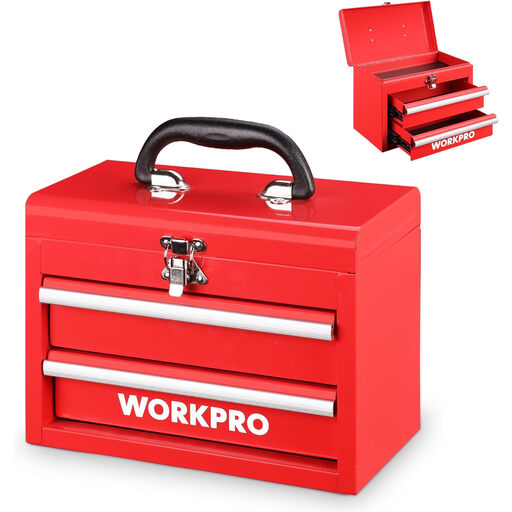
Why this model stands out: The WORKPRO drawer box combines a compact design with a robust metal construction. It offers a well-thought-out layout with two drawers and a top storage compartment for small parts and hand tools. The ball-bearing slides ensure smooth drawer operation.
Advantages:
Who is this model for? This box is a great choice for hobbyists, crafters, or for organising small parts in the workshop or office. Its compact size makes it a flexible portable toolbox for smaller tool sets.

Why this model stands out: This model from LARBANKE is designed as part of a modular system. The steel tool chest with drawers offers four drawers of varying heights and can be combined with other units from the same series. A special feature is the unified locking system.
Advantages:
Who is this model for? Ideal for professional tradespeople and ambitious DIY enthusiasts looking for an expandable and secure storage system. Its robust steel construction and thoughtful safety features make it a reliable choice for the workshop.
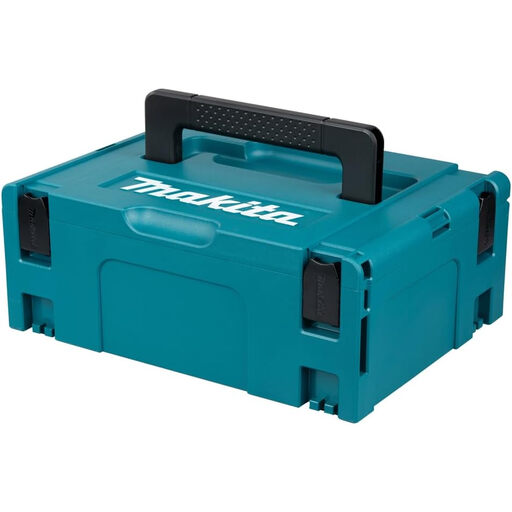
Why this model stands out: The Makita MAKPAC is a classic system case. It is not primarily a toolbox with drawers, but rather a transport and storage case that integrates seamlessly into Makita's established MAKPAC system. It is designed to be securely connected and stacked with other cases in the series.
Advantages:
Who is this model for? This case is the logical choice for users who already own Makita tools or plan to invest in the MAKPAC system. It is excellent for transporting power tools and their corresponding accessories.
The models presented cover specific use cases. If you need a different type of storage, such as larger, stackable boxes for warehousing or transport, you can find more options in our industrial storage boxes with lids category.
1. What is the difference between a toolbox and a tool chest? The terms are often used interchangeably. Traditionally, a toolbox is a portable unit with a lid and often a carrying handle. A tool chest can also be a larger, stationary unit, such as a workshop trolley. Models with drawers, whether portable or stationary, are often referred to as a tool chest with drawers or a toolbox.
2. Are metal or plastic toolboxes better? There is no one-size-fits-all answer, as the choice depends on the intended use. A metal toolbox is extremely robust and ideal for a stationary workshop. A plastic toolbox is lighter, rust-proof, and often better suited for mobile use. Modern, high-quality plastics also offer high impact resistance.
3. What is the best way to organise tools in a toolbox with drawers? A proven method is to organise by tool type or application. Place frequently used tools in the upper, easily accessible drawers. Small parts like screws, dowels, or bits can be neatly stored in small organiser boxes within a drawer. For stability, heavier tools should be stored in the bottom drawers.