
Lieferung heute & morgen

Qualitätsgarantie

Willkommens-Angebote freischalten: KOSTENLOSE Lieferung | Bis zu 80 % RABATT | Kostenlose 30-Tage-JoyPlus-Testphase
App herunterladen
Whether you’re cutting trim, pruning in the garden or dismantling old fittings, tools for wood, gardening and renovation need to suit the material, the job and how you plan to use them. A high wattage or a long list of features alone tells you little about how well a tool will perform in practice.
Three common buying mistakes can often lead to unnecessary expense:
Before you buy, think about the materials you’ll be working with regularly. A mitre shear may be suitable for thin plastic profiles, seals and softwood. For cutting wooden boards or panels, a circular saw with a specified cutting depth is a better choice.
Look for clear specifications:
Treat the stated capacity as a guide. Material hardness and moisture, feed rate and the condition of the cutting tool all affect the result.
With cordless tools, don’t just look at the voltage and battery capacity. Check whether you already have a compatible battery system. A tool supplied ‘without battery and charger’ can be convenient if you already own tools in the same system, but it may mean extra costs if you’re just starting out.
For a cordless saw, also consider charging time, the number of batteries supplied and the cost of spares. Petrol-powered tools involve fuel and maintenance costs, while electric models need regular charging and suitable storage.
A chainsaw should have a working chain brake, a chain guard and clear instructions. Safety glasses, suitable gloves and a stable stance are essential when using one. Before each use, check the chain tension and lubrication, and look for visible damage.
For hand tools, look for a secure lock, a non-slip handle and a controlled blade-changing mechanism. The angle scale on a mitre shear should be easy to read. For an angle cutter or reciprocating saw, a secure blade-changing mechanism and controllable cutting action are important.
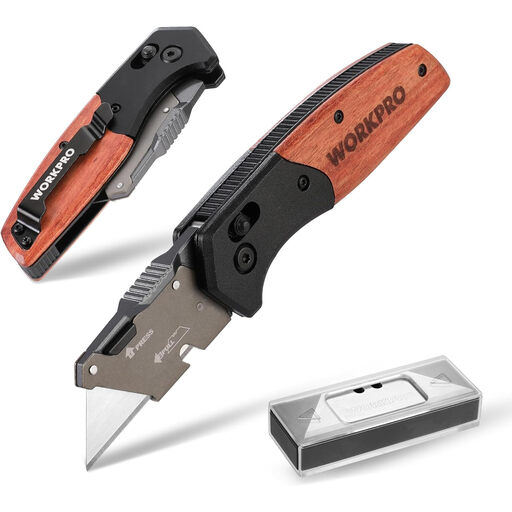
Why it suits this user: This compact utility knife is ideal for occasional cutting jobs involving carpet, packaging, paper and plasterboard.
The tool-free blade change and ten included SK5 replacement blades help keep follow-up costs down and make it easier to avoid handling blunt blades unsafely.
Weighs 130 g, with a sliding safety lock, belt clip and 61 mm SK5 blade.
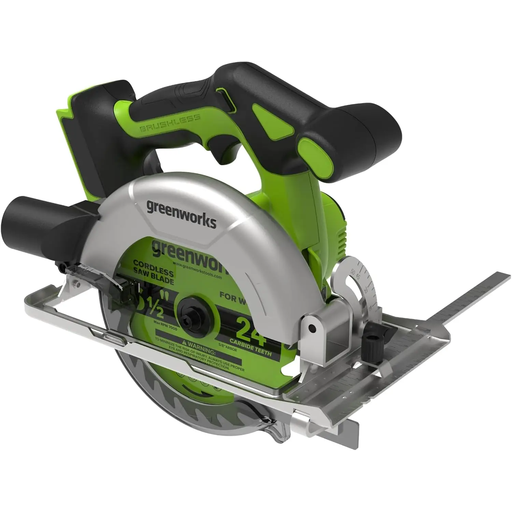
Why it suits this user: Ideal for renovation projects and joinery, this cordless circular saw offers precise settings for straight and angled cuts in wood.
A maximum cutting depth of 57 mm at 90° and an adjustable bevel of up to 45° give you more useful information than a motor power rating alone. Remember to budget separately for the battery and charger.
165 mm carbide blade, 5,000 rpm, LED work light and a connection for 35 mm dust-extraction hoses.
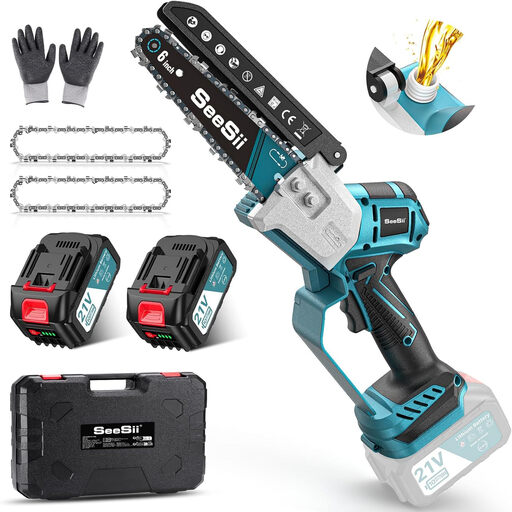
Why it suits this user: For garden owners who regularly prune branches and cut smaller pieces of wood, this set includes two batteries and automatic chain lubrication.
The stated cutting limit of up to 15 cm, transparent oil tank and supplied replacement chains help you plan jobs and maintenance more easily.
800-watt motor, chain speed of 7.8 m/s, two 4,000 mAh batteries, and overheat and overload protection, according to the product description.
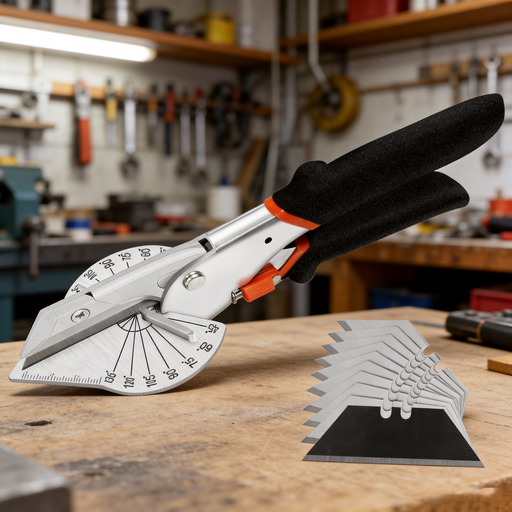
Why it suits this user: These mitre shears are designed for controlled angled cuts in softwood, plastic, PVC, rubber seals and trim.
The engraved scale covers angles from 45° to 135°. A rotating safety lock and replaceable blades make storage and maintenance easier to manage.
SK5 steel blades, an aluminium handle with PPC coating and ten replacement blades included.
We’ve put together a complete, regularly updated list of products that meet these strict selection criteria and the safety regulations in force in the EU.
Mitre shears may be suitable for PVC profiles, seals and softwood. For straight cuts in boards or panels, consider a circular saw. A mini chainsaw or cordless chainsaw is more practical for pruning in the garden. In each case, check the manufacturer’s stated material and cutting limits.
Their lifespan depends on the material, pressure applied, amount of cutting and how well they’re cared for. Blunt blades require more effort and can make it harder to guide the cut. Store replacement blades in a dry place and replace them straight away if they show visible signs of damage. Make sure the teeth, material and diameter of saw blades are compatible with your tool.
Running costs include electricity for charging, replacement batteries, chain oil, and new saw blades or cutting blades. If you already own a compatible battery system, you may not need to buy an additional charger. So when buying a new tool, compare not just the price, but also what’s included, battery compatibility and the availability of wear parts.