
Lieferung heute & morgen

Qualitätsgarantie

Willkommens-Angebote freischalten: KOSTENLOSE Lieferung | Bis zu 80 % RABATT | Kostenlose 30-Tage-JoyPlus-Testphase
App herunterladen
Selecting a 4K Gaming TV in 2026 requires an analysis of the technical specifications that directly impact the gaming experience. Factors such as refresh rate, latency, panel technology, and connectivity options are crucial for performance with current-generation consoles like the PS5 and Xbox Series X, as well as with high-end gaming PCs. This guide focuses on the objective parameters relevant to making an informed purchasing decision.
A television's performance for gaming applications can be evaluated based on measurable criteria. The following technical features are essential for a responsive and visually stunning gaming experience.
The refresh rate, measured in Hertz (Hz), indicates how many frames per second a display can render. While 60 Hz was the long-standing standard, modern gaming requires 120 Hz or more.
A TV with HDMI 2.1 is a fundamental requirement for unlocking the full potential of current gaming hardware. This standard offers higher bandwidth (up to 48 Gbps) and supports key features:
The choice of display technology has a significant impact on picture quality. The two dominant technologies are OLED and QLED.
These two metrics are critical for in-game responsiveness.
Based on the technical criteria above, we have compiled a selection of models suitable for different user profiles.
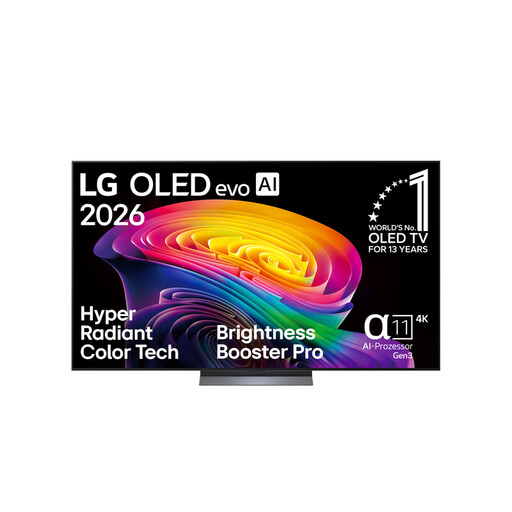
Why We Recommend This Product This model combines a generous 77-inch screen with advanced OLED evo technology. The α11 AI Processor optimises picture and sound in real time. With a variable refresh rate of up to 165 Hz and support for G-Sync and FreeSync Premium, this device is designed for demanding PC and console gaming.
Pros:
Who It's For: Users seeking an uncompromising, premium device for home cinema and high-end gaming who have the space for a 77-inch screen.
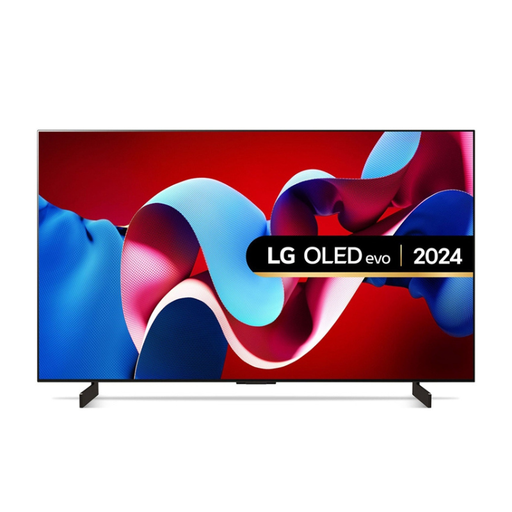
Why We Recommend This Product The OLED42C44LA offers the picture quality and gaming performance of larger LG OLED models in a compact 42-inch format. With a native 144 Hz refresh rate, a 0.1 ms response time, and full HDMI 2.1 support, it serves as an excellent high-end gaming monitor replacement or for smaller living rooms and bedrooms.
Pros:
Who It's For: Gamers who want the picture quality of a premium OLED at their desk or in a smaller room, without compromising on gaming performance.
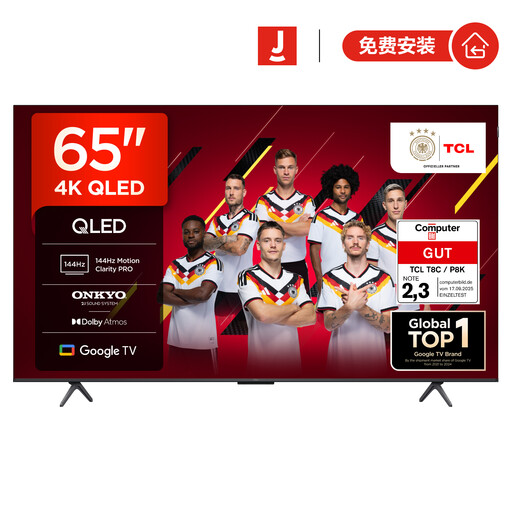
Why We Recommend This Product This 65-inch model from TCL leverages QLED technology to deliver high brightness and wide colour gamut coverage (97% DCI-P3). With 144 Hz Motion Clarity Pro, HDMI 2.1, and FreeSync certification, it is also designed for fast-paced gaming. The integrated Google TV operating system and Onkyo 2.1 sound system complete the package.
Pros:
Who It's For: Users looking for a large Gaming TV with high brightness for well-lit rooms who appreciate a comprehensive smart TV system with built-in Chromecast.
The models featured here represent a selection covering specific use cases. A broader spectrum of devices with different specifications, technologies, and sizes can be found in our main category for smart 4k ultra hd hdr tvs.
1. Do I absolutely need a TV with HDMI 2.1 for a PS5 or Xbox Series X? To utilise the maximum performance of the consoles, particularly 4K resolution at 120 fps and VRR, a TV with at least one HDMI 2.1 port is required. Without this port, you will be limited to 4K at 60 fps.
2. What is more important for gaming: 4K resolution or a high refresh rate (144Hz)? The priority depends on the type of gamer. For visually stunning single-player games, 4K resolution is crucial for detail. For competitive multiplayer titles (e.g., shooters), a high refresh rate of 120 Hz or 144Hz is more important as it provides smoother visuals and allows for faster reaction times. Ideally, a modern 4K Gaming TV combines both.
3. What is the difference between a gaming TV and a gaming monitor? Gaming TVs typically offer larger screen sizes, integrated smart TV features, and more advanced image processors for movie content. Gaming monitors are often smaller, can offer even higher refresh rates (over 240 Hz), and are primarily designed for desktop use. However, modern gaming TVs have largely closed the gap in terms of latency and refresh rate.