
Lieferung heute & morgen

Qualitätsgarantie

Willkommens-Angebote freischalten: KOSTENLOSE Lieferung | Bis zu 80 % RABATT | Kostenlose 30-Tage-JoyPlus-Testphase
App herunterladen
The air fryer has established itself in modern kitchens as a popular alternative to the conventional oven and the classic deep fryer. The promises are tempting: crispy results just like deep-frying, but with significantly less fat, all while offering shorter cooking times and lower energy consumption. However, the market is crowded, and not every appliance lives up to its advertising claims. Before you make a decision, it's crucial to understand the common pitfalls that can lead to a poor purchase.
Common Pitfalls When Buying an Air Fryer:
To make an informed decision, you should focus on objective, technical parameters rather than marketing promises. Three criteria are particularly important.
The crucial question isn't how many litres the appliance holds, but how much usable surface area the cooking basket offers. For a family of four, an XXL air fryer with a wide, flat basket of 6 litres or more is a sensible choice for evenly cooking a sufficient amount of French fries or other side dishes. For more complex recipes or preparing entire meals, a dual-zone air fryer can be a superior solution, as it allows you to cook different foods simultaneously at different temperatures.
A higher wattage doesn't automatically mean faster or better cooking performance. The efficiency of the hot air circulation technology is what counts. A well-engineered 1500-watt appliance can be more effective than a poorly designed 2000-watt model. Look for manufacturer claims about energy savings compared to a conventional oven. This is a good indicator of energy-efficient cooking and helps to reduce running costs in the long term.
The durability and safety of an air fryer depend heavily on its materials. The cooking basket should have a robust, PFOA-free non-stick coating. Check if the basket and other removable parts are designated as dishwasher-safe to simplify cleaning. Practical extra features, like an air fryer with a grill function, significantly expand its versatility. A viewing window is also a useful feature, as it allows you to monitor the cooking progress without having to pull out the basket and interrupt the cooking cycle.
Based on these objective criteria, we have identified some models that are suitable for different user profiles and requirements.
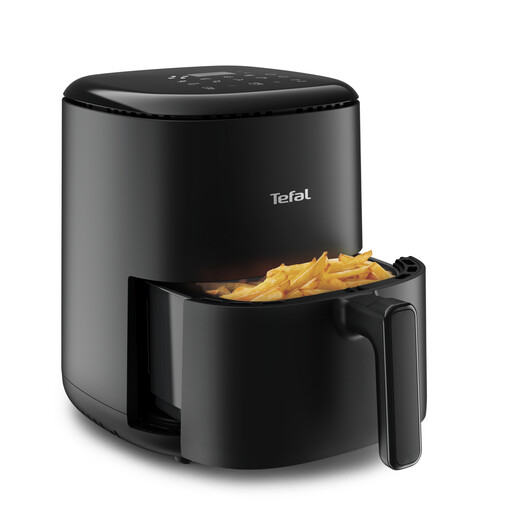
Why it's a good fit: Ideal for singles, couples, or small kitchens. Its compact design saves valuable counter space, while the 3-litre capacity is sufficient for preparing meals for 1-2 people.
The 3-litre capacity is realistic for its target audience, avoiding the problem of exaggerated claims. The 10 automatic programmes offer good guidance for beginners without being overwhelming.
Compact design: Fits in any kitchen.
Easy to use: The touch display and preset programmes make it easy to get started with healthy frying.
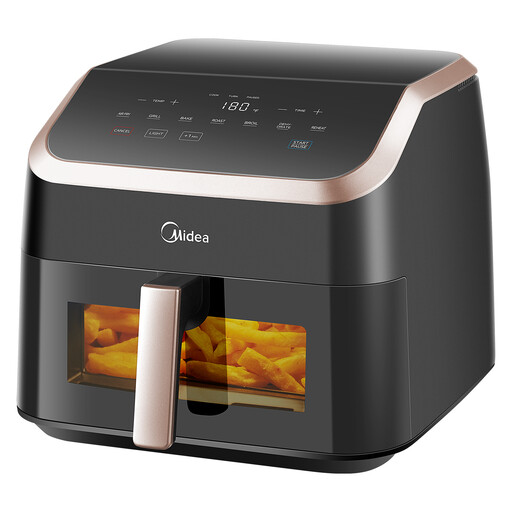
Why it's a good fit: With 8.5 litres, this appliance offers a true XXL air fryer capacity designed for preparing meals for the whole family. The viewing window is an extremely practical detail.
The large, single cooking basket provides a clear, usable volume, sidestepping the trap of misleading capacity claims. The viewing window reduces reliance on inaccurate automatic programmes, as you can visually check the cooking progress at any time.
Very large capacity: 8.5 litres is sufficient for large portions.
Practical viewing window: Allows you to monitor food without heat loss.
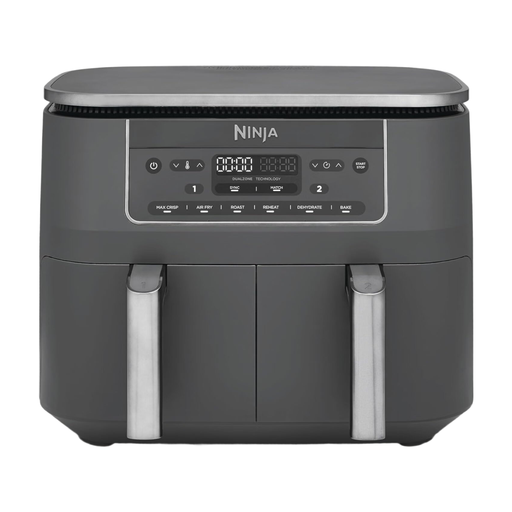
Why it's a good fit: This Ninja air fryer is a classic dual-zone air fryer. It allows you to cook two different dishes with different settings that finish at the same time—ideal for a main course and a side.
This model offers a functional solution to a real problem: coordinating different cooking times. The two independent zones are not a gimmick but a genuine value-add that overcomes the limitations of single-basket models.
Two independent cooking zones: Maximum cooking flexibility.
Sync function: Ensures both dishes are ready at the same time.
We have compiled a complete, up-to-date list of products that meet these strict selection criteria and relevant safety standards.
1. How much electricity does an air fryer really use? An air fryer's electricity consumption is typically much lower than that of a conventional oven. An average 1500-1800 watt model uses about 0.75-0.9 kWh for a 30-minute cycle. Because cooking times are shorter and no lengthy preheating is required, energy savings can often be up to 70% compared to an oven, according to manufacturer claims. This makes the air fryer an excellent choice for energy-efficient cooking.
2. Do you need special accessories for an air fryer? In principle, no special air fryer accessories are mandatory. However, some tools can make operation easier and simplify cleaning. These include reusable silicone liners or disposable parchment paper liners like the COOKER KING Steamer Paper, which prevent grease and food residue from sticking to the basket. An oil spray, such as the Bertolli Air Fryer Spray, can help apply a very thin layer of oil to enhance crispiness on certain foods.
3. What is the most effective way to clean an air fryer? Cleaning is easiest if done right after the appliance has cooled down. Most baskets and inserts are non-stick and dishwasher-safe. For manual cleaning, warm water, a soft sponge, and a little washing-up liquid are usually sufficient. Avoid abrasive scouring pads or harsh cleaning agents, as they can damage the non-stick coating. The appliance's housing can be wiped down with a damp cloth. Never submerge the main unit in water.