
Lieferung heute & morgen

Qualitätsgarantie

Willkommens-Angebote freischalten: KOSTENLOSE Lieferung | Bis zu 80 % RABATT | Kostenlose 30-Tage-JoyPlus-Testphase
App herunterladen
The world of board games is vast, and making the right choice can be a challenge. Whether you're looking for a cozy family night, an educational gift, or a competitive game session, the options can be overwhelming. Many products overpromise and underdeliver, leading to disappointment instead of fun.
This guide will help you spot common pitfalls and focus on the features that matter. You'll find a game that truly fits your needs and provides long-lasting enjoyment.
Manufacturers often use marketing claims that don't hold up in practice. Watch out for these three common issues to avoid making a bad purchase:
To avoid blindly trusting advertising claims, you should focus on objective and verifiable criteria. These three aspects are crucial for a great gaming experience.
The quality of the components is a direct indicator of a game's longevity. Look for the following features:
A good game remains captivating even after the tenth round. Replay value is heavily dependent on the game mechanics.
The manufacturer's age recommendation is an important guideline but should be viewed critically. It refers not only to the content but primarily to the cognitive demands. A game for children aged 8 and up typically requires strategic foresight and a longer attention span than a game for 5-year-olds, which focuses mainly on color recognition or simple moves. Verify that the complexity of the rules and the required skills truly match the intended player.
Instead of making a one-size-fits-all recommendation, we have selected products for different user profiles.
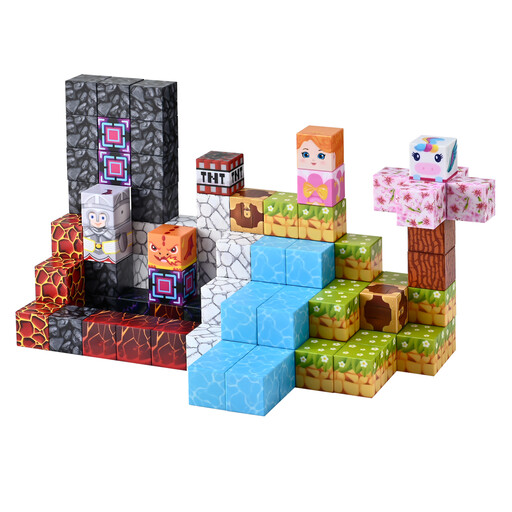
Why This Fits Their Persona: Ideal for families seeking an open-ended, creative play experience. Instead of following rigid rules, children and adults can build imaginative worlds together. The pixelated aesthetic sparks creativity and offers countless building possibilities.
This set bypasses the pseudo-educational toy trap by enabling genuine, free-form creative building. The quality is impressive, featuring robust ABS plastic and ultrasonically welded edges to ensure durability.
Strong magnets allow for stable, multi-layered 3D constructions. Playfully promotes spatial reasoning, concentration, and logical thinking.
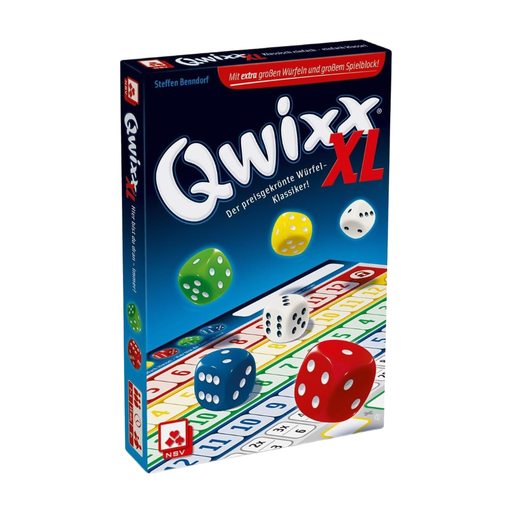
Why This Fits Their Persona: Perfect for anyone who wants a quick game to play between longer sessions or as a nightcap to a game night. Its compact size also makes it an ideal travel game. All players are involved at all times, so there's no lengthy downtime.
Qwixx avoids the trap of overly complex rules. The game's concept can be explained and understood in minutes, yet it offers enough tactical depth to ensure high replay value.
Short playtime of about 15 minutes. The XL version features extra-large dice and score pads for better readability and handling.
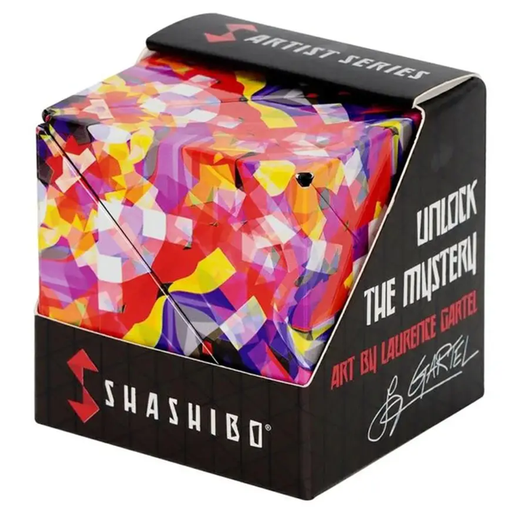
Why This Fits Their Persona: A modern alternative to the classic puzzle cube for anyone seeking a captivating, hands-on activity. It's both a relaxing fidget toy and a complex puzzle that demands concentration and spatial awareness.
The Shashibo box avoids the pitfall of inferior materials. It is made from high-quality injection-molded plastic with tear-proof surfaces and 36 strong rare-earth magnets that ensure stable and durable performance.
Transforms into over 70 geometric shapes. Multiple cubes can be magnetically connected to build larger, more complex structures.
For fans of fast and exciting dice games, we've compiled a list of products that meet our strict selection criteria.
1. What should you look for in the material quality of board games? Look for thick, sturdy cardboard for game boards and cards, as well as robust plastic like ABS for game pieces. For children's games, the CE mark is a must, as it guarantees compliance with EU safety standards. For puzzles like puzzle cubes, models with colored plastic ("stickerless") are often more durable than those with stickers.
2. How do you find a game that is suitable for different age groups in a family? Look for cooperative games where everyone plays together to beat the game, or games with simple basic rules that offer optional, more complex rules for older players. Games with a high luck factor, like many dice games, can also level the playing field, as strategy isn't the only deciding factor.
3. Are more expensive games always higher quality? A higher price can indicate more elaborate production, higher-quality materials, or a well-known license, but it's no guarantee of more fun. Many affordable, compact games offer enormous replay value and clever game mechanics. Focus on the core criteria mentioned above rather than just the price.