
Lieferung heute & morgen

Qualitätsgarantie

Willkommens-Angebote freischalten: KOSTENLOSE Lieferung | Bis zu 80 % RABATT | Kostenlose 30-Tage-JoyPlus-Testphase
App herunterladen
For many drivers in Germany, installing a dash cam in their vehicle is a worthwhile consideration. It can serve as an objective witness in the event of an accident and help determine who was at fault. However, the market is overwhelming and filled with technical promises that don't always deliver. Before you make a decision, it's crucial to understand the common pitfalls to avoid making a purchase you'll regret.
As your Joybuy Product Recommendation Officer, I'm here to help you separate the wheat from the chaff. We'll focus on the facts and the critical features that define a reliable car camera.
Marketing terms can be confusing. Many buyers regret their decision because they fell for one of these three common exaggerations:
To avoid these traps, you should focus on the following verifiable technical specifications. These are the key determinants of your car camera's reliability and image quality.
Resolution alone isn't everything. A native 4K resolution (3840x2160 pixels), powered by a quality image sensor like the Sony STARVIS 2, delivers the necessary clarity to capture details clearly, even in low-light conditions. Also, look for:
The type of storage significantly impacts recording reliability:
Some features are more than just gimmicks and offer real security value:
Based on these objective criteria, we have identified a few models that offer a suitable solution for different user profiles.
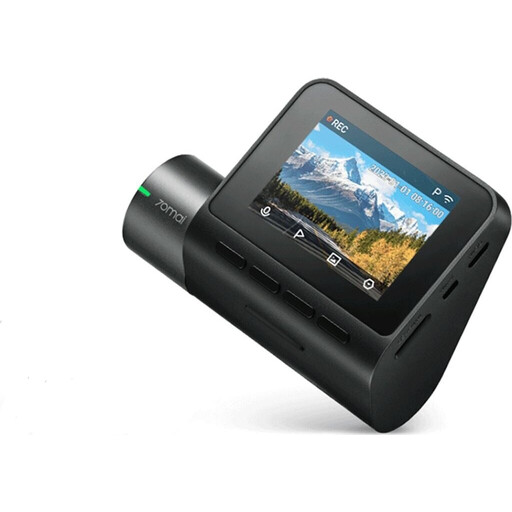
Why it's a good fit: Ideal for commuters and daily drivers who want a reliable front camera to document traffic events. It focuses on core functions without costly extras.
This model avoids the "4K trap" by focusing on high-quality 1080p HDR video at 60 FPS. In practice, this is often more useful than a poorly implemented 4K resolution.
The high frame rate of 60 FPS ensures smooth recordings. The 70mai Night Owl Vision technology delivers good low-light performance for its class.
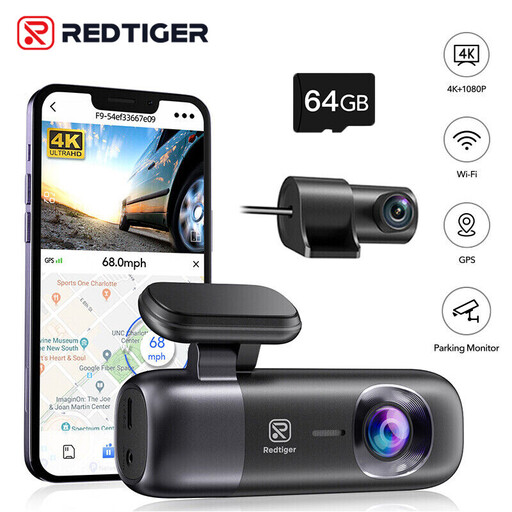
Why it's a good fit: For drivers who want comprehensive protection with front and rear views and value high-resolution footage as evidence.
Delivers true 4K resolution on the front camera for a high level of detail. The integrated GPS also captures important route data, which increases the evidentiary value of the recordings.
A complete package: Dual dash cam (4K front, 1080p rear), GPS, Wi-Fi, and a 64 GB memory card are already included in the box.
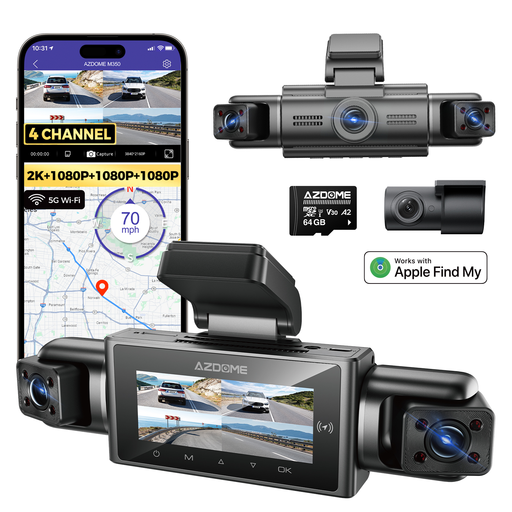
Why it's a good fit: Perfect for tech-savvy users or vehicle owners who want seamless 360° surveillance, especially in urban areas with a high risk of side collisions or vandalism.
This system solves the blind spot problem inherent in standard dash cams by providing 4-channel coverage. The Apple Find My integration offers an additional layer of security that goes far beyond a simple parking mode.
A 4-channel dash cam with native Apple Find My integration for global vehicle tracking and a seamless all-around view (front, rear, left, right).
We've compiled a complete, up-to-date list of products that fully meet these strict selection criteria and German regulations.
Yes, using a dash cam is generally permitted in Germany. However, data protection aspects (GDPR) must be considered. Permanent, indiscriminate recording of public space is not allowed. For this reason, most dash cams use loop recording, where old footage is continuously overwritten. Only in the event of an incident (e.g., triggered by the G-sensor) is the corresponding sequence saved permanently. Courts may admit dash cam recordings as evidence, but the decision is at the discretion of the respective judge.
A supercapacitor is significantly more resistant to extreme temperatures, such as those that can occur in a parked car in summer or winter. It has a much longer lifespan than a lithium-ion battery and poses a lower risk of overheating. Its function is to provide enough power to safely save the last recording after the engine is turned off. For longer recordings, like in parking mode, it relies on an external power source (hardwire kit).
For reliable 24-hour surveillance that reacts to motion or impact, a hardwire kit is necessary. It ensures a constant power supply from the car battery and includes a battery monitor that switches off the camera before the car battery's voltage drops to a critical level. Some cameras offer a rudimentary parking mode via a small internal battery, but this can only record very short clips in the event of a direct impact and is unsuitable for continuous monitoring.