
Lieferung heute & morgen

Qualitätsgarantie

Willkommens-Angebote freischalten: KOSTENLOSE Lieferung | Bis zu 80 % RABATT | Kostenlose 30-Tage-JoyPlus-Testphase
App herunterladen
The selection of educational toys is vast and often overwhelming. Manufacturers advertise developmental benefits, but not every product delivers on its promise. As a parent, grandparent, or friend, you want to find a gift for a toddler that is safe, provides lasting enjoyment, and meaningfully supports their development. This guide will help you navigate common purchasing traps and make an informed decision.
Many well-intentioned purchases turn out to be a bad investment in hindsight. Watch out for these three typical problems to avoid disappointment.
To ensure a toy serves its purpose and is safe, you should check three central aspects.
Safety is the top priority. The CE mark is a basic requirement, as the manufacturer thereby declares compliance with EU safety standards. For wooden toys, the FSC seal is an important indicator of wood from sustainable and responsible forestry. Also, look for the "saliva-resistant" label, especially for baby toys that are often put in the mouth.
The age recommendation on the packaging is only a rough guideline. More important is which skills the toy targets. For example, motor skills toys should specifically promote fine motor skills (grasping, inserting) or gross motor skills (crawling, walking). A good toy for ages 1 and up is designed to challenge the child but not frustrate them. Products based on Montessori pedagogy often feature a simple design that prioritises the child's own initiative and concentration.
A well-designed toy grows with the child or can be played with in various ways. A baby walker that later serves as a doll's pram, or building blocks used first for simple towers and later for complex structures, are examples of long-lasting investments. They foster creativity and remain engaging across multiple developmental phases.
Based on the criteria above, we have put together a selection of products for different needs and age groups.
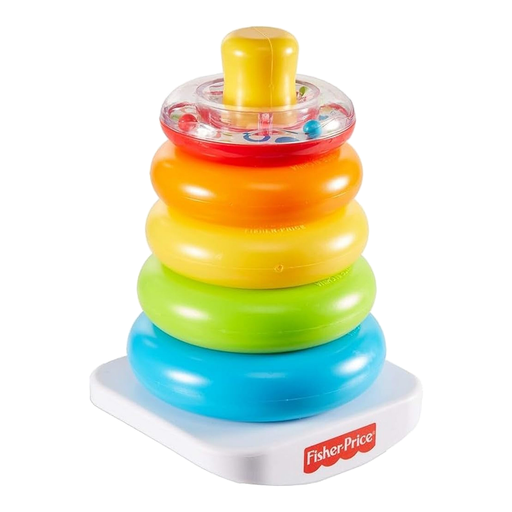
Why It's a Good Fit: Perfect for babies from 6 months who are beginning to grasp and explore objects purposefully. The toy focuses on the fundamental development of hand-eye coordination and understanding size relationships.
Avoids the overstimulation trap with a simple, clear play concept without distracting electronics. The robust construction from sustainable plastic ensures a long and safe lifespan.
Specifically promotes fine motor skills and early spatial reasoning. A classic baby toy that has proven its worth for generations.
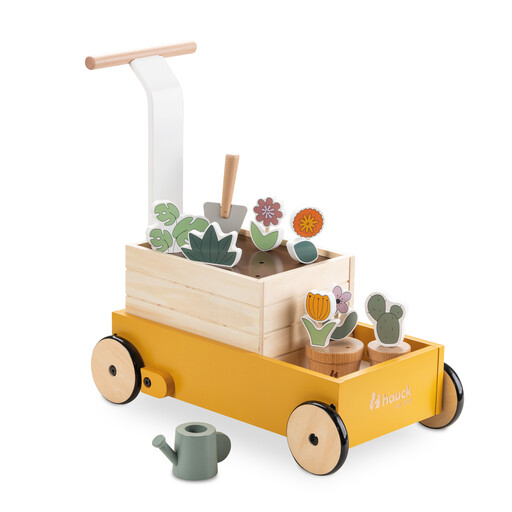
Why It's a Good Fit: This baby walker offers stable support for toddlers taking their first steps. It combines the walking function with playful elements that promote motor skills.
Bypasses the short-lifespan trap by also serving as a doll's pram or a wagon for transporting toys. The FSC-certified wood signifies high material quality and sustainability.
The speed of the wheels can be individually adjusted via a brake system, allowing the walker to be adapted to the child's abilities. This enhances safety during the learning phase.
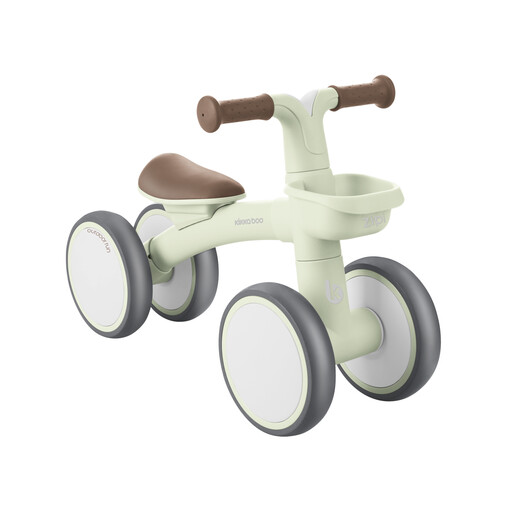
Why It's a Good Fit: This balance bike is designed for toddlers from 1 year old and playfully prepares them for riding a bicycle. It trains their sense of balance and coordination in a very intuitive way.
Focuses on a core skill (balance) and forgoes distracting elements. The adjustable seat ensures a long lifespan, as the balance bike grows with the child.
The lightweight aluminium frame and limited steering angle increase safety and make it easier for the child to handle. The puncture-proof EVA wheels are quiet and maintenance-free.

Why It's a Good Fit: This "Quiet Book" is ideal for quiet play sessions at home or while travelling. It promotes fine motor skills and concentration through everyday activities like buttoning, lacing, and using zippers.
As a screen-free and silent alternative, it counteracts overstimulation. The variety of activities ensures long-lasting engagement, making it a versatile companion.
The lightweight and compact design made of soft felt makes it a perfect travel toy. It bundles 15 different activities into a single product.
We have compiled a comprehensive, up-to-date list of products that fully meet these strict selection criteria and German safety regulations.
Look for recognised safety seals. The CE mark is mandatory in the EU. Additional seals like the GS mark ("Geprüfte Sicherheit" or "Tested Safety") offer further guidance. For wooden toys, the FSC seal is a plus for sustainability. Also, check the toy for rounded edges, sturdy construction, and the absence of small parts that could be swallowed by children under three.
Montessori toys are based on the principles of Montessori education. They are typically characterised by the following features:
Quality is more important than quantity. Instead of constantly buying new toys, it is often more effective to rotate a selection of high-quality, versatile toys. Observe what your child is currently enjoying and put other toys away for a while. When brought out again later, they often feel new and interesting. Good developmental toys can be used in new ways across different age stages.