
Lieferung heute & morgen

Qualitätsgarantie

Willkommens-Angebote freischalten: KOSTENLOSE Lieferung | Bis zu 80 % RABATT | Kostenlose 30-Tage-JoyPlus-Testphase
App herunterladen
The need for a quick meal doesn't have to mean sacrificing authentic flavour. For fans of Korean cuisine, finding dishes that can be easily integrated into a busy schedule is a constant challenge. Korean rice noodles in a cup offer a convenient solution, combining the traditional flavours of Korea with a preparation time of just a few minutes.
This article serves as your guide. We will introduce a selection of instant rice noodles and provide you with objective criteria to help you find the perfect product for your taste preferences when you buy Korean food online.
Deciding on the right Korean instant noodle soup depends on your personal preferences. The following points will help you make an informed choice.
A key feature of many Korean rice noodle products is the use of non-fried instant noodles. Unlike many conventional instant noodles, which are fried for preservation, these noodles are often made by steaming and drying. This results in a softer, smoother texture and can be reflected in the nutritional profile. Pay attention to the product description for information on the manufacturing process.
The diversity of Korean cuisine is also evident in its instant dishes. Flavour profiles range from mild and savoury to intense and spicy.
The spice level is usually indicated on the packaging or in the product description.
A look at the ingredient list is essential. As the name suggests, Korean rice noodles are based on rice flour, but they often also contain wheat flour or wheat starch to achieve the desired elasticity. Individuals with gluten intolerance should therefore carefully check the allergen information. The list also provides details on the composition of the soup base and any additives.
Here you will find a curated selection of products from the Baekje brand, covering different flavour profiles of Korean cuisine and serving as excellent quick Asian meals.
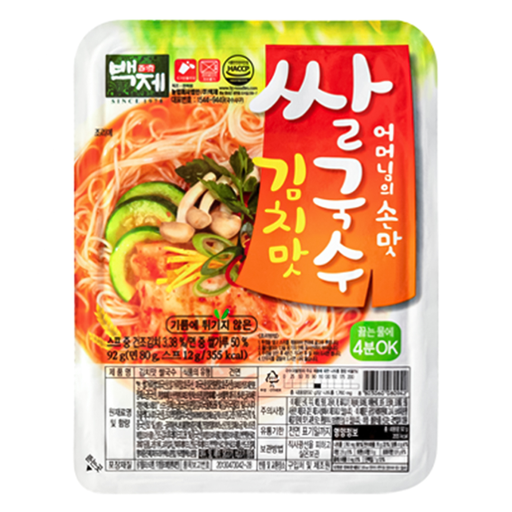
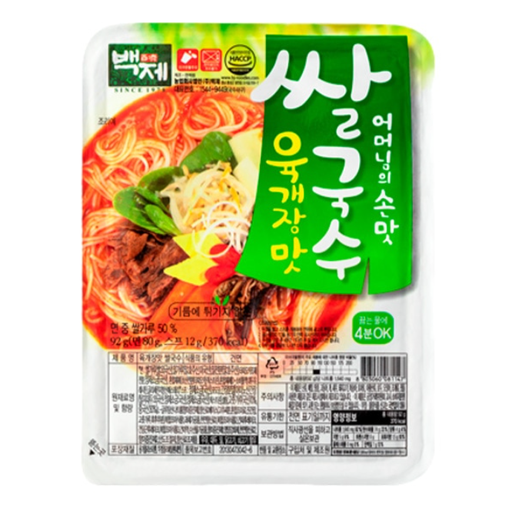
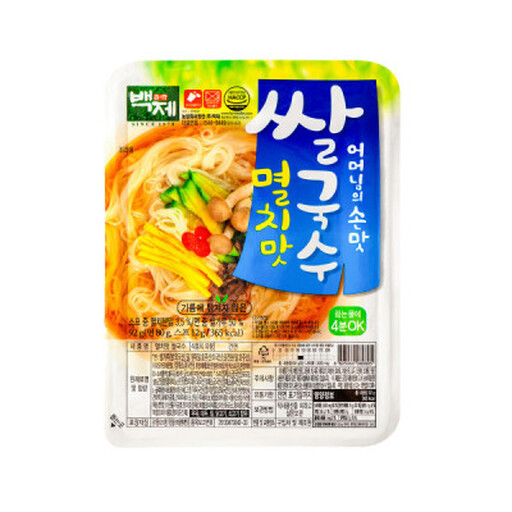

Haven't found the right one for you in this selection, or would you like to explore more flavours? Discover a wider range of products, including various red rice noodles and other Asian specialities in our assortment.
Not necessarily. Although the main ingredient is rice flour, many products, including those from Baekje featured here, also contain wheat flour or wheat starch to improve the texture of the noodles. People with celiac disease or gluten intolerance should therefore always read the allergen information on the packaging or in the product description carefully.
The preparation is standardised and simple. Typically, you open the lid halfway, add the included soup powder over the noodles, and fill the cup with boiling water up to the inner line. Then, close the lid again and let the dish steep for the time indicated on the package (usually 3–4 minutes). Stir well before eating.
The main difference lies in the ingredients and production. Korean rice noodles (Ssal-guksu) are made primarily from rice flour and are often non-fried. Ramyeon (or Ramyun) generally refers to instant noodles made from wheat flour that are fried for preservation, which gives them a different texture and taste.