
Lieferung heute & morgen

Qualitätsgarantie

Willkommens-Angebote freischalten: KOSTENLOSE Lieferung | Bis zu 80 % RABATT | Kostenlose 30-Tage-JoyPlus-Testphase
App herunterladen
An illuminated warning light on your dashboard, usually the check engine light, can be unsettling. The first reaction is often the thought of an expensive trip to the mechanic, where simply running a diagnostic scan incurs a fee. For car owners and DIY mechanics who want to perform initial diagnostics and handle minor maintenance tasks themselves, an OBD2 diagnostic tool offers a practical and cost-effective solution.
These devices allow you to directly access the vehicle's on-board computer to read and understand error codes. This article serves as a guide. It explains what to look for when choosing a tool and presents a selection of devices with different feature sets to help you make your decision.
The market offers a wide variety of devices, from basic code readers to comprehensive diagnostic tools. The following points will help you find the right model for your needs.
The fundamental requirement is compatibility with your vehicle. In the EU, the OBD2 interface has been standard for gasoline cars since 2001 and for diesel vehicles since 2004. Most modern diagnostic tools support the common protocols (e.g., CAN, KWP2000, ISO9141). For newer vehicles, especially from brands like General Motors, support for the CAN-FD protocol can be crucial to ensure full diagnostic functionality. Always check the manufacturer's vehicle coverage list before purchasing.
The range of functions determines what you can do with the device.
Modern diagnostic tools are often designed as compact OBD2 Bluetooth diagnostic tool adapters. These are plugged into the vehicle's OBD2 port and connect wirelessly to your smartphone or tablet. A companion car diagnostic app for iOS or Android is used to display and manage the diagnostic data. Such a diagnostic tool for your smartphone offers great flexibility and a user-friendly interface. Pay attention to the software terms: some providers require annual subscriptions, while others offer lifetime free updates, which significantly reduces the long-term cost of ownership.
Based on the criteria above, we have compiled a selection of devices suitable for different types of users.
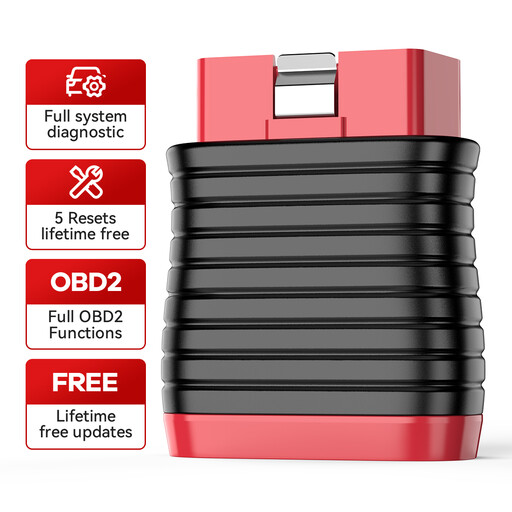
What sets it apart: The THINKCAR BD6 is a compact Bluetooth adapter that focuses on essential diagnostic and maintenance functions. It is controlled via the "ThinkDiag+" app on iOS and Android devices and offers lifetime free use with no recurring subscriptions.
Advantages:
Who it's for: This device is a great choice for car owners and beginners looking for a reliable tool for full system diagnostics and the most important maintenance tasks, without worrying about ongoing costs.
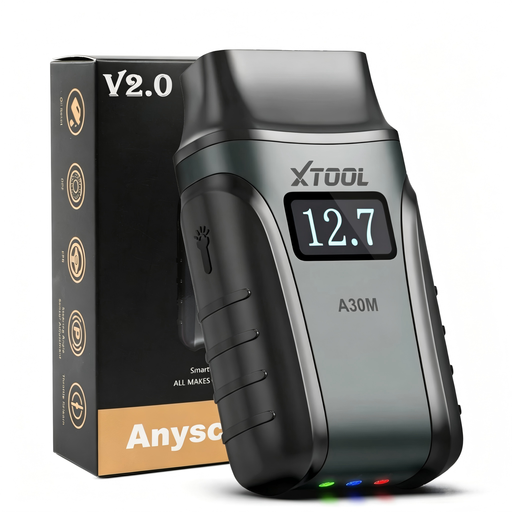
What sets it apart: The XTOOL A30M is a powerful OBD2 scanner for iOS and Android that stands out with its extensive feature set. It offers not only OE-level system diagnostics but also bi-directional control and a large number of service functions.
Advantages:
Who it's for: The A30M is aimed at advanced DIY mechanics and enthusiasts who not only want to diagnose but also perform active tests and handle a variety of maintenance and repair jobs themselves.
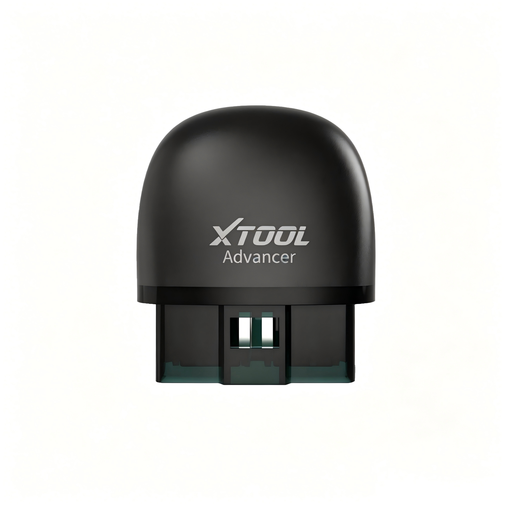
What sets it apart: The XTOOL AD20Pro V2.0 is an extremely compact and affordable Bluetooth scanner that still provides all-system diagnostics. It combines diagnostic functions with useful extra features like a trip log and a HUD function.
Advantages:
Who it's for: Ideal for everyday drivers and tech-savvy users looking for a straightforward, portable diagnostic tool for their smartphone. It is suitable for quick checks, monitoring driving behavior, and basic service resets.
The devices presented here cover a broad spectrum of diagnostic needs. If you are looking for tools for specific maintenance jobs, such as an oil change, you can find more suitable products and aids in our Oil Accessories category.
1. Can I clear the check engine light with an OBD2 diagnostic tool? Yes, after the error code has been read, it can be cleared with the diagnostic tool. This will turn off the warning light. However, note that the light will come back on if the underlying cause of the fault has not been fixed. Clearing the code alone is not a repair.
2. Will every OBD2 diagnostic tool work with my car? Basic OBD2 compatibility is a given for most vehicles in the EU built from 2001 (gasoline) or 2004 (diesel) onwards. However, advanced functions like all-system diagnostics or specific service resets are highly dependent on the vehicle model and the diagnostic tool. It is recommended to check the manufacturer's compatibility list before purchasing.
3. What is the difference between a basic code reader and an all-system diagnostic tool? A basic code reader typically only accesses the engine control unit (ECU) to read and clear engine-related fault codes (DTCs). An all-system car diagnostic tool can communicate with a variety of control units in the vehicle, including ABS, Airbag (SRS), transmission, air conditioning, and more. This allows for a much deeper and more comprehensive analysis of the vehicle's condition.