
Lieferung heute & morgen

Qualitätsgarantie

Willkommens-Angebote freischalten: KOSTENLOSE Lieferung | Bis zu 80 % RABATT | Kostenlose 30-Tage-JoyPlus-Testphase
App herunterladen
Manually cleaning a pool is time-consuming and tedious. From removing leaves on the surface to scrubbing the floor and walls, maintenance requires constant effort to ensure pristine water quality and appearance. An automatic pool cleaner can take over these tasks, giving you back valuable time.
This article serves as your guide. We will introduce different types of robotic pool cleaners and explain the crucial criteria you should consider in your selection. Our goal is to provide you with an objective basis to find a model that precisely matches your pool and your requirements.
Choosing the right model depends on several factors that go beyond just the price. The following points will help you define your needs and make an informed decision.
Not every robotic pool cleaner is designed for all tasks. The fundamental distinction lies in the intended cleaning area:
For comprehensive cleaning, combination units or using two specialised robots (one for the floor/walls, one for the surface) is a strategy worth considering.
The power source is a crucial feature for user convenience:
Modern robotic pool cleaners are more than just simple vacuums. Smart features enhance efficiency and convenience:
Here, we present a selection of models that stand out for their specific features and applications.
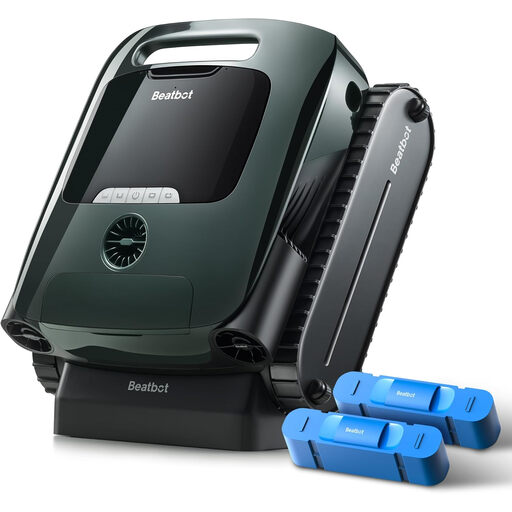
The Beatbot AquaSense 2 Pro is designed as a flagship model for comprehensive pool care. It combines floor, wall, and waterline cleaning with integrated surface skimming and a water clarification function.
Why it stands out: Its unique selling point is the 5-in-1 cleaning. While other robots focus on the pool body, the AquaSense 2 Pro also takes care of the water surface and water clarity. The CleverNav Path Optimisation ensures systematic cleaning, and the Smart Surface Parking feature brings the robot to the surface for easy retrieval after its job is done. The cordless design with an induction charging dock avoids corrosion-prone charging contacts.
Pros:
Best for: Owners of large in-ground pools who are looking for a fully automated, "set-it-and-forget-it" solution that covers the entire pool ecosystem, from the surface to the floor.
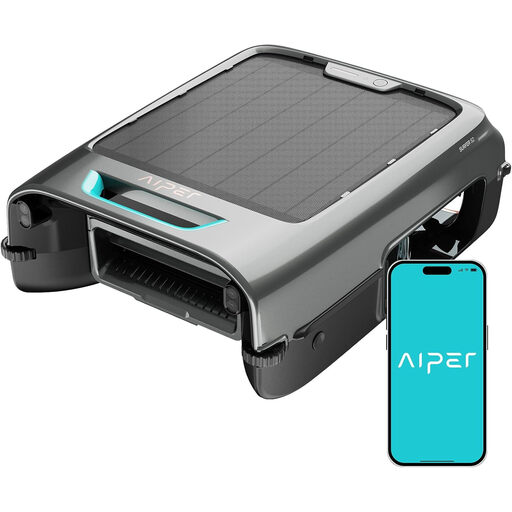
The AIPER Surfer S2 is a specialised robotic pool skimmer dedicated exclusively to cleaning the water's surface. Thanks to solar technology, it can operate around the clock with sufficient sunlight.
Why it stands out: The combination of solar and DC charging makes it particularly energy-efficient and flexible. It not only captures coarse debris like leaves and insects but also filters fine particles such as pollen and dust from the water with its 150 ?m fine filter. Smart sensors prevent it from getting stuck on obstacles or steps.
Pros:
Best for: Pool owners who primarily struggle with surface debris and are looking for an energy-efficient, continuously operating supplement to an existing floor cleaner or manual cleaning.
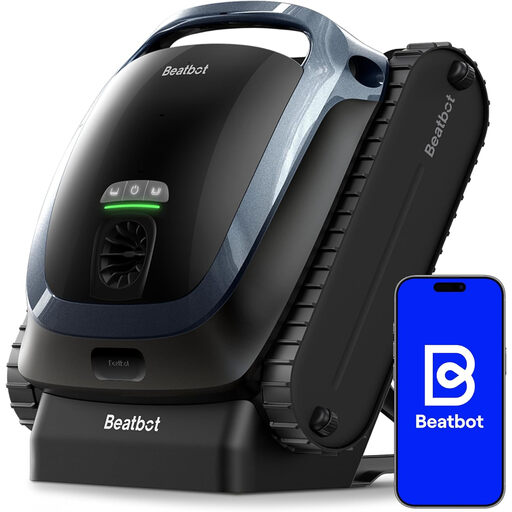
The Beatbot AquaSense 2 is a powerful, cordless robotic pool vacuum designed for the thorough cleaning of floors, walls, and especially the waterline in pools up to 300 m?.
Why it stands out: Its standout feature is the Double-Pass Waterline Scrubbing. The robot cleans the waterline twice in every pass to effectively remove stubborn buildup. Like the Pro model, it features CleverNav Navigation and Smart Surface Parking technology for easy handling. The powerful 10,000 mAh battery allows for long cleaning cycles.
Pros:
Best for: Owners of in-ground pools where grime lines quickly form on the waterline. It is ideal for anyone who places a strong focus on the cleanliness of the entire pool body.
The models presented here cover specific use cases. If you want to focus on removing leaves and pollen or are looking for another type of specialised device, you can find more surface cleaners in our category.
1. How often should a robotic pool cleaner run? The frequency depends on pool usage and environmental conditions (e.g., nearby trees). During the swimming season, a daily or every-other-day cleaning cycle is recommended for surface cleaners, and 2-3 cycles per week for floor and wall cleaners to maintain consistently high water quality.
2. Can a robotic pool cleaner be used in a saltwater pool? Most modern robotic pool cleaners are designed for use in saltwater pools up to a certain salt concentration (usually up to 5,000 ppm). However, it is important to check the manufacturer's specifications in the product data sheet. After each use in saltwater, the robot should be rinsed with fresh, clear water to extend the life of its components.
3. What is the difference between a pool vacuum and a robotic pool cleaner? Although the terms are often used interchangeably, a "pool vacuum" traditionally refers to a manual or semi-automatic device that connects to the pool's filtration system. In contrast, a robotic pool cleaner or automatic pool cleaner is a standalone, electric device with its own motor, filtration system, and often intelligent navigation, which operates completely autonomously.