
Lieferung heute & morgen

Qualitätsgarantie

Willkommens-Angebote freischalten: KOSTENLOSE Lieferung | Bis zu 80 % RABATT | Kostenlose 30-Tage-JoyPlus-Testphase
App herunterladen
Choosing the right stroller can be a challenge for expectant parents. The market is filled with models promising a multitude of features. However, not every feature is suited for every lifestyle, and some supposed advantages turn out to be costly drawbacks. This guide will help you understand the essential criteria and critically evaluate marketing claims, enabling you to make an informed decision.
Before we delve into the key features, let's highlight three common traps that often lead to dissatisfaction and extra costs.
To avoid these pitfalls, focus on the following three objective parameters that determine the comfort, safety, and longevity of your stroller.
The wheels and suspension are the chassis of your stroller and are directly responsible for your child's comfort.
Good four-wheel suspension is essential to absorb shocks and ensure a smooth ride, especially if you won't be sticking to perfectly paved paths.
Everyday handling depends significantly on the folding mechanism, weight, and packed size.
A well-designed system grows with your child and your lifestyle.
Here are some models tailored to specific lifestyles that successfully avoid the pitfalls mentioned.

Why this model is a great fit: Perfect for families who are often on the go. This travel buggy is designed for maximum portability without compromising on the child's comfort.
It solves the problem of bulky strollers with its low weight of just 7.2 kg and a compact one-hand folding mechanism. The included carrying strap makes transport effortless.
The 4-way suspension and a backrest that adjusts to a lie-flat position offer high comfort even when travelling. The canopy with UPF 50+ provides reliable protection.
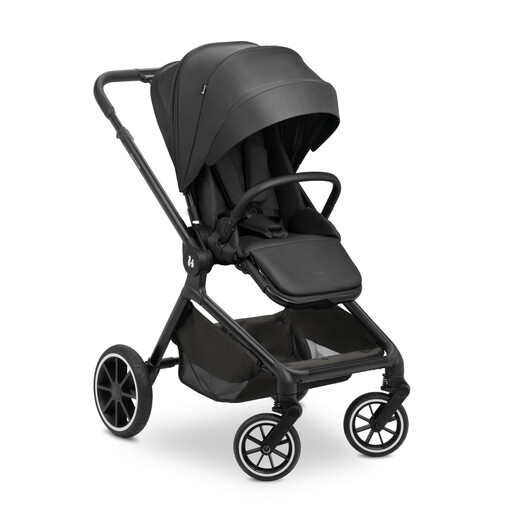
Why this model is a great fit: A versatile combination stroller that accompanies families from day one through to the toddler years. It is designed for the demands of urban life, including shopping trips and varied surfaces.
This set bypasses the "all-in-one" trap by offering a high-quality, softly padded bassinet and a grow-with-me seat unit. The puncture-proof rubber tyres and 4-way suspension can handle cobblestones with ease.
The reversible seat, height-adjustable telescopic handle, and large XL shopping basket offer great flexibility and practical benefits for daily use.
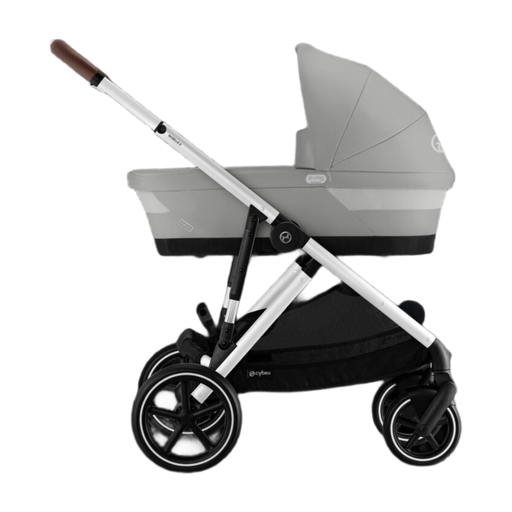
Why this model is a great fit: The solution for families who plan ahead. This system can be used as a single stroller and easily expanded into a sibling or twin stroller when needed.
It prevents the later, expensive purchase of a separate sibling stroller. With over 20 configurations according to the manufacturer, it flexibly adapts to a growing family without sacrificing stability.
Despite its capacity for two children, it folds down compactly. The two large shopping baskets with a total capacity of 23 kg offer exceptional storage space.
We have compiled a comprehensive, up-to-date list of products that fully meet these strict selection criteria and UK/EU safety regulations.
A baby should only sit upright in a buggy or the seat unit of a combination stroller once they can sit up independently and steadily. This is typically around six months of age. For newborns, a completely flat, lie-flat position in a bassinet is mandatory to avoid straining their spine and compromising their breathing.
A combination stroller is a modular system designed for use from birth. It consists of a frame onto which you can mount either a bassinet (for newborns) or a seat unit (for older children). A buggy (or stroller), on the other hand, is a lighter, more compact pushchair primarily intended for children who can already sit up. It often has a simpler design and is focused on portability.
Weight is a very important factor for everyday usability. A lightweight stroller is easier to manoeuvre, lift into the car, take on public transport, or carry up stairs. Remember that in addition to the stroller's weight, you'll also have the weight of your child, plus any shopping or a changing bag. A few kilograms less can make a significant difference in daily use.