
Lieferung heute & morgen

Qualitätsgarantie

Willkommens-Angebote freischalten: KOSTENLOSE Lieferung | Bis zu 80 % RABATT | Kostenlose 30-Tage-JoyPlus-Testphase
App herunterladen
In woodworking, precision is the difference between success and failure. An inaccurate cut or a poorly transferred angle can ruin an entire workpiece. A reliable angle finder for woodworking isn't a luxury—it's a necessity for every DIYer and professional. But the market is flooded with tools that overpromise and underdeliver. Before you invest, it's crucial to understand the common flaws that separate a great tool from a useless one.
Many buyers focus on price or marketing claims, overlooking three critical design flaws:
A quality measuring tool must withstand these stresses. Choosing the right model not only saves you from frustration but also prevents wasted time and materials.
To avoid these pitfalls, check three core parameters before you buy. These features determine the durability and accuracy of your tool and are crucial for achieving clean results on every project.
The material is the foundation of accuracy. While plastic may suffice for very simple tasks, it's unsuitable for the serious DIYer or professional carpentry needs.
An aluminum ruler offers the best compromise between stability and weight. Look for a sufficient material thickness to prevent bending. Anodized aluminum models offer extra protection against corrosion and scratches, significantly increasing their lifespan in a demanding workshop environment. Such a measuring tool for wood also remains dimensionally stable during temperature fluctuations.
The readability of the scale is non-negotiable. There is a clear quality difference here:
For a reliable layout tool, precise and permanent markings are essential. Check for both metric and imperial units to maximize versatility.
An adjustable angle ruler is only as good as its locking mechanism. It must secure the set angle absolutely firmly and without any play. Robust metal screws with easy-to-grip knobs are the preferred choice. They allow for tight fastening without tools and hold the ruler's arms reliably in position. A poor-quality mechanism quickly turns a potentially useful multi-angle ruler into a source of constant errors. Its function as a reusable angle template depends directly on the reliability of this connection.
Based on these criteria, we have curated a selection of tools suitable for various needs and budgets.
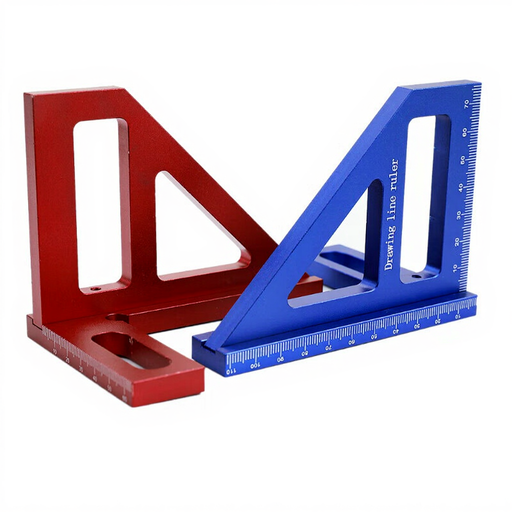
Why This Fits Their Persona: Ideal for DIYers seeking a reliable tool for occasional projects without a large investment. It provides the necessary functionality for standard tasks like laying laminate flooring or building simple furniture.
Its aluminum construction bypasses the risk of warping common in plastic models. The locking mechanism is sufficiently stable for occasional use.
Excellent value for money; lightweight and easy to handle; rust-resistant aluminum construction.
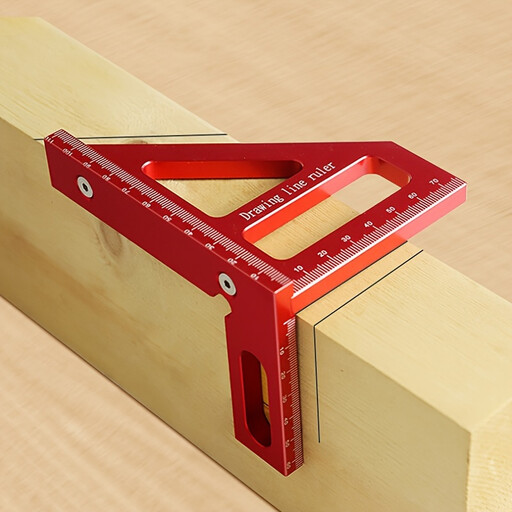
Why This Fits Their Persona: For demanding DIYers and professionals where every millimeter counts. Perfect for complex miter cuts, frame building, or detailed inlay work that requires the highest accuracy.
The laser-engraved metric and imperial scales are extremely durable, preventing the problem of worn-off markings. The red finish provides excellent contrast against wood.
High measurement accuracy due to precise engraving; robust anodized aluminum construction; versatile for complex angles.
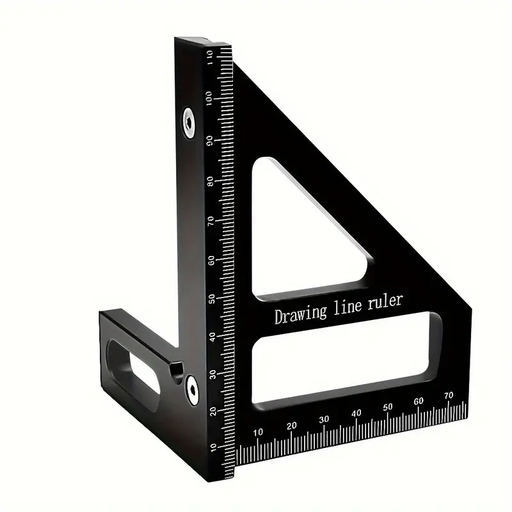
Why This Fits Their Persona: This tool is designed for continuous use. Its robust build and durable finish make it the ideal companion for craftspeople who rely on a dependable measuring instrument every day.
The solid aluminum construction and scratch-resistant black finish withstand the rigors of daily workshop life, preventing typical wear and damage.
Exceptional durability; highly legible markings; robust locking mechanism for repetitive measurements.
We have compiled a complete, up-to-date list of products that fully meet these strict selection criteria and safety standards.
To maintain precision, you should care for the tool regularly. Occasionally check its accuracy against a known right angle, like a high-quality framing square. Keep the joints and screws clean and free of sawdust. Store the ruler flat to prevent it from bending.
For woodworking, an aluminum ruler offers crucial advantages. It is more dimensionally stable, durable, and less sensitive to temperature changes in a workshop. Plastic models may be lighter, but they are more prone to damage, warping, and inaccuracies. For reliable carpentry needs, aluminum is the more robust choice.
A simple protractor measures an angle. A multi-angle ruler, which also functions as an angle template, can transfer that angle or a complex shape directly onto a workpiece. It's ideal for repetitive cuts, such as those needed for laying tiles, timber framing, or fitting trim. The tool "saves" the shape and serves as a direct template for marking, which saves time and reduces errors.