
Lieferung heute & morgen

Qualitätsgarantie

Willkommens-Angebote freischalten: KOSTENLOSE Lieferung | Bis zu 80 % RABATT | Kostenlose 30-Tage-JoyPlus-Testphase
App herunterladen
By Joybuy Product Recommendation Officer, August 28, 2026
Tightening a bolt to the correct torque isn't a minor detail; it's a necessity—whether for the lug nuts on your car, the cylinder head on your engine, or the carbon components of a modern bicycle. The wrong torque can, at best, lead to loose connections and, at worst, cause irreparable material damage. However, the market for torque wrenches is overwhelming. Many users invest in a tool that fails to meet their needs. Before you make a decision, you should be aware of the most common pitfalls.
The 3 Most Common Mistakes When Buying a Torque Wrench:
To avoid a bad purchase, focus on the technical specifications relevant to your application. Marketing promises are secondary.
The most important parameter is the torque range. A one-size-fits-all tool does not exist. Check the torque specifications provided by the manufacturer of your components (car, bicycle, etc.).
The precision of a torque wrench is stated as a percentage deviation from the set value (e.g., ±3%). For professional applications and sensitive materials, a low tolerance is crucial. According to manufacturer specifications, many models offer an accuracy of ±3% or ±4%, which is sufficient for most mechanical work in the automotive and DIY sectors.
Pay attention to the material specifications. Chrome vanadium steel (Cr-V) is an established standard for durable and resilient automotive tools and industrial equipment. It offers a good balance of hardness and toughness and protects against premature wear.
Here are some product recommendations tailored to specific user profiles that purposefully avoid the pitfalls mentioned.
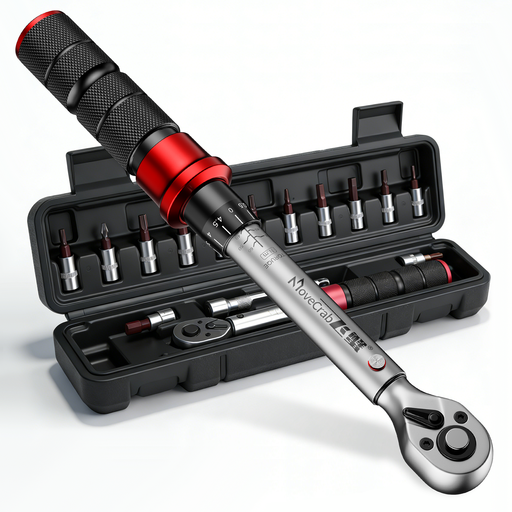
Why this product is a great fit: This set is specifically designed for the fine adjustments on modern bicycles. The torque range of 2-20 Nm perfectly covers the requirements for sensitive components like carbon handlebars, stems, and seat posts.
It solves the problem of incomplete tools by coming as a complete torque wrench set with 11 essential bits (Allen, Torx). No immediate additional purchases are needed for common bicycle repairs.
The chrome-molybdenum steel ratchet head and the hardened chrome-vanadium steel alloy handle are designed for durability. Measurement is possible in both directions (for clockwise and counter-clockwise threads).
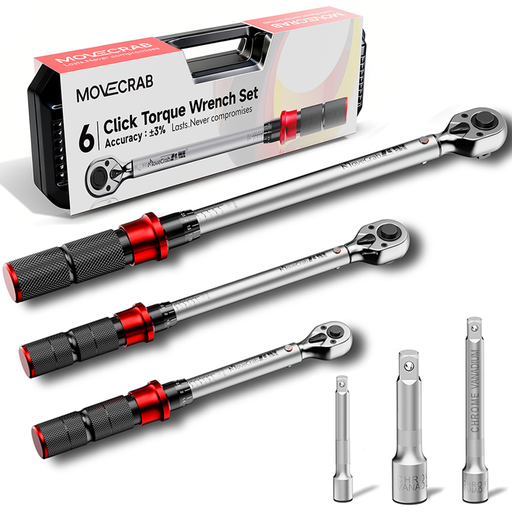
Why this product is a great fit: This set covers an extremely wide range from 5-220 Nm with three separate wrenches (1/4", 3/8", 1/2" drive). It's a comprehensive solution for ambitious mechanics who handle everything from engine work to changing tyres.
It addresses the concern of inaccurate mechanics: according to the manufacturer, each wrench comes with a calibration certificate attesting to an accuracy of ±3%. The heat-treated Cr-V steel construction counteracts material wear.
The combination of three wrenches ensures that the right, precise tool is available for every torque range, rather than making a compromise with a single, oversized wrench.
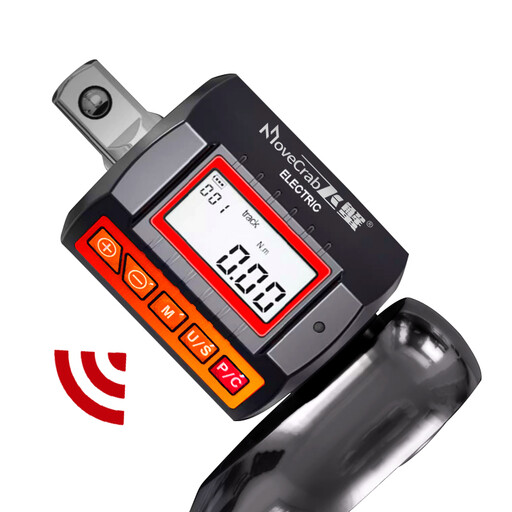
Why this product is a great fit: This torque adapter is the ideal upgrade for anyone who already owns a high-quality socket set. It transforms a standard ratchet into a high-precision digital measuring tool with a massive range of up to 340 Nm.
It eliminates the risk of inaccurate mechanical scales with a digital display that offers a manufacturer-stated bidirectional accuracy of ±2% to ±2.5%. The included adapters for 3/8" and 1/4" drives make it universally applicable and prevent costly follow-up purchases.
Professional features like peak and real-time modes, data storage for 1,000 readings, and an audio-visual alarm provide a level of control and documentation that mechanical wrenches cannot offer.
We have compiled a complete, up-to-date list of products that fully meet these strict selection criteria and all applicable regulations.
This is not recommended. The mechanism of a torque wrench is designed for controlled tightening. The sudden, high-impact forces required to loosen seized bolts can damage the calibration mechanism and compromise the tool's accuracy. Use a standard ratchet or a breaker bar for loosening.
For professional use in workshops, an annual calibration is often recommended. For occasional home use, a check every few years or after the tool has been dropped is advisable. To maintain accuracy, the wrench should always be turned back to the lowest value on its scale after use to release the tension on the internal spring.
This figure describes the tool's tolerance. If you set a value of 100 Nm, the actual torque applied at the "click" will be between 97 Nm and 103 Nm. For most automotive applications, this is an acceptable and common accuracy level. For highly sensitive components, such as those in aerospace or professional motorsports, tools with even lower tolerances (e.g., ±1%) are required.