
Lieferung heute & morgen

Qualitätsgarantie

Willkommens-Angebote freischalten: KOSTENLOSE Lieferung | Bis zu 80 % RABATT | Kostenlose 30-Tage-JoyPlus-Testphase
App herunterladen
An over-tightened or under-tightened bolt can be more than just an annoyance—it can lead to damaged threads, warped components, or even safety hazards. The correct torque is especially crucial when working on modern vehicles or bicycles with carbon parts. This guide serves as a reference, presenting objective criteria to help you choose a suitable torque wrench for your specific needs.
The choice of the right tool depends on its intended application. You should consider three key aspects in your decision.
The most fundamental decision concerns the type of torque wrench.
A single torque wrench can rarely cover all applications.
Accuracy is the most critical quality feature. It is specified as a percentage deviation from the set value (e.g., ±2% or ±4%). A smaller deviation means higher precision. Look for information on calibration according to standards like ISO 6789. Many digital models also offer modes like "Peak" (displays the highest value reached) and "Track" (displays the value in real-time), which facilitates control during tightening.
Based on the criteria mentioned, we have compiled a selection of tools that are suitable for different user profiles due to their specific features.
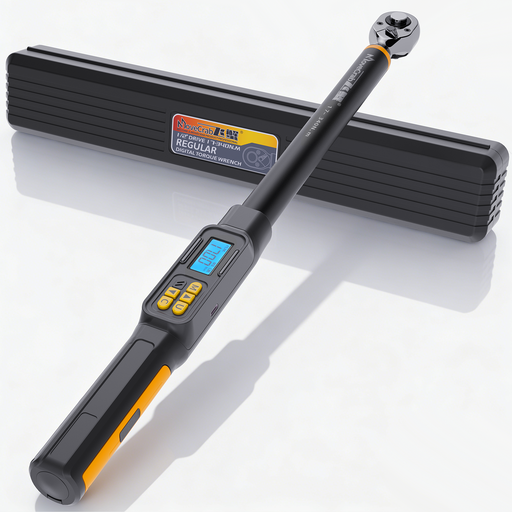
Why It Stands Out: This model combines a wide torque range with a triple alarm system. The combination of vibration, sound, and LED light ensures that reaching the target torque is not missed, even in a noisy workshop environment.
Pros:
Who Is It For? This tool is an excellent choice for professional auto mechanics and ambitious DIY enthusiasts who need a precise and reliable tool for suspension, engine, and wheel work and who value clear feedback.
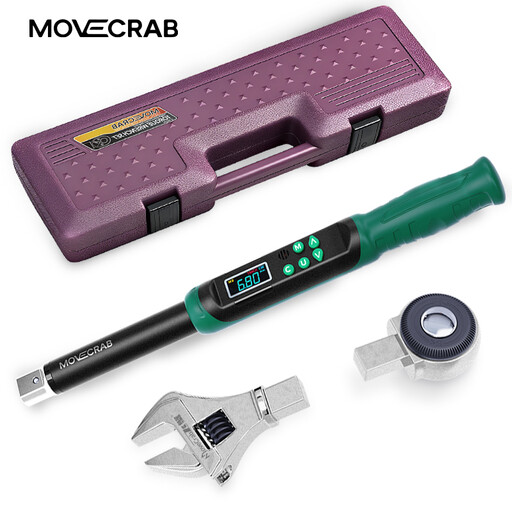
Why It Stands Out: The standout feature of this model is its flexibility, thanks to interchangeable heads. In addition to a standard ratchet head, an adjustable open-end wrench head is included, enabling use in hard-to-reach places or on line fittings.
Pros:
Who Is It For? Ideal for users in machine maintenance or for automotive work where standard sockets won't fit. The interchangeable heads significantly expand its range of applications.
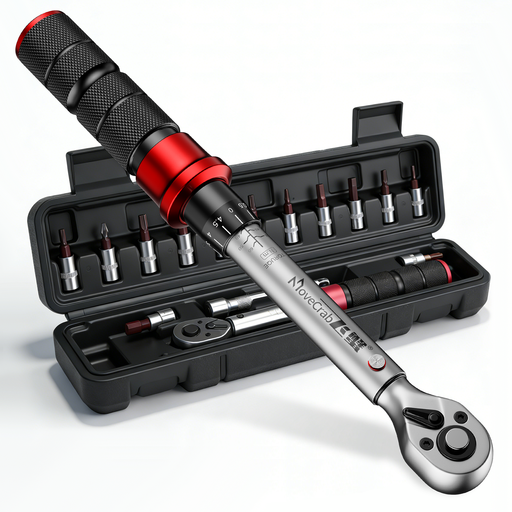
Why It Stands Out: This mechanical torque wrench set is specifically tailored to the demands of bicycle maintenance. With a low torque range of 2-20 N.m and an extensive set of bits, it's ready out of the box for precise work on stems, seat posts, and other sensitive components.
Pros:
Who Is It For? This set is aimed at cycling enthusiasts and workshops that need a reliable mechanical tool for the precise assembly and maintenance of modern bicycles.
If you haven't found the right tool for your specific application yet, or if you're looking for complementary tools, you can find a wider selection for various requirements and torque ranges in our Wrench Accessories category.
1. How often does a torque wrench need to be calibrated? Manufacturers generally recommend calibration once a year or after approximately 5,000 load cycles. An unscheduled check is advisable if the tool has been dropped or is suspected of having been overloaded.
2. Can you use a torque wrench to loosen bolts? This is strongly discouraged. Torque wrenches are precision measuring instruments, and their mechanism can be damaged by the high, uncontrolled forces used to loosen stuck bolts. Use a standard ratchet or a breaker bar for loosening.
3. What is the difference between a 1/2-inch and a 1/4-inch drive? The inch measurement refers to the size of the square drive that the socket fits onto. A 1/4 inch drive is used for small sockets and low torque applications (e.g., in bicycle or electronics work). A 1/2 inch drive is designed for larger sockets and high torque, such as when changing a car tyre or working on the suspension.