
Lieferung heute & morgen

Qualitätsgarantie

Willkommens-Angebote freischalten: KOSTENLOSE Lieferung | Bis zu 80 % RABATT | Kostenlose 30-Tage-JoyPlus-Testphase
App herunterladen
A torque wrench is an indispensable precision tool for anyone working on a car, motorcycle, or bicycle. Applying the correct torque is crucial for ensuring component safety and preventing costly damage like stripped bolts or warped parts. However, the market is flooded with models whose performance claims often don't hold up in practice. This guide will help you identify the essential features and avoid common purchasing pitfalls.
Many users invest in a tool that causes more problems than it solves. Pay close attention to these three points to avoid a poor investment:
To find the right precision torque wrench for your needs, you should focus on the following technical features.
The most important factor is the torque range, measured in Newton-metres (Nm). This must match your application:
The way the torque wrench signals that the target torque has been reached is another key distinguishing feature.
Here are some recommendations tailored to specific user profiles that purposefully avoid the pitfalls mentioned earlier.
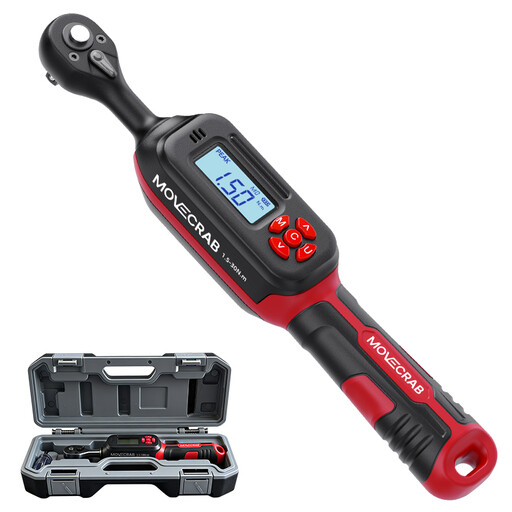
Why This Fits Their Persona: Ideal for working on modern bicycles with carbon components or for small engines where low but exact torque values are critical. The digital approach provides the necessary assurance for sensitive components.
The digital display and triple alarm system (vibration, sound, LED) eliminate the risk of inaccurate readings. The high accuracy of ±2% (according to the manufacturer) is designed for sensitive fasteners.
The torque range of 1.5-30 Nm is perfect for bicycle repairs. It offers Peak and Track modes, as well as 10 presets for recurring tasks.
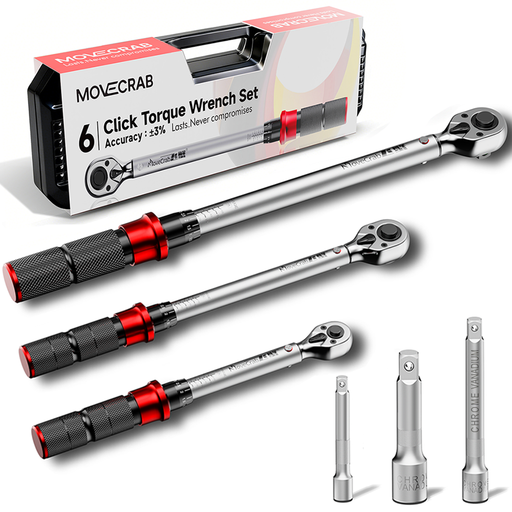
Why This Fits Their Persona: A practical set for users who want to cover a wide range of tasks on their car, motorcycle, and around the house without having to buy multiple individual tools.
This set focuses on three wrenches with different ranges (5-25 Nm, 10-80 Nm, 20-220 Nm) and drive sizes, rather than being overloaded with unnecessary accessories. The Cr-V steel construction addresses concerns about poor material quality.
Covers a very broad torque range from 5-220 Nm with three wrenches. According to the manufacturer, each wrench comes with a calibration certificate attesting to ±3% accuracy.
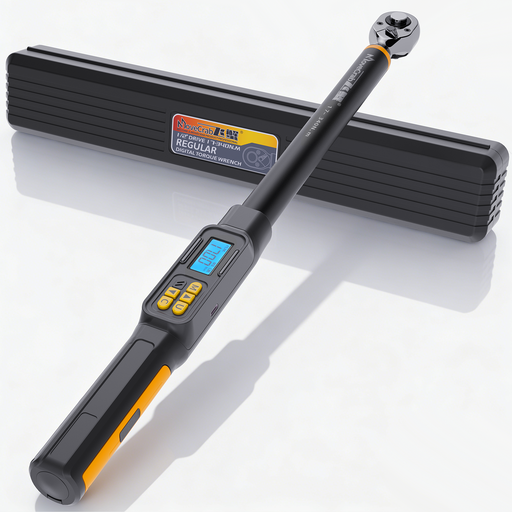
Why This Fits Their Persona: Designed for daily, intensive use in a professional auto workshop. The high torque range and digital features streamline workflow and ensure maximum precision on critical fasteners.
The combination of visual, acoustic, and haptic signals ensures the target value is not missed, even in a noisy environment. The robust construction is designed for longevity in a professional setting.
The wide range of 17-340 Nm covers most tasks on automotive suspension and engines. The ability to store up to 500 readings is a useful feature for quality control and documentation.
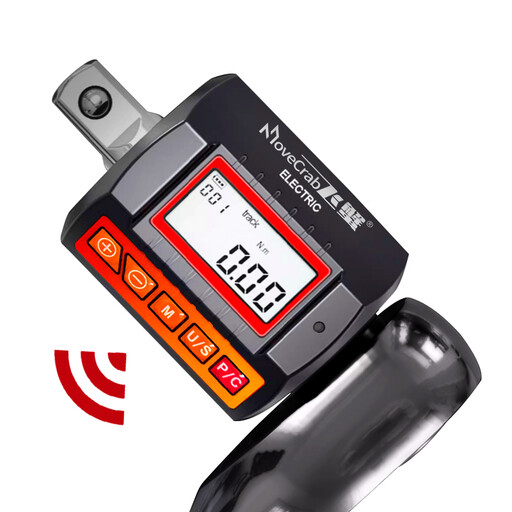
Why This Fits Their Persona: For users who already own a high-quality standard ratchet and want to cost-effectively upgrade it into a precise digital measuring tool.
A torque adapter is a smart alternative to buying a completely new tool. It upgrades existing equipment with digital precision (±2% accuracy according to the manufacturer) and modern alarm functions.
Highly flexible thanks to included adapters for 1/4", 3/8", and 1/2" drives. The wide measurement range of 10.2-340 Nm makes it universally applicable. It also offers data storage for 1,000 values.
We have compiled a complete, up-to-date list of products that fully meet these strict selection criteria and applicable safety regulations.
Calibration intervals depend on the frequency of use and the manufacturer's recommendations. As a general guideline, annual calibration is recommended for professional use. For occasional DIY use, a check every few years or after approximately 5,000 cycles is advised. A torque wrench should also always be recalibrated if it has been dropped or overloaded.
No, a torque wrench is a measuring instrument for precisely tightening bolts. Loosening tight bolts, especially with high force, can damage the internal measuring mechanism and compromise its calibration. Always use a standard ratchet or an impact wrench for loosening. An exception is some digital models that explicitly feature a measurement function for counter-clockwise torque, but even then, the tool should not be misused as a "breaker bar."