
Lieferung heute & morgen

Qualitätsgarantie

Willkommens-Angebote freischalten: KOSTENLOSE Lieferung | Bis zu 80 % RABATT | Kostenlose 30-Tage-JoyPlus-Testphase
App herunterladen
A precision torque wrench isn't a luxury; it's a necessity for safety-critical jobs on vehicles and machinery. Whether it's your seasonal tool for changing tires or for assembling delicate bicycle components, applying the correct tightening torque is crucial for both safety and the longevity of parts. However, the market is confusing and full of pitfalls that can easily lead to a bad purchase. As your Joybuy Product Recommendation Officer, I'm here to help you separate the wheat from the chaff and make an informed decision.
Many users invest in a tool that doesn't meet their needs. Pay close attention to these three common problems to avoid a wasted investment:
To find the right torque wrench, focus on these three objective criteria.
The required torque range, measured in newton-metres (Nm), is the most important selection criterion. It must match your primary application.
Accuracy indicates how much the actual applied torque can deviate from the set value. A tolerance of ±3% to ±4% is the industry standard for mechanical wrenches. Higher-quality models, especially a digital torque wrench, often achieve ±2% or better.
Also, pay attention to the type of release signal:
Technology has advanced in this area as well. Your choice depends on your budget and requirements.
Here are some recommendations tailored to specific user profiles that are designed to avoid the pitfalls we've discussed.
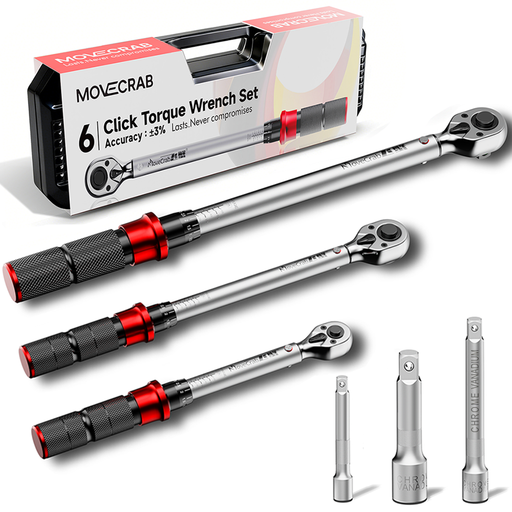
Why This Fits Their Persona: Ideal for DIY enthusiasts who work on both their car (tire changes) and smaller machinery. Covering a range from 5 to 220 Nm, this set handles almost all common tasks without the need to buy multiple individual tools.
It bypasses the "wrong torque range" trap by providing three separate, calibrated wrenches for low, medium, and high torque applications. Each wrench is used within the optimal range of its scale.
Comprehensive coverage (5-220 Nm) with three wrenches. According to the manufacturer, each wrench comes with an individual calibration certificate (±3% accuracy).

Why This Fits Their Persona: Perfect for bicycle enthusiasts and precision mechanics working with sensitive materials like carbon fibre and small bolts. The low torque range of 1-20 Nm is tailored exactly to these requirements.
Prevents inaccuracy at low torque values. The digital display and triple alarm system (vibration, sound, light) make over-tightening bolts virtually impossible—a common problem with imprecise mechanical scales.
High accuracy of ±2% according to the manufacturer. The peak mode saves the maximum value reached, allowing for precise documentation and control.
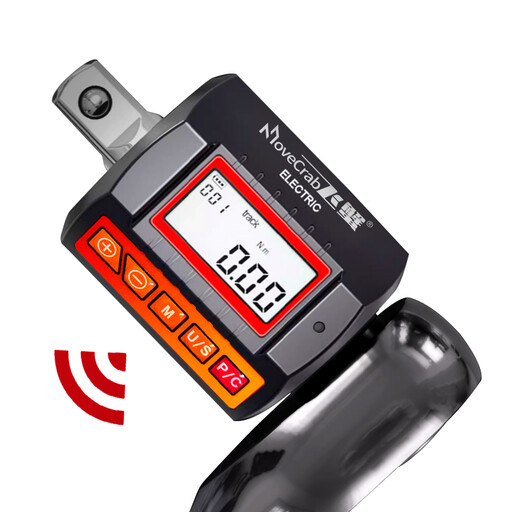
Why This Fits Their Persona: For users who already own a good set of ratchets and want to add precise, digital torque control without buying a whole new tool. Flexible and space-saving.
Solves the problem of inaccurate scales in the smartest way: it makes the scale obsolete. Instead, it provides an exact digital reading and alarms for any standard ratchet.
Transforms existing tools into a precision instrument. Includes adapters for 3/8" and 1/4" drives, making it extremely versatile.
We have compiled a complete, up-to-date list of products that fully meet these strict selection criteria and rigorous safety standards.
For professional use in workshops, annual calibration is often recommended. For occasional private use, it's needed less frequently, as long as the tool is handled with care. Always store a mechanical wrench in its relaxed state (set to the lowest value on the scale) and avoid dropping it to maintain its calibration for as long as possible.
Generally, this is not recommended. Torque wrenches are precision measuring instruments designed for controlled tightening. Loosening stuck bolts can require very high forces that can damage the internal mechanism and throw off the calibration. Use a standard ratchet or an impact wrench for loosening. Some digital models are approved for counter-clockwise use, but you should always check the manufacturer's specifications.
A torque wrench is a measuring tool used to tighten a fastener to a precisely defined force. A cordless impact wrench, on the other hand, is a power tool that generates very high torque through rapid, rotational blows (impacts), primarily to loosen or drive bolts quickly. However, it offers no precise control over the final tightening torque and is therefore not a substitute for a torque wrench on safety-critical fasteners.