
Lieferung heute & morgen

Qualitätsgarantie

Willkommens-Angebote freischalten: KOSTENLOSE Lieferung | Bis zu 80 % RABATT | Kostenlose 30-Tage-JoyPlus-Testphase
App herunterladen
A torque wrench is designed to tighten bolts neither too loosely nor too tightly. However, when working on bicycle parts, brake components, motorbikes or wheel bolts, using the wrong tool can cause more problems than it solves. In many cases, the mistake is made when buying the tool rather than when using it.
A car torque wrench with a range such as 5–220 Nm covers many high-torque fastening jobs. However, it is not automatically suitable for delicate bicycle components. Small bolts on stems, handlebars, seat posts or carbon parts often require significantly lower settings.
The key is to ensure that the required value is not right at the bottom of the tool’s working range. For bicycles, a 2–20 Nm torque wrench or a similar range is usually more suitable than a large automotive model.
The specifications 1/4 inch, 3/8 inch and 1/2 inch describe the square drive for sockets and adapters:
An adapter can extend compatibility, but it does not replace checking that the torque range, socket and tool load rating are all suitable for one another.
A digital torque wrench with an LED display, audible signal or vibration is easy to read and convenient to use. However, these features alone say nothing about the actual measurement accuracy. Buyers should check the stated tolerance, direction of rotation and permitted working range.
With a mechanical torque wrench, a scale shows the selected value, while a click indicates that the target value has been reached. An electronic torque wrench can also display actual values, peak values or stored measurements. This is useful for repeated tasks, but it increases maintenance and battery requirements.
The range must match the specific application. A bicycle torque wrench with a range of 2–20 Nm is designed for different tasks from a model with a range of 5–220 Nm for cars or industrial maintenance. Higher torque settings often require larger drive sizes.
A specification such as ±2 % or ±3 % describes the deviation stated by the supplier under the intended conditions. It is not a substitute for regular inspection or calibration. For safety-critical fastenings, always use the torque values specified in the vehicle, component or assembly instructions.
A mechanical torque wrench works without batteries and is straightforward for occasional repairs. After use, the setting should be returned to the lowest value on many models, reducing long-term stress on the spring.
A digital torque wrench will usually offer:
Several warning signals can be useful when working in dark areas or noisy workshops. Electronic models should be stored somewhere dry and clean, away from heat, moisture and strong magnetic fields.
A torque wrench set may include sockets, bits, extensions and adapters. Before buying, check:
A torque adapter is worth considering if you already have a suitable ratchet. Depending on the version, the adapter solutions in this selection cover ranges of 4,05–135 Nm or 10,2–340 Nm and include reducers for 3/8 inch and 1/4 inch.
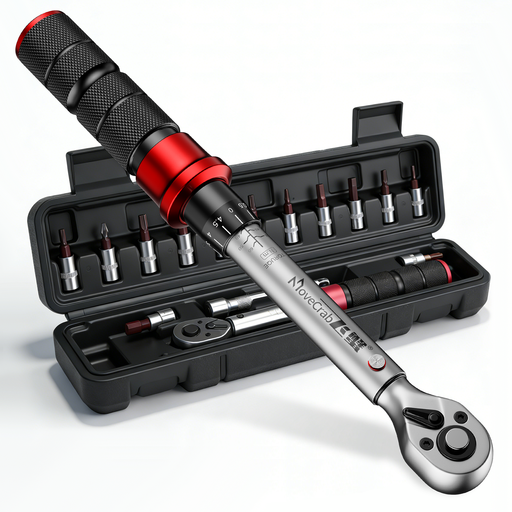
Why this product suits this profile: This mechanical torque wrench is aimed at bicycle owners looking for a manageable set for maintenance and assembly work.
The 2–20 Nm range is designed for many typical bicycle fastenings and is not intended for the range of a large automotive tool.
15-piece set, 1/4-inch drive, 72-tooth ratchet head and a click signal when the selected value is reached.
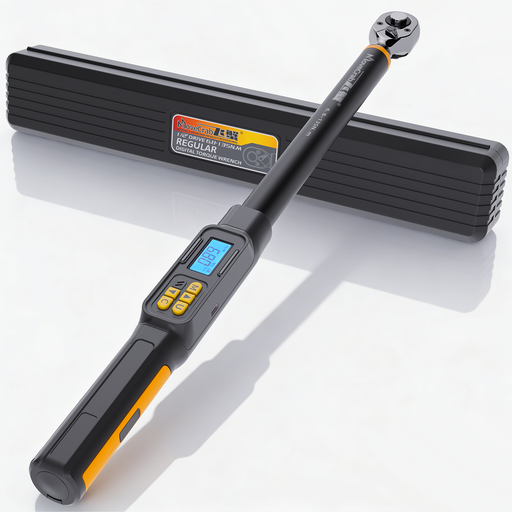
Why this product suits this profile: The digital display and multiple warning signals make repeatable work on motorbikes and cars easier.
The stated working range of 6.8–135 Nm and specified tolerance of ±2 % are easier to verify than purely promotional claims without figures.
LED display, audible signal and vibration; switchable units plus Track, Peak and ten preset modes.
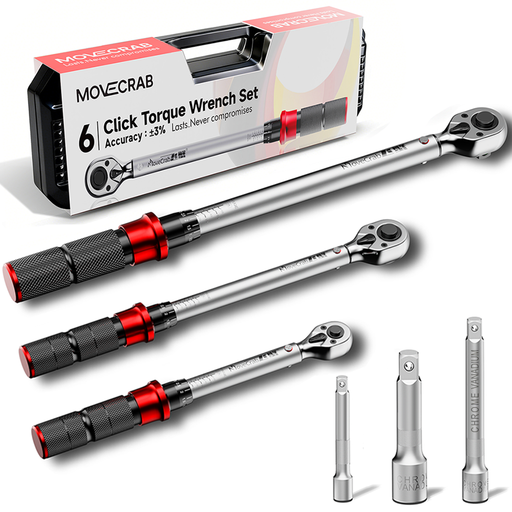
Why this product suits this profile: The wide range is suitable for users who want to cover bicycle, motorbike, car and general repair work with one set.
Three drive sizes or extensions make it easier to adapt the tool to different sockets. For low bicycle torque settings, however, a suitable low-range wrench should still be used.
According to the product description, three wrenches with ranges up to 220 Nm, a Cr-V steel construction and numbered calibration certificates.
We have put together a complete, regularly updated list of products that fully meet these strict selection criteria and the safety regulations applicable in the EU.
Before fitting the tool, take the required torque value from the manufacturer’s or vehicle documentation. The socket and square drive must be fully engaged. Pull evenly on the designated grip area and stop applying force once the click or alarm sounds.
After use, we recommend:
If the tool is used frequently in a workshop, its calibration should be checked in accordance with workplace requirements. A torque wrench is not a permanently maintenance-free measuring instrument.
For many bicycle jobs, a range of around 2–20 Nm is suitable. A 1/4-inch model with hex, Torx and Phillips bits covers typical assembly tasks. The torque specifications provided by the relevant bicycle or component manufacturer remain decisive.
This depends on how it is used, stored and loaded, as well as on its design. Overloading, dropping the tool and leaving it permanently set to high values can affect its measurements. Mechanical models should be stored with the tension released after use; digital models also require sufficient battery power and protection from moisture.
In addition to the purchase price, you may need to pay for batteries and, where applicable, calibration. In return, digital devices offer features such as memory, Peak mode and multiple alarm signals. If you only tighten bicycle bolts occasionally, you may not need these extra functions. For repeated work in a workshop or vehicle fleet, they can make the process easier to monitor.