
Lieferung heute & morgen

Qualitätsgarantie

Willkommens-Angebote freischalten: KOSTENLOSE Lieferung | Bis zu 80 % RABATT | Kostenlose 30-Tage-JoyPlus-Testphase
App herunterladen
Correctly tightening nuts and bolts is critically important for many jobs on vehicles and machinery. A connection that is too loose can come apart under load, while an over-tightened bolt can damage the thread or the component itself. A torque wrench is the specialised tool that ensures every bolted connection is tightened with the exact force specified by the manufacturer.
This article serves as a comprehensive guide. It explains the key criteria to consider when selecting a torque wrench and presents a selection of models for various applications. The goal is to provide you with a solid basis for making an informed decision for your next automotive repair tool or other precision work.
Choosing the right tool depends on your specific use case. You should consider three main criteria in your decision.
The most important parameter is the torque range. The required values vary greatly depending on the application:
Before purchasing, check the manufacturer's specifications for your planned jobs to select a tool with the appropriate adjustment range.
The drive size determines which sockets will fit the torque wrench. The most common sizes are:
Adapters allow the use of different-sized sockets, increasing flexibility.
The technology of the tool is another decisive factor.
Here is a selection of tools that are well-suited for different requirements due to their specific features.
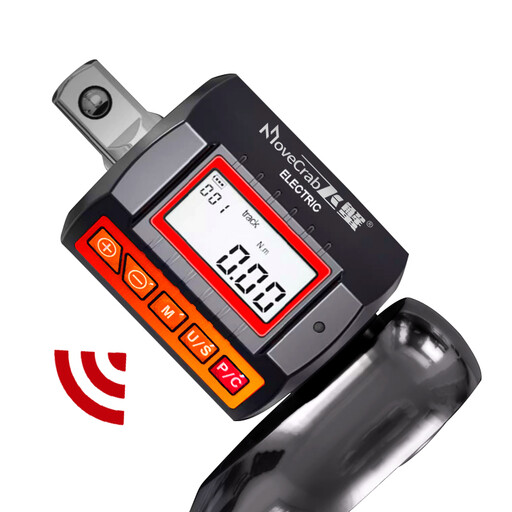
MoveCrab Digital Torque Adapter 6–200 Nm, 1/2" Drive
What sets it apart: This digital adapter covers a wide torque range suitable for most automotive tasks, including wheel changes and engine repairs. It transforms any standard 1/2-inch ratchet into a precise digital measuring tool.
Advantages:
Who it's for: Users who already own ratchets and are looking for a precise, digital upgrade for a wide spectrum of automotive jobs.
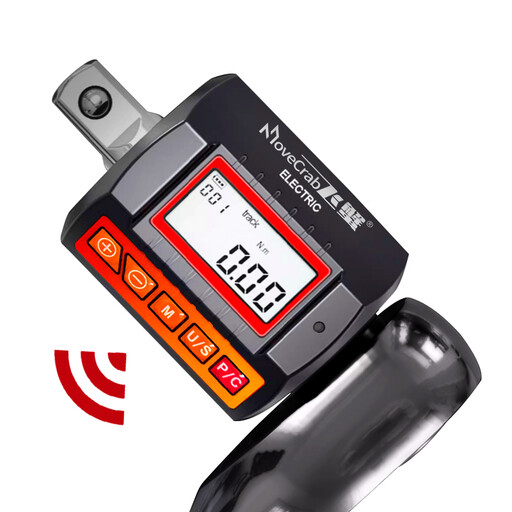
MoveCrab Digital Torque Adapter 10.2–340 Nm, 1/2" Drive
What sets it apart: With an extended range up to 340 Nm, this adapter is designed for demanding tasks on larger vehicles, light commercial vehicles, or in industrial settings. It offers the same digital features as the smaller model.
Advantages:
Who it's for: Professional mechanics and serious DIY enthusiasts who regularly work on chassis, axles, or industrial machinery.
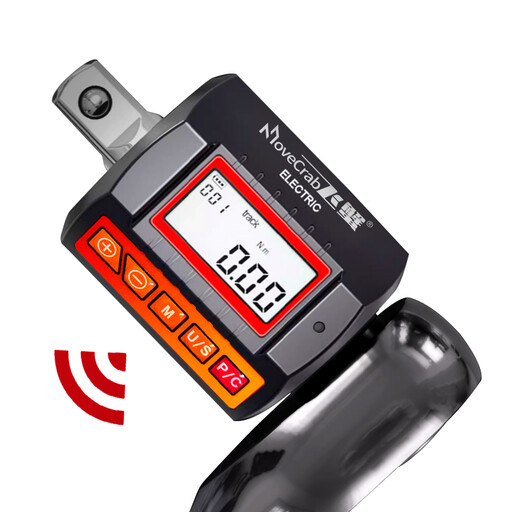
MoveCrab Digital Torque Adapter 4.05–135 Nm, 1/2" Drive
What sets it apart: This model is ideal for precision work, as its measurement range starts at just ~4 Nm. This makes it suitable for sensitive components on bicycles or motorcycles as well as for general automotive work, right up to changing wheels.
Advantages:
Who it's for: Users looking for a single digital tool for work on bicycles, motorcycles, and cars.
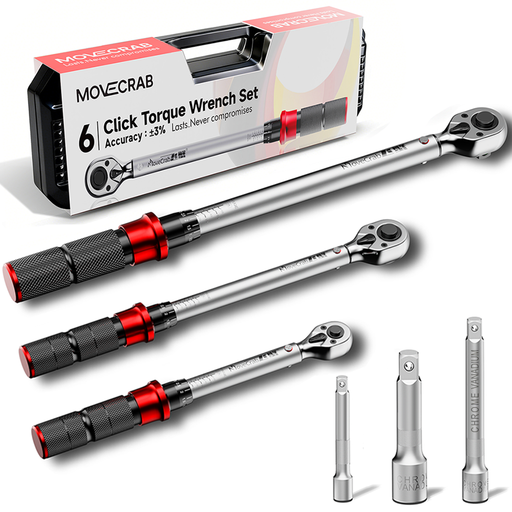
MoveCrab Mechanical Torque Wrench Set, 6-pc, 5–220 Nm
What sets it apart: This torque wrench set offers a complete mechanical solution for a wide variety of tasks. It includes three separate torque wrenches that together cover a range from 5 Nm to 220 Nm.
Advantages:
Who it's for: Beginners and advanced mechanics looking for a reliable, battery-free, all-in-one set for almost any job on a car, motorcycle, or bicycle.
The products presented here cover common use cases. However, if you are looking for tools with different specifications or specialised configurations, you can find an expanded selection in our automotive tools category.
Discover more solutions in our range of Automotive Tool Kits.
The frequency of calibration depends on the frequency of use and the manufacturer's recommendations. As a general guideline for professional use, annual calibration is recommended. For occasional use in a home workshop, longer intervals are often sufficient. Important: If the tool is dropped or subjected to a strong impact, it should be checked and recalibrated before further use to ensure measurement accuracy.
It is generally not recommended to use a torque wrench to loosen tight bolts. The high force required can damage the internal measurement mechanism and compromise its calibration. Use a standard ratchet or an impact wrench for loosening. The primary function of a torque wrench is controlled tightening.
"Nm" stands for Newton-metre. This is the internationally accepted unit for torque. Torque describes the rotational effect of a force on an object. A torque of 1 Nm corresponds to the force acting at a lever arm of one metre with a force of one Newton. On a torque wrench, this value indicates the exact force with which a nut or bolt is being tightened.