
Lieferung heute & morgen

Qualitätsgarantie
App herunterladen
Kategorien
A torque wrench is a fundamental precision tool for maintenance and repair work on vehicles and bicycles. Its primary function is to tighten a threaded fastener with a precisely defined force, known as torque. This prevents material damage from over-tightening—especially on sensitive components like carbon on a bicycle or aluminium on an engine—and ensures safety through correctly tightened critical connections, such as a car's lug nuts. The selection of the right tool depends on technical parameters that must be tailored to the specific application.
The decision for a specific model should be based on an analysis of your unique requirements. The following criteria are crucial for making the right choice.
The required torque range, measured in Newton-metres (Nm), is the most important criterion.
The square drive determines which sockets can be used. The most common sizes are:
The durability and reliability of a torque wrench depend heavily on its material. Tool bodies made of Chrome Vanadium Steel (Cr-V) offer good strength and corrosion resistance. For the ratchet head, which is subjected to high stress, the even more durable Chrome Molybdenum Steel (Cr-Mo) is often used. A precisely machined scale and a secure locking mechanism for the set value are also hallmarks of quality.
Based on technical specifications and intended use, we present a few models here.
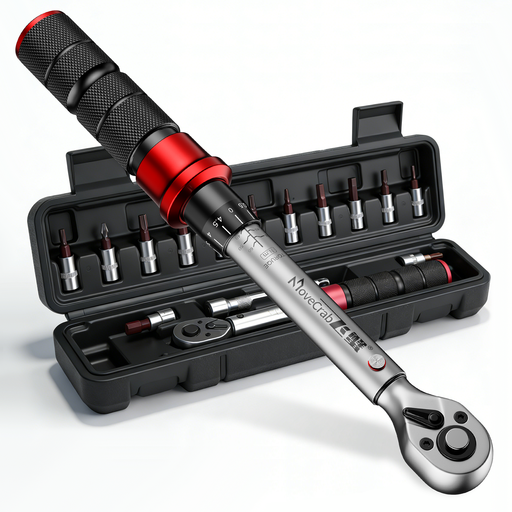
Why we're featuring this product: With its 1/4-inch drive and 2-20 Nm torque range, this mechanical torque wrench set is specifically designed for precision work on bicycles. The extensive accessory kit makes it a complete solution for any bike workshop.
Advantages (Pros):
Who it's for: Bicycle mechanics and ambitious DIY enthusiasts who need a reliable mechanical tool for maintaining road bikes, mountain bikes, and e-bikes, especially when working on carbon and lightweight alloy parts.
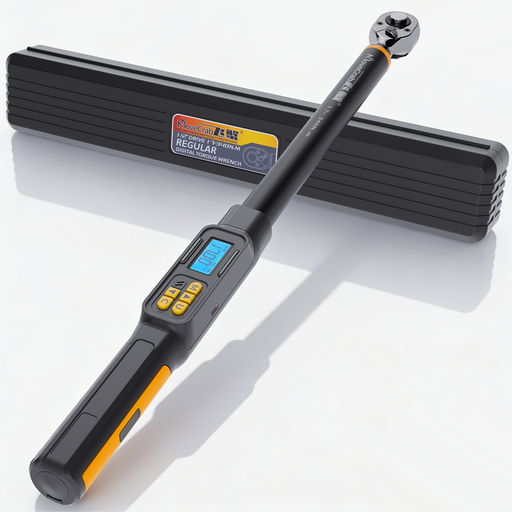
Why we're featuring this product: This model is a digital torque wrench for high-force applications. With its 1/2-inch drive and a very wide torque range of 17 to 340 Nm, it is ideal for the automotive sector.
Advantages (Pros):
Who it's for: Professional auto mechanics and discerning car enthusiasts looking for a precise, feature-rich tool for wheel changes, suspension, and engine work. Ideal for anyone who values digital documentation and high process reliability.
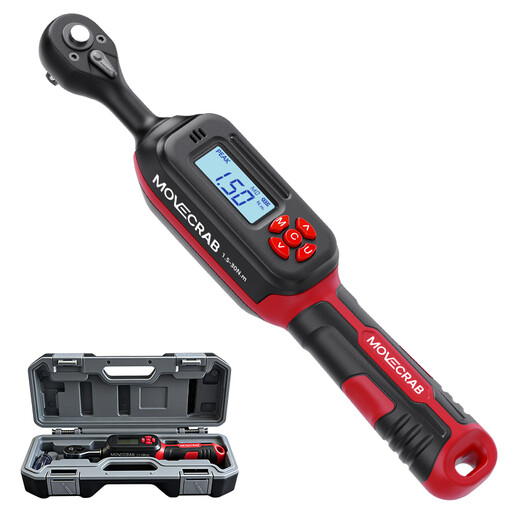
Why we're featuring this product: This digital torque wrench bridges the gap between fine mechanics and standard applications. The 1.5 to 30 Nm range, combined with digital precision, makes it a versatile tool for two-wheelers and delicate mechanical jobs.
Advantages (Pros):
Who it's for: Technicians, bicycle, and motorcycle mechanics who require the accuracy and advanced features of a digital wrench for work in the low to medium torque range.
The featured products cover specific use cases. However, depending on the project and requirements, other or additional equipment may be necessary. For a broader overview of various hand tools, from socket sets to specialty pliers, visit our main category for Tools & Hardware.
1. How often does a torque wrench need to be calibrated? Calibration intervals depend on the frequency of use and the manufacturer's recommendations. As a general guideline, a check is often recommended after 5,000 load cycles or once a year, whichever comes first. For professional use in safety-critical areas, shorter intervals may be required.
2. Can you also use a torque wrench to loosen bolts? A torque wrench is a measuring instrument and should not be used to loosen tight bolts. The high and uncontrolled forces involved can damage the internal mechanism and compromise the tool's accuracy. Use standard ratchets or breaker bars for loosening.
3. What do 1/4 inch or 1/2 inch drive mean? The inch measurement refers to the side length of the square drive onto which the socket is placed. A 1/4-inch drive (6.35 mm) is small and designed for low torque. A 1/2-inch drive (12.7 mm) is significantly larger and more robust to handle the high forces involved in automotive work. The choice of drive size depends on the required torque and the size of the bolts being worked on.
Authored by: Joybuy Product Recommendation Officer