
Lieferung heute & morgen

Qualitätsgarantie

Willkommens-Angebote freischalten: KOSTENLOSE Lieferung | Bis zu 80 % RABATT | Kostenlose 30-Tage-JoyPlus-Testphase
App herunterladen
By Joybuy Product Recommendation Officer, July 18, 2026
When it comes to vehicle maintenance and repair, precision isn't an option—it's a necessity. A wheel nut that is too loose can come off while driving, while a cylinder head bolt that is too tight can strip the threads and cause costly subsequent damage. A reliable torque wrench set is therefore an indispensable part of any well-equipped workshop and garage.
This guide is designed to provide you with objective information and practical criteria. Instead of overwhelming you with marketing promises, we focus on the technical features that are truly relevant for making an informed purchasing decision.
The selection of the right tool depends on your specific requirements. Whether you're working on a bicycle, motorcycle, or car, the following criteria will help you make the right choice.
The most important characteristic of a torque wrench is its measurement accuracy. This is specified as a percentage deviation from the set value (e.g., ±3%). For most automotive applications, an accuracy of ±4% or better is sufficient. Look for an included calibration certificate that documents compliance with industry standards. This certificate confirms that the tool has been factory-tested and adjusted.
The required torque range, measured in Newton-metres (Nm), varies depending on the use case.
A versatile tool set for cars and other vehicles should ideally include multiple wrenches or adapters to cover a wide torque range.
Based on the criteria mentioned above, we have compiled a selection of tools that stand out for their specifications and application ranges.
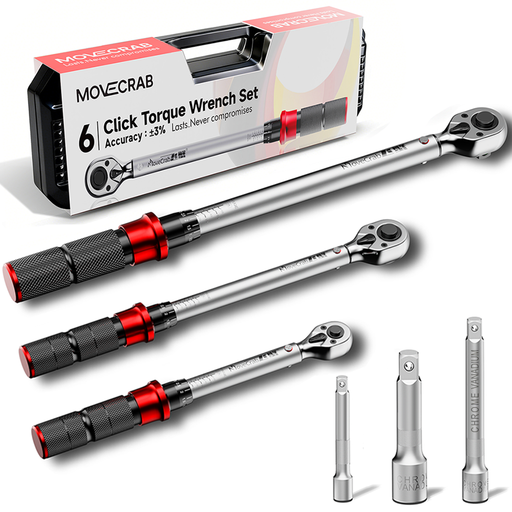
Why it stands out: This set is a comprehensive solution for users who need to cover a wide spectrum of jobs. It includes three separate wrenches for 1/4", 3/8", and 1/2" drive sizes, which together cover a torque range of 5 to 220 Nm. Each wrench comes with an individual calibration certificate, attesting to an accuracy of ±3%. The construction of heat-treated chrome vanadium steel and the non-slip handles are designed for durability and comfortable handling.
Advantages:
Who is it for? For ambitious DIY mechanics and professional workshops looking for a complete and versatile torque wrench set for different vehicle types and who value certified precision.
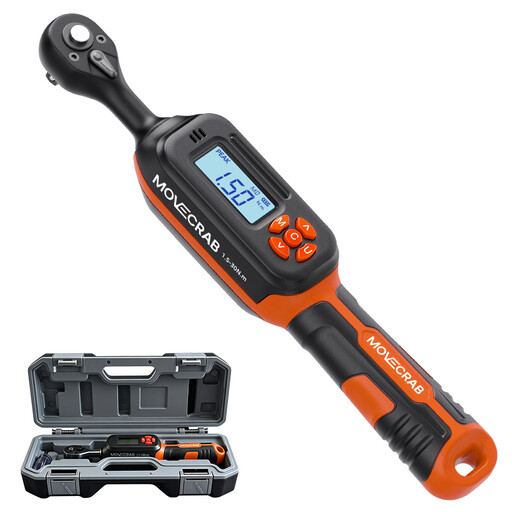
Why it stands out: This digital torque wrench is designed for environments where precision and clear feedback are crucial. It combines a high accuracy of ±2% with a triple alarm system (vibration, sound, LED light). This ensures that reaching the target torque is perceived under all conditions—whether in a noisy workshop or in hard-to-see areas. The ability to switch between four units (Nm, ft.lb, in.lb, kgf.cm) and preset up to 10 values increases efficiency for repetitive tasks.
Advantages:
Who is it for? For professional mechanics and technicians who work on sensitive components like engine or transmission parts and require extremely high accuracy and unmistakable signaling.
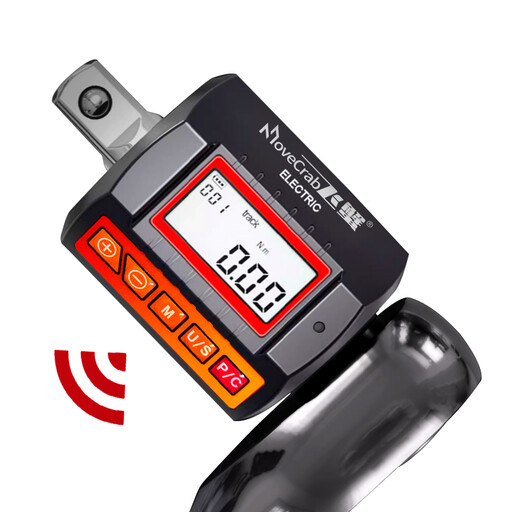
Why it stands out: This torque adapter is a smart and space-saving alternative to a full-fledged digital torque wrench. It simply attaches to an existing 1/2-inch ratchet to provide instant digital precision. With the included adapters for 3/8" and 1/4", it is also extremely versatile. It measures bidirectionally with an accuracy of ±2% (clockwise) and features a sound and light alarm. The ability to store up to 1,000 measured values is a useful feature for quality control and documentation.
Advantages:
Who is it for? For users who already own a high-quality tool set for cars or bicycles and want to cost-effectively add digital torque measurement without purchasing a completely new tool.
The products presented here cover many, but not all, conceivable use cases. If you are looking for specialized torque wrenches with different ranges, drive sizes, or features, you may find the right solution in our broader product category.
Discover More Automotive Torque Wrenches
This is generally not recommended. A torque wrench is a precision measuring instrument. The high and uncontrolled forces generated when loosening seized bolts can damage the internal calibration mechanism and compromise the tool's accuracy. Use a sturdy breaker bar or an impact wrench for loosening.
Manufacturer recommendations vary, but a common guideline for professional use is an annual calibration or after approximately 5,000 load cycles. For infrequent use or after the tool has been dropped, a check should also be considered to ensure measurement accuracy.
The specification in inches (e.g., 1/2" or 3/8") refers to the size of the square drive onto which the sockets are placed. This size typically correlates with the wrench's torque range.