
Lieferung heute & morgen

Qualitätsgarantie

Willkommens-Angebote freischalten: KOSTENLOSE Lieferung | Bis zu 80 % RABATT | Kostenlose 30-Tage-JoyPlus-Testphase
App herunterladen
A torque wrench set is useful whenever bolted connections need to be tightened not just firmly, but to a specified torque. This applies to bicycle components, motorcycle parts, wheel bolts and work on machinery, among other things. The choice may seem straightforward at first glance, but certain details in product descriptions can lead to the wrong purchase.
A set covering 5 to 220 N·m sounds versatile. However, this range is not automatically suitable for small bicycle bolts. What matters is whether the desired value falls within the appropriate section of the scale. For delicate components, for example, 2 to 20 N·m or 2 to 26 N·m is more practical than a tool whose main focus is on significantly higher torque values.
A 1/4-inch torque wrench is often suitable for smaller sockets and bits. A 1/2-inch torque wrench, on the other hand, is designed for larger sockets and higher torque values. Adapters can change the connection size, but they cannot override the mechanical limits of the tool or the socket being used.
A digital torque wrench or electronic torque adapter displays values conveniently and can provide both audible and visual signals. Even so, the stated accuracy should be checked. The measuring direction, measuring range, power supply and whether readings can be stored are equally important. With a mechanical model, scale readability, the release mechanism and correct storage are key.
Choose a range so that the required target value does not sit right at the extreme end of the scale wherever possible. The manufacturer’s accuracy specification should clearly distinguish between clockwise rotation and anticlockwise rotation. Figures such as ±2% or ±3% should only be assessed within the specified measuring range and under the stated conditions.
DIN EN ISO 6789 sets out requirements for hand-operated torque tools, including testing and calibration considerations. A certificate or calibration statement in the product description can be helpful. However, this does not replace regular checks when the tool is used intensively in a workshop.
For a bicycle torque wrench, a 1/4-inch drive, hex bits and Torx bits are often practical. With a motorcycle torque wrench, additional sockets and a wider range may be useful. A car torque wrench will often require 1/2-inch sockets and higher torque values.
Look out for:
After use, a mechanical torque wrench should be reset to the lowest specified scale value, if recommended by the manufacturer. This relieves tension on the release mechanism. A precise torque wrench also needs to be stored in a clean, dry place and must not be used as a general lever or to loosen seized bolts.
With digital devices, battery checks, display readability and automatic shut-off are all important in practical use. An electronic torque adapter can complement existing ratchets, but should only be used with compatible drives and sockets.
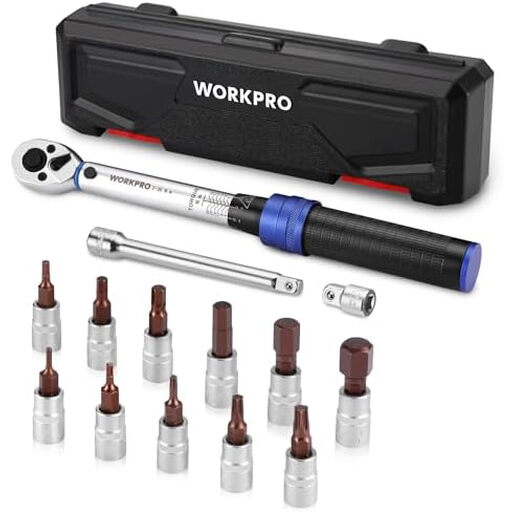
Why this product suits this profile: The range from 2 to 26 N·m covers typical bicycle jobs and minor repairs. The set includes several hex and screwdriver bits, as well as an extension.
The clearly defined low-torque range helps prevent you from choosing a large universal tool for delicate bicycle bolts.
1/4-inch drive, 72-tooth ratchet, ±3% according to the product specification, plus 14 accessories.
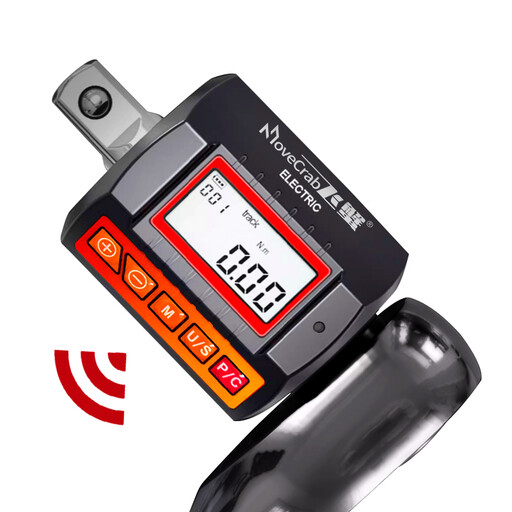
Why this product suits this profile: This adapter is ideal for users who want to use their existing ratchets and read torque measurements digitally. Adapters for 3/8 and 1/4 inch are included.
The specified measuring direction and broad range make the tool’s technical limits more transparent than a vague universal specification.
±2% clockwise and ±2.5% anticlockwise according to the product specification, multiple units, alarm and storage for up to 1,000 readings.
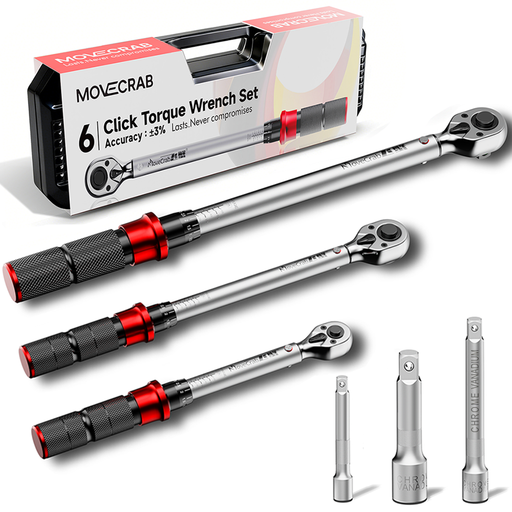
Why this product suits this profile: Three torque wrenches cover different drive sizes and working ranges. This makes the set interesting for car, motorcycle and industrial maintenance work.
Dividing the set into three tools reduces the compromise of relying on a single wrench with a limited working range.
Range from 5 to 220 N·m, 1/4-, 3/8- and 1/2-inch extensions, plus ±3% according to the product specification.
We have put together a complete, regularly updated list of products that fully meet these strict selection criteria and the safety regulations applicable in the EU.
For many bicycle jobs, the relevant range is at the lower end of the torque scale. A bicycle torque wrench covering around 2 to 20 N·m or 2 to 26 N·m, with a 1/4-inch drive, is often a good choice. Hex and Torx bits, together with an easy-to-read scale, are important.
Its service life depends on how it is used, stored and maintained. A mechanical torque wrench should not be used as a lever and should be stored without tension, in accordance with the manufacturer’s instructions. If it is used regularly in a workshop, recurring calibration checks are advisable.
An electronic torque adapter can be worthwhile if you have several ratchets or need to document torque readings. Features such as peak-value storage, multiple units, and audible and visual warnings make checking easier. Before buying, however, make sure the connection size, measuring range and battery supply are suitable for your intended application.