Planning a snack on the go
If you’re taking a bag with you, a smaller pack can limit how much you have available. It’s still up to you to decide how much to eat.


If you eat tortilla chips on the go and want to limit how much you have available beforehand, a small bag is usually more practical than a 300 g bag. That doesn’t mean it’s low in energy: compare the nutrition information per 100 g and decide on your own portion. A larger bag is better suited to filling a portion at home or sharing the contents.
If you’re taking a bag with you, a smaller pack can limit how much you have available. It’s still up to you to decide how much to eat.
A 300 g bag may suit you if you portion some out before eating or share the pack. If the open bag is left within easy reach, that limit is gone.
If you’re keeping an eye on energy, salt or particular ingredients, check the specific variety. If you have an allergy or intolerance, the ingredients and allergen information on the pack you buy are what matter.
First, decide whether you’ll eat the bag on the go or portion it out at home. Then compare the information for the specific variety: a smaller pack doesn’t change the nutrition information per 100 g.
A good choice if: you want to limit how much you have available for a snack on the go; for example, REWE sells Chio Tortillas in a 110 g pack.
Keep in mind: even a small bag may contain more than you want to eat, and its energy density remains the same.
A good choice if: you want to portion some out at home or share the tortilla chips; EDEKA, REWE and ALDI SÜD sell corresponding salted own-label products.
Keep in mind: without portioning them out first, much more of the product is readily available.
| Criteria | What to check when buying | Who it matters to |
|---|---|---|
| Pack size | Net weight and how much you actually want to eat; if you buy a 300 g pack, consider portioning some out first. | When I’m out and about, I don’t want to take more chips than I’ve planned for my snack. Around 42% of consumers put limiting the amount first. |
| Energy content | kcal per 100 g and the energy content of your planned portion; don’t assume a smaller bag has a lower value per 100 g. | When I plan my snack, I want to know how much energy it contains. For around 33% of consumers, this comparison comes first. |
| Salt and ingredients | Salt per 100 g, as well as the ingredients list and allergen information for the specific pack. | If I have an allergy or am watching my salt intake, the variety I choose needs to suit my needs. This is the main concern for around 25% of consumers. |
The pack size doesn’t tell you how much you’ll eat. ALDI SÜD lists 486 kcal per 100 g for Chio Wild Paprika in the 110 g pack.
Decide how much you want to eat before opening the bag, rather than automatically treating the whole pack as one portion.
Vegetable or pulse crisps aren’t automatically lower in energy. The North Rhine-Westphalia Consumer Advice Centre points out that this is true of only a few of the alternative snacks it assessed.
Compare kcal, fat and salt per 100 g for the specific varieties.
With a large bag, the pack itself doesn’t limit how much you plan to eat. EDEKA, REWE and ALDI SÜD list between 472 and 481 kcal per 100 g for the salted 300 g varieties considered here.
Put the amount you plan to eat in a bowl and put the rest of the bag away.
The recipe and labelling need to match the variety you actually buy. EDEKA points out that information online may differ from what’s on the packaging.
Especially if you have allergies, read the ingredients and allergen information on the specific pack.
The examples below show pack sizes and nutrition information for the specific varieties listed. Figures for one variety don’t necessarily apply to every product from the same brand.
Tortilla chips in a small pack, for comparison with 300 g bags.
Salted tortilla chips in a 300 g bag for households looking to portion them out or share.
Salted tortilla chips in a 300 g pack.
Salted tortilla chips in a 300 g bag for portioning out or sharing.
These tortilla chips may suit a snack on the go that you’ve planned in advance. Two product names specify a pack size of 110 or 100 g; for each variety, check the pack size, nutrition information, ingredients and allergens before buying.
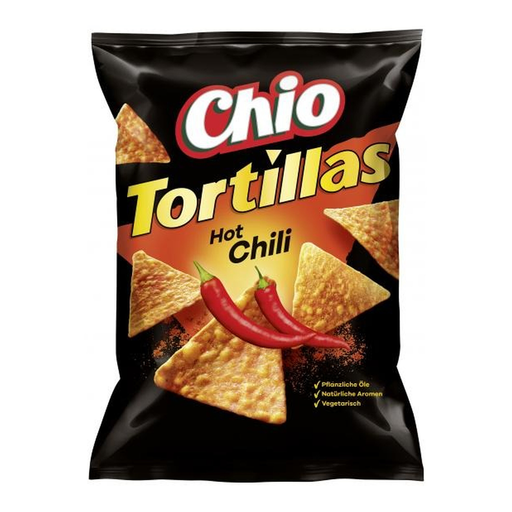 No image available
The 110 g pack can limit how much you have available for a snack on the go, but it doesn’t set a portion size.
Compare the nutrition information per 100 g, as well as the ingredients and allergens on the specific pack.
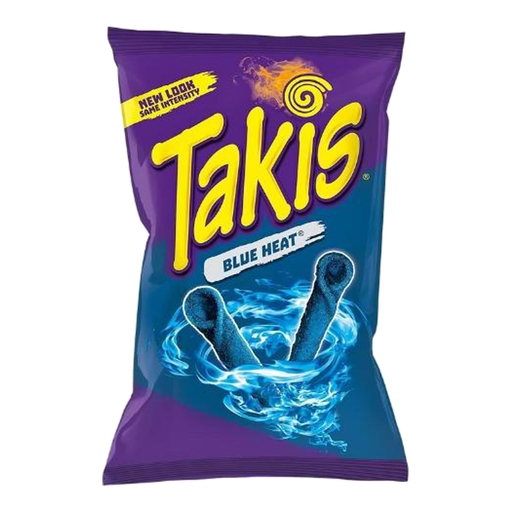 No image available
The 100 g pack gives you a smaller amount to have available for a planned snack on the go, but it isn’t automatically the right portion for one person.
Before buying, check the nutrition information, ingredients and allergen information on the specific pack.
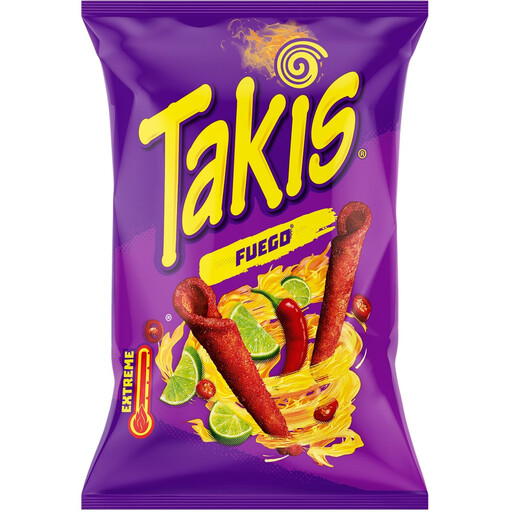 No image available
If you choose this variety for a planned snack, check that the pack size matches the amount you intend to eat.
To compare it with other varieties, check the nutrition information per 100 g, as well as the ingredients and allergen information on the pack.
No. A small bag only limits how much is available, not the energy content per 100 g. For the varieties considered here, EDEKA, REWE and ALDI SÜD list between 472 and 486 kcal per 100 g; how much you actually eat matters too.
Based on the information from ALDI SÜD, 110 g of Chio Wild Paprika at 486 kcal per 100 g contains around 535 kcal. Based on their respective figures of 472 to 481 kcal per 100 g, the salted 300 g varieties from EDEKA, REWE and ALDI SÜD contain a calculated 1,416 to 1,443 kcal per bag. These pack totals aren’t recommended portion sizes.
Read the ingredients list and allergen information on the pack for the variety you’ve chosen. For example, EDEKA notes that its salted tortilla chips considered here may contain traces of soya; this information shouldn’t be assumed to apply to other varieties.
Follow the storage instructions on the pack and seal the opened bag securely. For the ja! product considered here, REWE recommends storing it in a dry place away from heat.