Solo snackers who plan their portions
If an open multipack tempts you to keep eating, a smaller pack may better suit how much you plan to have. You’ll still need to portion out the amount you want.


A 300 g bag of tortilla chips is better suited to several planned snacking occasions or sharing between several people. If you’re snacking on your own and want to limit how much you buy, you could choose a smaller pack. When planning your portion, the amount you intend to eat and the nutrition information per 100 g matter more than the pack size alone. You’ll only know whether the larger bag is better value by checking the price per kilogram at your chosen retailer.
If an open multipack tempts you to keep eating, a smaller pack may better suit how much you plan to have. You’ll still need to portion out the amount you want.
If you’re shopping for several people or occasions, you can compare 300 g packs by price per kilogram. It’s also worth considering whether you’ll actually use the larger amount for the occasions you have planned.
If you have allergies or intolerances, check the label on the exact variety you’re buying. You can’t assess a salted, cheese or seasoned variety by its name alone.
First decide how much you’d like to snack on, then compare nutrition information and ingredients per 100 g. Finally, check the price per kilogram at your chosen retailer.
| Criteria | What to check | Who it matters to |
|---|---|---|
| Portion size and energy | Compare kcal per 100 g and work out the energy for the amount you actually want to eat. The portion shown on the pack may not match yours. | When I’m snacking on my own, I want to decide how much to put in my bowl before opening the pack. For around 46% of consumers, portion control is the main consideration when buying. |
| Price per kilogram and pack size | Compare the current price per kilogram of similar varieties and consider whether you’ll use the larger amount. | When planning several snacking occasions, I want to know whether buying the 300 g bag really makes sense. Getting value for money is the top priority for around 27% of consumers. |
| Ingredients and allergens | Read the ingredients list and allergen information on the pack you’re buying; cheese and salted varieties may have different ingredients. | If I need to avoid certain ingredients, I need a variety whose current labelling meets my requirements. Around 18% of consumers make this their main consideration. |
| Availability and stocking up | Check what’s available at your chosen retailer and whether the pack size and best-before date suit your planned occasions. | I want to buy a suitable pack without having to search elsewhere, and not stock up on more than I need. For around 9% of consumers, this is the most important consideration when buying. |
A 300 g bag contains more chips than a 110 g one, but that doesn’t mean it has a lower price per kilogram. Prices may vary depending on the location or retailer you choose.
Compare the current price per kilogram and only buy the larger amount if it suits the snacking occasions you have planned.
In 2017, German consumer advice centres reported that people surveyed often ate more crisps than the portion stated on the label. So the portion shown won’t necessarily match the amount you eat.
Decide how many grams you’ll have before eating, then use the nutrition information per 100 g to calculate the figures for your portion.
According to EDEKA, GUT&GÜNSTIG salted tortilla chips contain 472 kcal per 100 g; REWE lists 481 kcal per 100 g for ja! salted tortilla chips. The flavour alone doesn’t tell you what’s in the nutrition information.
Compare varieties on the same per-100-g basis, then take your planned portion into account.
Recipes can change, and online information may differ from what’s on the pack you buy.
If you have allergies or intolerances, read the ingredients list and allergen information on the pack itself before eating.
REWE’s own-brand range includes 300 g packs of salted tortilla chips.
EDEKA’s own-brand range includes 300 g packs of salted tortilla chips.
ALDI SÜD’s own-brand range includes a 300 g paprika variety as an alternative to the salted options mentioned above.
Chio Tortillas Nacho Cheese is a 110 g cheese variety with a 30 g portion listed by the manufacturer.
This smaller pack of tortilla chips could be a good choice if you don’t want to buy a 300 g multipack. The 110 g is the pack size, not a suggested single snack portion.
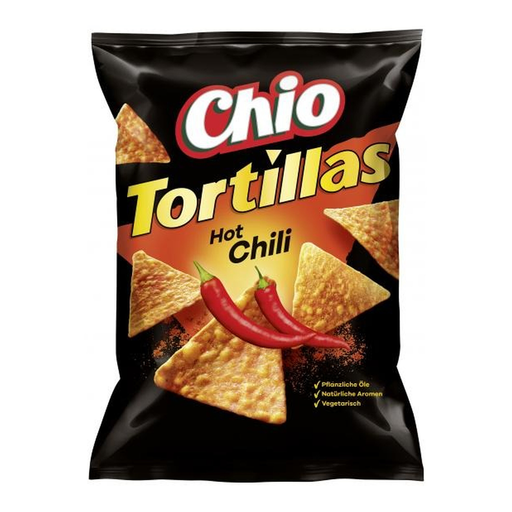 No image available
The 110 g pack is a smaller amount to buy if you don’t want a large multipack. If you only want to eat some of it, portion out the amount you want beforehand.
If you only want a smaller amount, the whole 300 g bag isn’t your portion. It may suit several planned occasions or sharing between several people; portion out the amount you want before eating.
Start by comparing tortilla chips per 100 g so you’re looking at different packs on the same basis. According to the European Commission, the EU nutrition declaration includes energy, fat, sugars, protein and salt, among other details. Any additional portion information may be based on a different number of grams from the portion you eat.
Not necessarily. According to the manufacturer, Chio Tortillas Nacho Cheese contains milk ingredients and may contain wheat, while EDEKA lists possible traces of soya for the GUT&GÜNSTIG salted variety mentioned above. Check the label on the specific pack you buy for every variety.
It can help you make an initial choice, but if you have allergies or intolerances, check the information on the pack you buy. EDEKA notes that online information may differ from the packaging, while Chio advises checking the ingredients list on the pack if a recipe changes.