Bathroom users short on floor space
If a permanently positioned airer isn’t an option, you’ll need to consider the available wall space, suitable mounting options and a safe location for electrical use.


If floor space is always at a premium, a wall-mounted model is an obvious choice, provided the mounting location and connection are suitable. If you can’t drill, a freestanding model may work, but it will need floor space while in use. Extra heat uses electricity and is no substitute for ventilation or checking that the chosen position is suitable for bathroom use. If you can let your towels dry at their own pace, the German Environment Agency recommends an airer or washing line as an energy-efficient option.
If a permanently positioned airer isn’t an option, you’ll need to consider the available wall space, suitable mounting options and a safe location for electrical use.
If you want to hang several large or thick towels, consider the usable rail length and spacing – not just the stated number of rails.
You can put a freestanding model away after use. While it’s in use, though, its dimensions and stability matter, as does having a suitable spot near a power socket.
First, check whether wall mounting is possible or whether the appliance will need to stand on the floor while your towels dry. Then compare the hanging space, heating requirements and bathroom conditions.
| What matters | What to check before buying | Who will find this important? |
|---|---|---|
| Floor space | Check whether it’s wall-mounted or freestanding, and measure it in use. For freestanding models, also allow for the feet, cable and space to hang towels. | If I have very little floor space, I don’t want the appliance to block an already narrow walkway while it’s in use. That’s why around 33% of consumers put floor space first. |
| Space for towels | Compare the usable rail length and spacing with your towels, and check which areas are actually heated. | If I have several or large towels, I want enough room to hang them properly, with space between them. Around 27% of consumers focus above all on the usable space for their towels. |
| Heating and electricity use | Compare the rated power and planned running time of the specific model. If included, a timer can limit how long it heats for. | If I don’t need extra heat regularly, I want to limit the electricity it uses or avoid it altogether. Around 20% of consumers prioritise electricity use. |
| Moisture and safe use | Check the installation instructions, connection type and intended location together, and ventilate the room to clear moisture while towels dry. | In the bathroom, I want to clear moisture and use electrical appliances only in a suitable location. Around 20% of consumers put these points first. |
A foldable airer saves space when stored, but still needs room on the floor while it’s in use.
Compare its dimensions when set up with the space you actually have. If floor space is always at a premium, consider a wall-mounted option.
A total measurement may be spread across several rails, and hooks or shelves aren’t necessarily heated drying areas.
Compare the length and spacing of each rail with your towels, and check which areas are heated.
When damp towels are dried indoors, the moisture initially stays in the room. The German Environment Agency recommends ventilating regularly.
Plan for air to circulate, and keep an eye on the room’s conditions if bathroom humidity is a concern.
In bathrooms, VDE guidance defines zones with different requirements for appliances and connections.
Before buying, check the instructions for the specific model, its intended location and the existing electrical installation.
Heated towel warmers in freestanding or combined freestanding and wall-mounted designs, as well as foldable models.
Electric wall-mounted towel radiators, including swivel and compact designs.
Electric towel warmers designed for freestanding or wall-mounted use, depending on the model.
Unheated wall-mounted dryers for keeping floor space clear when you don’t need extra heat.
The Joybuy models below are wall-mounted towel radiators. They include electric designs and one model that connects to an existing hot-water system.
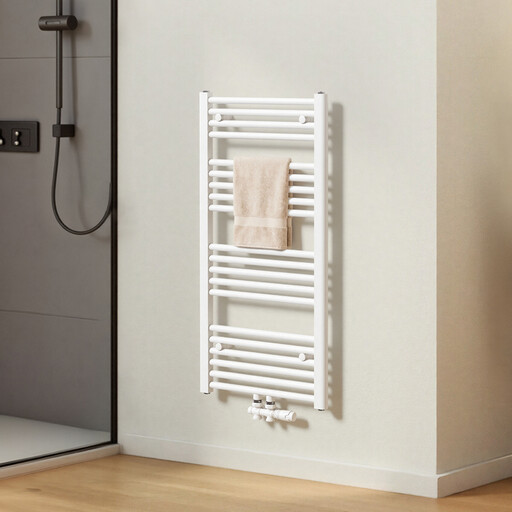 No image available
A wall-mounted option that won’t permanently take up floor space. It requires a compatible existing hot-water system.
1000 × 500 mm; 427 W; central connection.
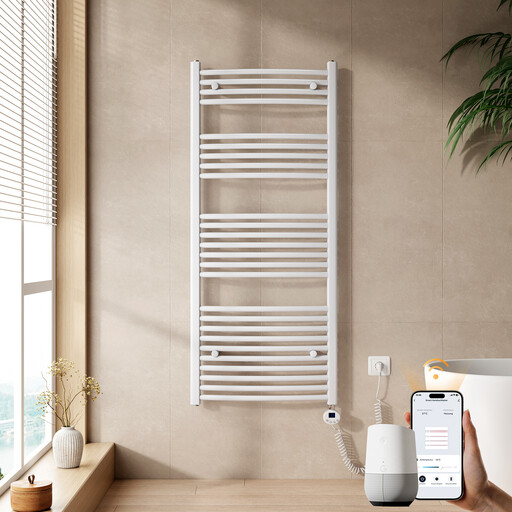 No image available
For anyone looking for an electric wall-mounted option with a thermostat and timer. Check the specific bathroom mounting location first.
1400 × 600 mm; 600 W; with thermostat and timer.
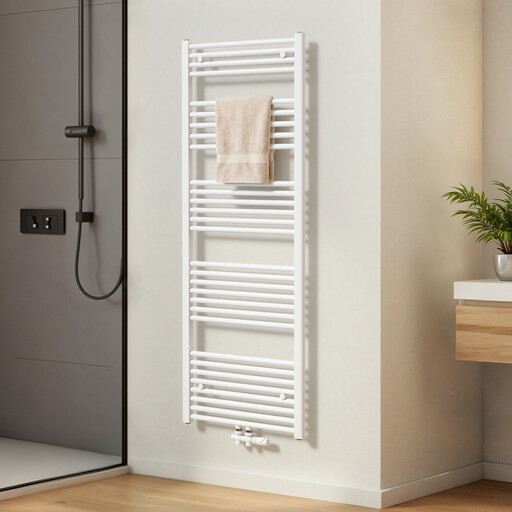 No image available
A wall-mounted option, provided its dimensions and connection are compatible with your existing installation.
1600 × 600 mm; 761 W; G1/2 connection.
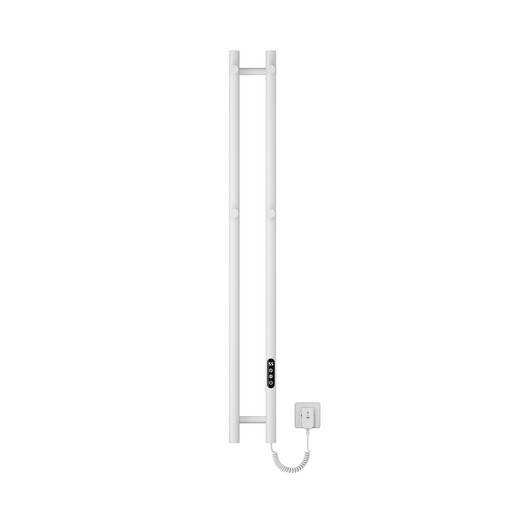 No image available
For hanging several towels on a wall-mounted model. You’ll need to check separately whether the specific bathroom location is suitable.
145 W; four hooks; timer; IP45. The IP rating alone doesn’t confirm that it’s suitable for a particular bathroom mounting location.
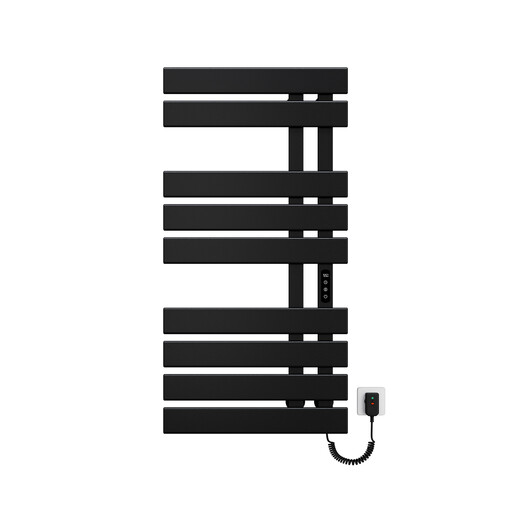 No image available
An electric wall-mounted design with a timer and thermostat. Check that the specified orientation suits your bathroom.
100 × 50 cm; WiFi app control; timer and thermostat.
No. VDE guidance sets out bathroom zones with different requirements for appliances and connections. For the specific model, check the instructions, connection type and intended position. An IP rating alone doesn’t give general permission to install it anywhere.
Yes. When damp towels are dried indoors, the moisture they release needs to be cleared from the room. The German Environment Agency recommends regular ventilation when drying damp laundry.
Follow the instructions for the exact model. The safety instructions for the ProfiCare PC-EHW 3115 include positioning the controls where they can’t be reached by anyone in the shower or bath, and switching off and unplugging the appliance before cleaning. These instructions apply to the named model, not necessarily to all appliances.
For consumer purchases in Germany, statutory consumer rights claims are made against the seller. The consumer advice centre distinguishes these rights from a voluntary guarantee. If a product is faulty, the first step may be to request a repair or replacement. There isn’t a general right to claim repairs from the manufacturer for every towel radiator.