
Lieferung heute & morgen

Qualitätsgarantie

Willkommens-Angebote freischalten: KOSTENLOSE Lieferung | Bis zu 80 % RABATT | Kostenlose 30-Tage-JoyPlus-Testphase
App herunterladen
A disorganised bathroom where damp towels have no place to dry is a daily nuisance. A freestanding towel rack promises a simple and flexible solution—no drilling required. However, the market is flooded with models that overpromise and underdeliver. Many buyers soon discover that their new bathroom accessory wobbles, rusts, or dries towels even less effectively than before.
This guide reveals the three most common design flaws that can render a model useless and explains which technical parameters you should check before buying to make a durable and functional choice.
Choosing a towel rack seems straightforward, but certain weaknesses often only become apparent with daily use. Pay attention to these three critical points to avoid a bad purchase.
To avoid the problems mentioned above, you should base your selection on objective features. The following three parameters are crucial for the functionality and longevity of your towel rack.
The material determines not only the look but, more importantly, its resistance to moisture and corrosion.
The type of rack should suit your available space and needs. Each type has specific stability requirements.
For effective drying, the spacing between the individual rails is critical. A minimum distance of 5 to 10 centimetres between the rails should be maintained. Equally important is the distance of the rails from the wall. Models where towels rest directly against the wall are unsuitable. Look for a design that inherently provides sufficient clearance.
Based on the criteria above, we have identified several models suitable for different user profiles and requirements.
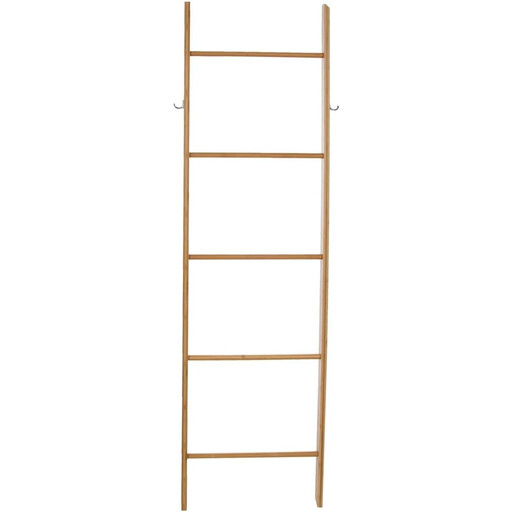
Why This Fits Their Persona: Ideal for rental properties, as no assembly or drilling is required. The slim design makes optimal use of vertical space and fits even in smaller bathrooms. Its lightweight construction allows for easy repositioning.
The bamboo material is naturally moisture-resistant, avoiding the pitfall of rusting or swelling materials. The ladder's rungs ensure ample space between towels for optimal air circulation.
Space-saving vertical design; uses a sustainable, moisture-resistant material (FSC-certified).
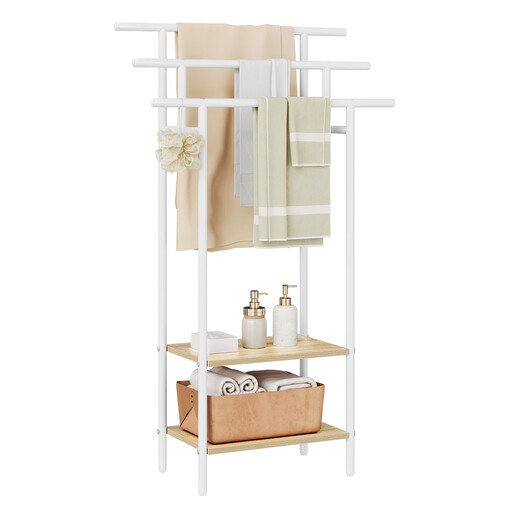
Why This Fits Their Persona: This model combines generous hanging space (3 bars) with practical shelves for bathroom essentials or folded laundry. The modern look of white metal and engineered wood fits well in family bathrooms that demand both functionality and design.
The sturdy metal frame, combined with a self-weight of 8.4 kg, ensures high stability and counteracts the risk of tipping over. The staggered arrangement of the three bars allows for good ventilation for multiple towels at once.
Multifunctional design with hanging bars and shelves; stable, floor-standing construction with a high self-weight.
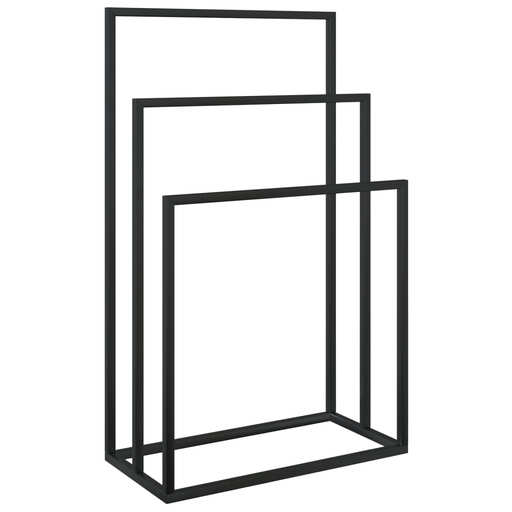
Why This Fits Their Persona: The iron construction with a matte black finish offers a clean, industrial aesthetic that complements modern and minimalist interior styles. Its straight-lined, rectangular shape is functional without being intrusive.
The robust iron construction ensures durability and stability, countering the risk of a wobbly stand. The matte coating is designed for bathroom use and protects the material from corrosion.
Sturdy iron construction with a modern matte black finish; the three-tier design provides organised storage on a compact footprint.
We have compiled a complete, up-to-date list of products that fully meet these strict selection criteria and UK safety regulations.
1. How much space should be between a towel rack and the wall? To ensure optimal air circulation and prevent mildew on towels or mould on the wall, a minimum distance of 10 to 15 centimetres between the towel rack and the wall is recommended. This allows air to circulate freely around the towels, speeding up the drying process.
2. Can you place a metal towel rack near the shower? It is advisable to be cautious. Even models with a rust-resistant powder coating or made of stainless steel should not be permanently exposed to direct water spray. Ideally, place the rack outside the immediate splash zone to maximise the lifespan of the surface and material.
3. Is a towel ladder stable enough for heavy bath towels? The stability of a towel ladder depends on its leaning angle and material. Most models are designed to support the weight of several damp bath towels. For a secure stand, the ladder should be leaned against a sturdy wall at the angle recommended by the manufacturer. Ensure that the feet are on a level, non-slip surface. Some models feature additional rubber feet for increased stability.