
Lieferung heute & morgen

Qualitätsgarantie

Willkommens-Angebote freischalten: KOSTENLOSE Lieferung | Bis zu 80 % RABATT | Kostenlose 30-Tage-JoyPlus-Testphase
App herunterladen
An uncluttered bathroom significantly contributes to a sense of well-being. But the question often arises: where to put used towels? A suitable towel rack not only creates order but also allows textiles to dry quickly, all while serving as a stylish design element. However, the selection of models is vast, ranging from space-saving wall solutions to flexible freestanding models.
This guide introduces different types of towel racks and explains their specific features. Our goal is to provide you with an informed basis for your decision, helping you find a solution that is both functional and aesthetically perfect for your bathroom.
Before you decide on a model, a few practical considerations should be top of mind. The following points will help you define your requirements and narrow down your choices.
The most fundamental decision concerns the method of installation. Both options offer specific advantages.
The material determines not only the longevity but also the visual impact in the room.
Consider how many towels you want to hang at the same time. A simple bath towel holder for a single shower towel has different requirements than a solution for the whole family. Models with an additional towel shelf offer storage space for folded, clean towels or other bathroom essentials, combining multiple functions in one piece of furniture.
Based on different requirements for design, installation, and functionality, we have compiled a selection of models that cater to various needs.
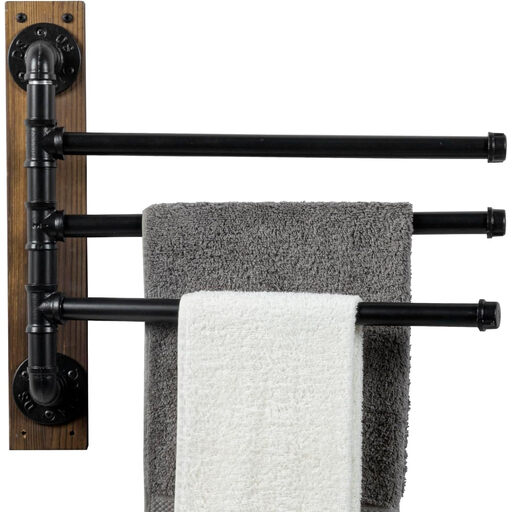
Why This Model Stands Out This wall-mounted rack combines a rustic wood base with three swiveling metal arms in an industrial pipe design. The arms can rotate 180 degrees, allowing for good air circulation to dry the towels.
Pros
Who It's For This model is suitable for those looking for a space-saving wall solution who favor an industrial or rustic interior style. It is ideal for smaller bathrooms, kitchens, or guest toilets.
Product Details
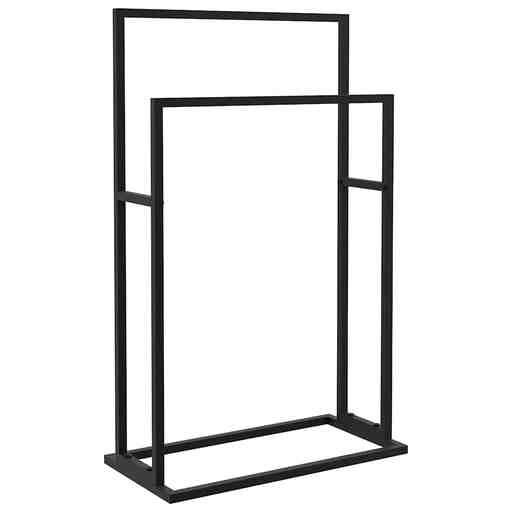
Why This Model Stands Out This towel stand offers a straightforward and flexible storage solution without drilling. With its minimalist design and matte black finish, it blends seamlessly into modern bathrooms.
Pros
Who It's For Ideal for renters or homeowners looking for a flexible, no-drill solution. The modern, simple look appeals to lovers of minimalist design who have sufficient floor space.
Product Details

Why This Model Stands Out This bamboo towel ladder is more than just a holder—it's a multifunctional piece of bathroom furniture. It combines three hanging bars with a practical towel shelf in the lower section.
Pros
Who It's For This model is the right choice for anyone who needs additional storage space and appreciates a natural, spa-like atmosphere. It works well in larger bathrooms where it can act as both a decorative and functional element.
Product Details
The products featured already cover a wide spectrum. However, if you are looking for more specific designs or sizes, you can find other alternatives in our assortment.
Explore more models in the Towel Rack with Rail category here.
1. How high should a towel rack be mounted? A general recommendation for the mounting height of a towel bar is about 120 to 140 cm above the floor. This ensures that even long bath towels do not touch the floor and are easily accessible. However, you should adjust the height to your own body height and the specific conditions in your bathroom.
2. What is the difference between a towel rack and a towel stand? A towel rack is an umbrella term that includes all devices for hanging towels. More specifically, it often refers to wall-mounted models like a towel bar. A towel stand, on the other hand, is always a freestanding piece of furniture that is placed on the floor without drilling.
3. How do you install a towel rack without drilling? There are several options for a no-drill towel rack. The simplest is to choose a freestanding model like a towel stand or a towel ladder. For wall mounting, there are also adhesive solutions with special high-performance adhesives suitable for damp rooms. When using these, pay close attention to the manufacturer's specifications regarding maximum load capacity and suitable surfaces.