A breeze by your armchair
If you mainly want airflow where you’re sitting, check the outlet height and direction, and whether you can switch off oscillation.


For airflow directly where you’re sitting, choose a tower fan that can direct air at seat height and lets you switch off oscillation. A wide oscillation range isn’t necessarily helpful for this. If you want to reach several seats, the oscillation range and adjustable speed settings matter more, while you’ll also need to consider noise and unwanted draughts for anyone else sharing the room. The German Environment Agency points out that fans cool the skin by moving air, but they don’t lower the room temperature.
If you mainly want airflow where you’re sitting, check the outlet height and direction, and whether you can switch off oscillation.
If you want to avoid disturbing people while they’re reading or talking, consider how loud the fan is at the speed you’ll actually need, not just its stated minimum noise level.
If several people want a breeze, the oscillation range and speed need to suit the seats in use, without blowing air at anyone unnecessarily.
First, check where you want the airflow to reach when you’re sitting down. Then consider noise, oscillation range and how much space it will take up in a shared room.
| What matters | What to check before buying | Who will value this? |
|---|---|---|
| Airflow where you’re sitting | Outlet height and position beside the armchair; adjustable speed settings and the option to switch off oscillation. | If I want a focused breeze by my armchair, it should reach me rather than simply be noticeable somewhere in the room. Around 36% of consumers put airflow at their seat first. |
| Keeping disruption to a minimum | Check the noise at the speed you need; make sure the direction and oscillation work for the other seats too. | If I’m reading or talking in a shared room, the fan should cause as little disruption as possible and avoid blowing air at others. Around 29% of consumers prioritise quiet, considerate use. |
| Airflow for several seats | Compare the oscillation range with the seats in use; check that you can adjust the speed to suit. | If several people want a breeze, aiming the airflow at just one armchair may not be enough. Around 21% of consumers prioritise airflow across several seats. |
| Positioning and maintenance | Check the fan and base dimensions, as well as the cable route; consider power consumption and access for cleaning. | If the fan is going to stay beside the armchair, I want to consider the space it needs, how it runs and how to maintain it from the outset. Around 14% of consumers prioritise these points. |
A fan moves air, which can cool your skin, but it doesn’t lower the room temperature. The German Environment Agency specifically distinguishes moving air from actually cooling a room.
Before you buy, consider whether you need airflow by your armchair or a lower room temperature.
The noise level at a low speed doesn’t tell you how loud the fan will be when it’s moving more air. Levoit gives a range of 20–48 dB for the Classic 36 DC; this is the manufacturer’s rating for that model.
If possible, assess the noise and airflow at the speed you’ll actually need by your armchair.
If you only want to cool one spot, oscillation may periodically direct the breeze away from your armchair and towards other people sharing the room.
Check the seating layout and whether you can switch off oscillation.
A range name alone doesn’t always identify the exact version. Features and spare parts may depend on the full model number.
Before ordering, check the full model number against the details on the product page.
For the 307S, DREO lists app control, 90° oscillation and a removable grille.
According to Levoit, the Classic 36 DC combines 12 speed settings and a remote control in a tower design.
For the Eole Infinite VU6670, Rowenta lists 180° oscillation and three speed settings.
The 5000 Series includes models with the product codes CX5550/01 and CX5535/11.
The AM07 is a tower fan for which Dyson lists ten airflow settings, selectable using the remote control.
This selection includes tower fans for creating airflow beside an armchair, as well as models with stated speed settings and oscillation features to help you adjust airflow around the room.
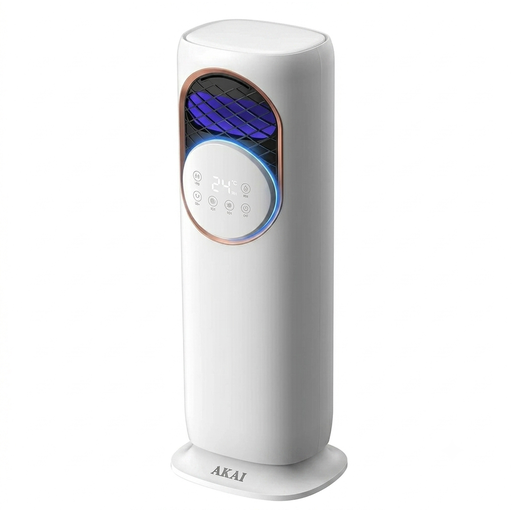 No image available
The product name describes a tower fan for home use.
Heating, air purification and humidifying functions are also listed. Check whether the airflow details meet your needs beside your armchair.
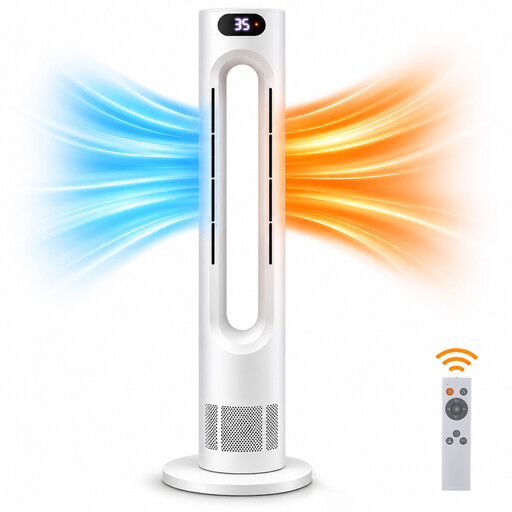 No image available
The stated oscillation and range of cooling speeds may be useful if you want to adjust how the air is distributed.
Features listed include 10 cooling speeds, 3 heating settings, 75° oscillation, a remote control and a 9-hour timer. The product name also gives 25 W for the fan and 1700 W for the heater.
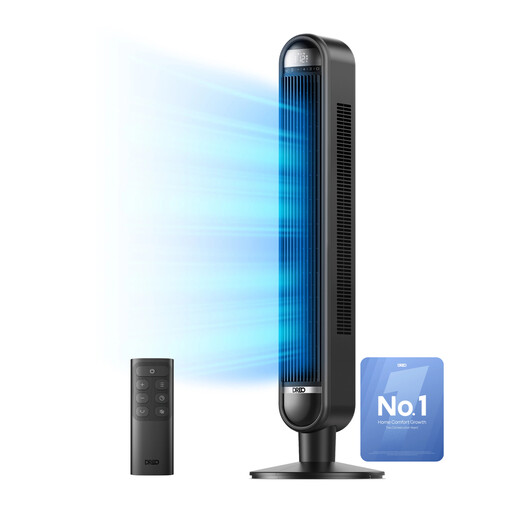 No image available
The stated oscillation and different operating modes give you options for directing airflow where you’re sitting.
Features listed include six speeds, four modes, 90° oscillation and a 12-hour timer. You can operate it using the remote control or touch controls.
No. The German Environment Agency explains that moving air can cool your skin, but that doesn’t lower the room temperature. If you need the room itself to be cooler, a fan alone won’t do the job.
Compare the fan and base dimensions with the available space, plan a safe route for the cable, then check the airflow direction where you’ll be sitting. A wide oscillation range is only suitable if other people want the breeze too.
Follow the instructions for the specific model number and use the cleaning access provided for that model. DREO lists a removable grille for the 307S, while Philips offers model-specific help for weak airflow. These details don’t provide general disassembly instructions for other fans.
According to the European Union, CE marking is required for products covered by the relevant harmonised EU rules. It isn’t a general, independent quality mark.