Who is a tower fan suitable for?

People who want a breeze directed at their armchair

If you mainly want air movement where you sit, check the distance, outlet height and direction. The F.A.Z. Buying Guide and IMTEST both consider air distribution and airflow important factors when choosing a fan.

Noise-sensitive bedroom users

If you plan to run the fan in the evening or as you fall asleep, check the noise level on its lowest setting and whether it still provides enough airflow. IMTEST highlights quiet operation on a low setting as a useful feature for bedrooms.

Buyers short on space beside their armchair

If space is limited, consider not just the width of the fan but also its base and the room it needs to oscillate. The F.A.Z. Buying Guide describes the tower design as space-saving, but you should still check the measurements at your chosen spot.

What should you look for when choosing one?

Criteria What to check before buying Who it matters most to
Airflow at your armchair Distance from your seat, outlet height and usable speed settings; if you move around, check the oscillation range too. When I’m sitting in my armchair, I want the breeze to reach me and be easy to adjust. Around 33% of consumers give airflow at their seat the highest priority.
Noise during quiet use Compare the noise level and airflow for the same low setting; don’t confuse maximum and minimum figures. If you want to use the fan in the evening or as you fall asleep, you need peace and quiet without sacrificing the airflow you need at your seat. Around 27% of consumers prioritise minimal disturbance during quiet use.
Footprint and positioning Allow for the full base dimensions and check that the intended oscillation path will remain clear. If space beside your armchair is limited, the fan and its base need to fit without blocking furniture or walkways. Around 27% of consumers put finding a suitable spot first.
Controls and running costs Consider only the features you need, such as a remote control or timer. Check the power consumption in watts separately from how long you plan to use it. If I want to change the settings from my armchair or limit how long the fan runs, convenient controls matter. Around 13% of consumers prioritise ease of use and running costs.

Avoiding common buying pitfalls

  • Assuming maximum airflow is suitable for quiet use at night

    A high setting may be noticeably noisy, while the lowest setting may not provide enough airflow at your armchair.

    Compare the noise level and airflow on the setting you’re actually likely to use.

  • Measuring only the slim tower body

    A narrow casing doesn’t tell you whether the base and oscillation path will fit beside your armchair.

    Check the full dimensions when set up and keep the intended oscillation area clear.

  • Expecting a fan to cool the room

    The airflow may feel pleasant, but it doesn’t remove heat from the room like an air conditioner.

    Use the fan to move air around your seat, and treat ventilation and sun protection as separate ways to keep rooms from overheating.

Key brands at a glance

Dreo

Dreo models tested vary in features such as their controls and equipment.

  • COMPUTER BILD lists nine speeds, a timer and app control for the 519S PRO.
  • For the 519S PRO it tested, COMPUTER BILD notes a limited 90-degree oscillation range and noticeable noise on the highest setting. These results don’t necessarily apply to other Dreo models.

Levoit

The “Levoit DC Motor Tower Fan” tested by COMPUTER BILD is worth considering if you’re weighing up a wide choice of settings and a remote control.

  • COMPUTER BILD lists twelve speeds and a timer for the model it tested.
  • The test noted that the fan was a little unsteady. The test name doesn’t include a clear, complete model number, so it can’t be matched to a differently named version without further checks.

Philips

The Philips 5000 Series is an option if low settings and easy controls are important in the bedroom.

  • Philips lists five speed settings, a remote control and 24 dB on the lowest setting for the CX5550/01.
  • The noise level is a manufacturer’s figure for the CX5550/01 on its lowest setting, not a measurement for every Philips model or speed setting.

Shark

The TurboBlade tested is an option if flexible airflow and a wider oscillation range are important to you.

  • COMPUTER BILD highlights the adjustable airflow direction on the model it tested.
  • For the model tested, COMPUTER BILD reports power consumption of up to 59.5 W and 55.5 dB(A) on the highest setting, as well as no app or remote control. These details apply to this model, not the entire Shark range.

Brandson

The Brandson 303143 is a specific model that has been tested, with air distribution worth considering when choosing a fan for beside your armchair.

  • The F.A.Z. Buying Guide highlights the 303143’s air distribution in its test.
  • For use beside your armchair, also check its lowest setting and the dimensions of the space where you plan to put it.

Tower fans at Joybuy

This selection includes tower fans for moving air beside your armchair, including models with a sleep mode and one with an additional heating function. Compare the noise levels, airflow direction and dimensions with the space you have in mind.
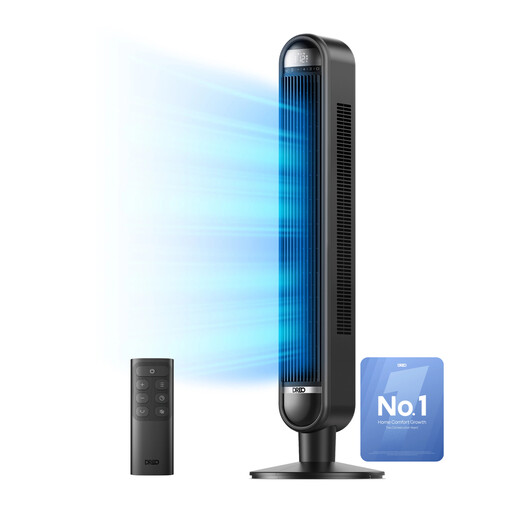
DREO 42-inch tower fan

DREO 42 Inch Tower Fan

Six speed settings and 90° oscillation give you options for directing airflow towards your seat.

The listing mentions a sleep mode, 30 dB, a remote control and a 12-hour timer.

View at Joybuy
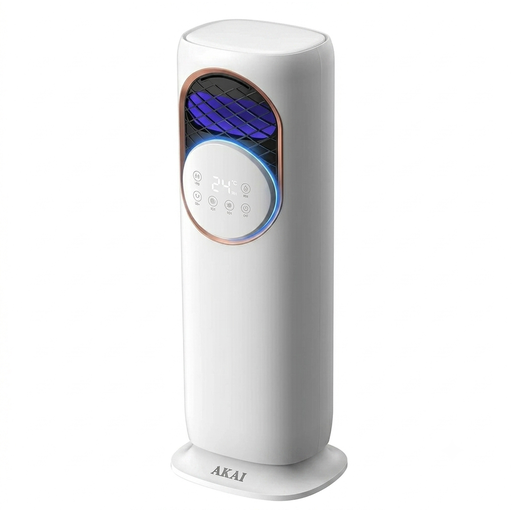
AKAI AKIC41-R 4-in-1 tower fan

AKAI AKIC41-R 4-in-1 tower fan

The description mentions a slim design and suitability for bedrooms, which may be useful when planning where to put it.

The listing title includes heating, air purification and humidifying functions. Check which of these you’ll actually need in addition to air movement.

View at Joybuy
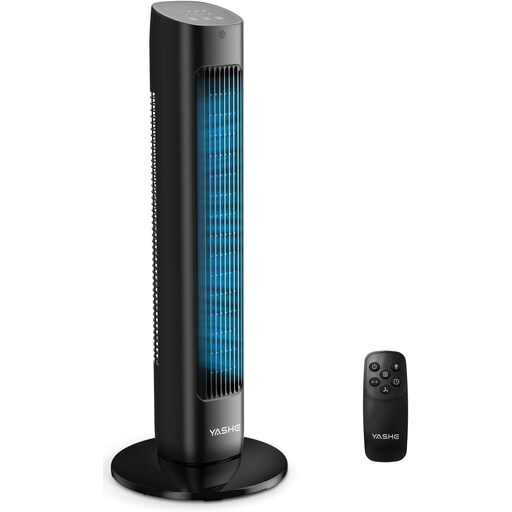
YASHE NDTFT21R tower fan, 80 cm

YASHE NDTFT21R tower fan, 80 cm

Three speed settings and 85° oscillation let you adjust the airflow towards your seat.

The listing mentions speeds of up to 7.9 m/s, 28 dB, a sleep mode and a remote control.

View at Joybuy
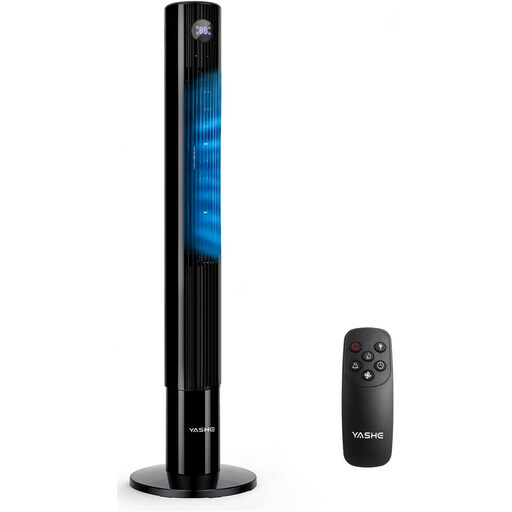
YASHE NDTFT17RH tower fan, 110 cm

YASHE NDTFT17RH tower fan, 110 cm

Three speed settings and 85° oscillation let you adjust the airflow direction.

The listing mentions speeds of up to 7.9 m/s, 28 dB, a remote control, an LED display and a 12-hour timer.

View at Joybuy
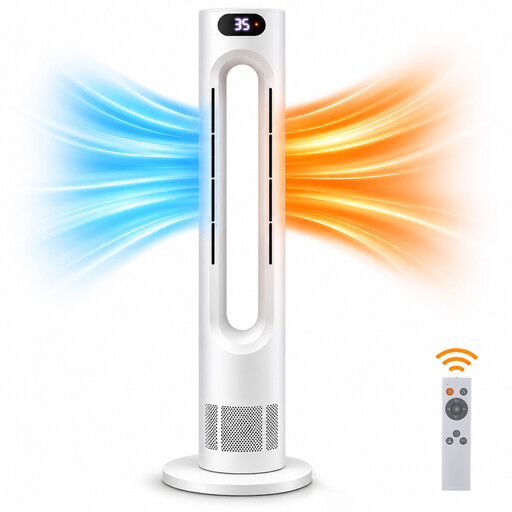
Rosnek tower fan with heating function, 103 cm

Rosnek tower fan with heating function, 103 cm

If you want a heating function as well as air movement, the listing gives separate settings for each mode.

Features include 10 cooling settings, 3 heating settings, 75° oscillation, a remote control and a 9-hour timer. The power ratings are 25 W for the fan and 1,700 W for the heater.

View at Joybuy

Frequently asked questions

Does a tower fan cool the bedroom itself?

No. A tower fan moves air, which may make you feel cooler, but it doesn’t lower the room temperature like an air conditioner. If the air outside is cooler, the German consumer advice centre also recommends ventilating the room.

How can I check whether the airflow will reach my armchair?

Compare the airflow on a setting you find comfortable with the distance from your seat, and check the outlet height and whether the fan can be fixed or oscillating. IMTEST points out that wattage alone tells you little about airflow.

What should I bear in mind when positioning and cleaning the fan?

Keep the base and oscillation path clear, and follow the instructions for the version you buy. Philips provides product-specific help for the CX5550/01, including advice on a dirty grille and an unsteady base. This shouldn’t be taken as general cleaning or disassembly guidance for other models.

What rights do I have when buying online in Germany?

Online consumer purchases generally come with a 14-day right to cancel. If an item is faulty, your statutory rights are against the seller. A manufacturer’s guarantee is separate and voluntary. The German consumer advice centre explains the difference.

What safety markings should I check on a mains-powered appliance?

Electrical appliances covered by the EU Low Voltage Directive, with a rated voltage of 50 to 1,000 V AC, must meet conformity requirements and carry a CE marking, among other requirements. Germany’s Federal Network Agency also recommends checking the product identification, manufacturer details and German-language instructions. The marking alone does not prove that a particular product listing has been independently tested.