If you have a regular spot on the sofa
If you usually sit in the same place, check whether the outlet, distance and direction will send the airflow there, rather than relying on the advertised maximum output alone.


If you have a regular spot on the sofa, what matters is whether the airflow reaches you where you plan to sit. If there are several seats, the fan’s oscillation range matters too. Judge the noise and airflow together on a setting you’d actually use, and check that you can position the appliance safely. A fan moves air but doesn’t lower the room temperature: Germany’s consumer advice service recommends using sun protection, while the German Environment Agency advises closing it when the sun is shining in.
If you usually sit in the same place, check whether the outlet, distance and direction will send the airflow there, rather than relying on the advertised maximum output alone.
If you want airflow to reach several seats, check that the fan’s oscillation range suits the width of your sofa and its intended position.
If you read or chat on the sofa, check whether a noise level you find comfortable and sufficient airflow are available on the same setting.
Best for: When one person usually sits in the same place on the sofa and wants the breeze to reach them there.
Trade-off: A fixed direction can provide a steady breeze at your preferred spot, but it won’t automatically distribute air to other seats.
Best for: When you want several people or seats on the sofa to get airflow in turn, and the oscillation range actually covers them.
Trade-off: Each spot only gets the breeze intermittently. A wide oscillation angle alone doesn’t guarantee the outlet is at the right height or that there’s enough airflow where the fan is placed.
Best for: When the main problem is the heat in the room, rather than a lack of airflow by the sofa.
Trade-off: Moving air can make you feel more comfortable, but a fan won’t lower the room temperature.
| Priority | What to check when buying | Who is it important to? |
|---|---|---|
| A breeze at your preferred seat | Compare outlet height, direction, distance from the seat and adjustable settings. | If I usually sit in the same place, I want to be able to adjust the breeze to suit me there. Around 29% of consumers prioritise targeted airflow. |
| Airflow across several seats on the sofa | Check the oscillation range and the position of the air outlet against your sofa and where you plan to put the fan. | If several people use the sofa, the airflow should reach the seats they actually sit in. Around 23% of consumers prioritise airflow across several seats. |
| Peace and quiet while reading or chatting | Judge the noise and noticeable airflow together on a setting you can use comfortably. | If I read or chat on the sofa, I want a comfortable noise level without having to give up the breeze I’m after. Around 18% of consumers prioritise quiet operation. |
| Space beside the sofa | Check the footprint, including the base, cable route and positioning instructions for the specific spot. | If space beside the sofa is limited, I want to position the fan safely without blocking the way. Around 18% of consumers prioritise finding a suitable place for it. |
| Power consumption during extended use | Consider the power consumption of the setting you plan to use and how long you expect to run it. | If the fan runs often, I want to estimate its consumption based on how I use it and my electricity tariff. Around 12% of consumers prioritise running costs. |
A fan moves air and can feel pleasant on your skin, but it won’t stop sunlight coming in or remove the heat that has built up in the room.
If the heat in the room is the main problem, use sun protection and ventilate when the air outside is cooler.
For the Rowenta Eole Infinite VU6670, the manufacturer’s claims about reach and low noise refer to different settings.
Judge the airflow and noise on the same setting, and make sure it’s one that will work for your seat.
The base, cable route and direction all affect whether you can position the fan sensibly beside the sofa.
Measure the space you have in mind and check the positioning instructions for the specific model.
The 303143 tower fan is a specific option to compare for distributing air around a seating area.
The 5000 Series, German model CX5535/00, is an option if you’re looking for an oscillating tower fan.
The Eole Infinite VU6670 is an option if you want to compare a wide oscillation range.
The Cool AM07 is an alternative with a remote control and several airflow settings.
The 307 tower fan (DR-HTF-007) is another model that has been specifically reviewed.
The following Joybuy listings include tower fans for living spaces, including models with oscillation and additional heating or air-purifying functions. Before using one in a conservatory, check the relevant model’s instructions on positioning and environmental conditions.
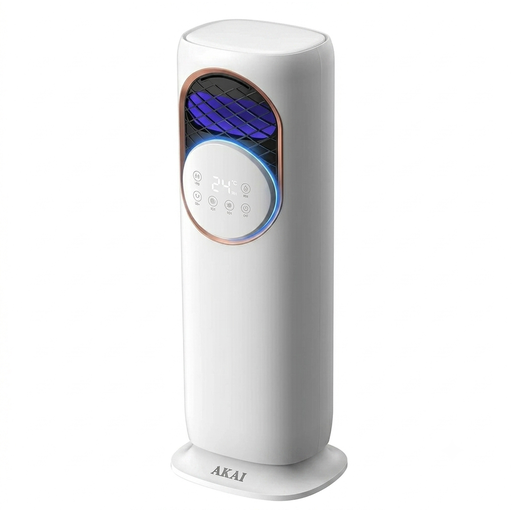 No image available
An option if you’re looking for one appliance that combines a fan with heating, air-purifying and humidifying functions.
Features listed in the product name: cooling and heating, air purification and humidification.
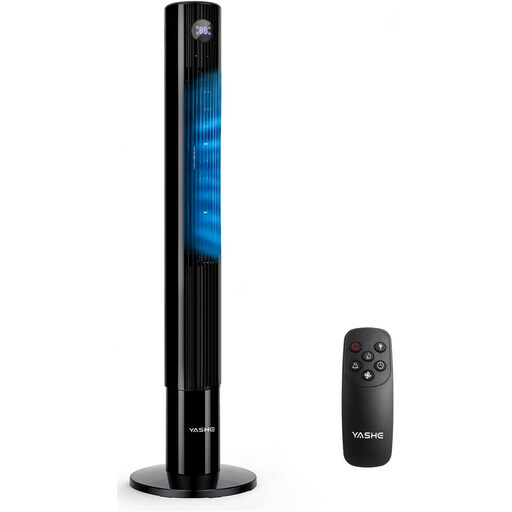 No image available
With oscillation and three speeds, this is an option if you want airflow to reach several seats in turn.
110 cm; 85° oscillation; three speeds; remote control; 12-hour timer; LED display. The product description specifies a stable, level surface and distance from moisture for positioning.
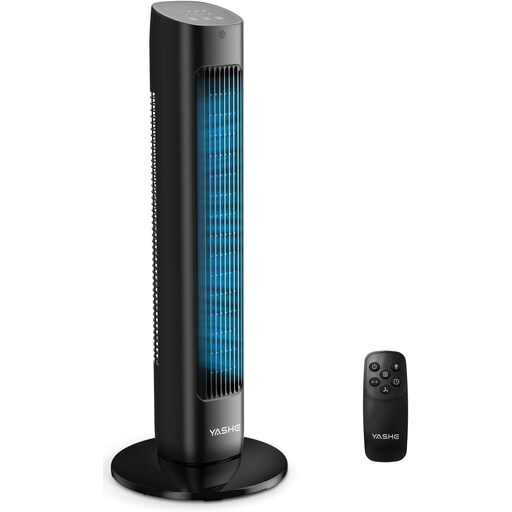 No image available
A more compact-height option if you’re looking for a tower fan with a remote control.
80 cm; remote control.
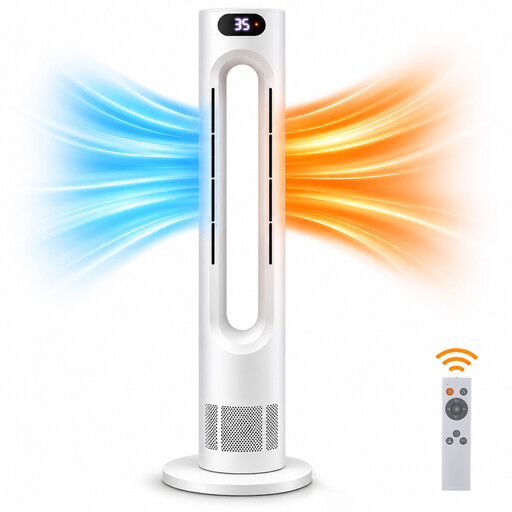 No image available
An option if you want to combine airflow and heating in one appliance.
103 cm; 25 W fan power; ten cooling settings; three heating settings; 75° oscillation; 9-hour timer; remote control.
 No image available
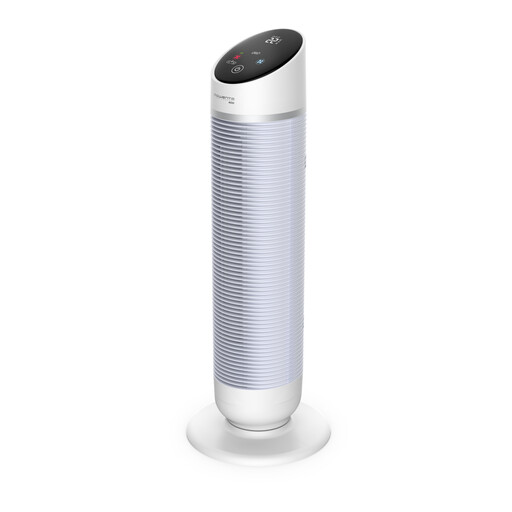
An option if you’re looking for a tower appliance that combines a fan, heater and air purifier.
Features listed in the product name: heating function, Eco Heating Mode, Smart Mode, timer, automatic shut-off and remote control. The instructions rule out outdoor use and use near water sources.
No. A fan won’t lower the room temperature, although moving air can feel more comfortable on your skin. Sun protection helps keep the sun out, and ventilating when the outside air is cooler can help too.
Not necessarily. Directing the airflow at one favourite spot may work well, while oscillation can spread it across several seats. What matters is which seats the airflow reaches from the fan’s actual position.
Check the instructions for your specific model for guidance on positioning, permitted environmental conditions and cleaning. In particular, make sure the spot you have in mind in the conservatory is suitable. You can’t assume from the type of appliance alone that it’s suitable for damp conditions or strong sunlight.
Multiply the power consumption in watts by the number of hours the fan runs, then divide by 1,000 to get its consumption in kWh. Multiply this figure by your electricity price per kWh, then check whether the setting you’re considering moves enough air by the sofa.
The Federal Network Agency lists the CE marking, an identifiable product and manufacturer details, and German operating instructions with the necessary warnings among the points to check as part of its market surveillance. The CE mark alone is not an independent quality seal and doesn’t prove that a particular listing meets all requirements.