Which buying criteria matter in a large living room?
First, measure the distance between a possible position for the fan and the sofa. Then compare airflow, noise and oscillation range under the conditions in which you expect to use it.
The table breaks down what to look for according to the main priorities of people who want to move air near a sofa in a large living room.
| Priority |
What to look for |
Especially important for |
| Airflow at the sofa |
Measure the distance from the intended position and check which setting a stated range applies to. Compare the outlet height and direction with your seating position. |
I want to feel the airflow at the sofa from a possible position without automatically needing the highest setting. Around 31% of consumers put airflow at the sofa first. |
| Noise while watching TV |
Compare noise figures for the setting you actually need. Sone and dB(A) are different measurements and cannot be directly compared. |
I want useful airflow while watching a film or having a conversation, without it drowning out speech. Around 25% of consumers prioritise quiet when watching TV. |
| Airflow across several seats |
Compare the oscillation range with the seats you want to reach from a possible fan position. Also check whether oscillation can be adjusted or switched off. |
If several people are sitting in different places, the fan should cover their seats as it oscillates, rather than directing air at just one spot the whole time. Around 25% of consumers prioritise airflow across several seats. |
| Floor space and running costs |
Check the base dimensions and cable route at your planned position. To calculate energy use, look at the power consumption in watts and how long you intend to run the fan, not how cool it feels. |
I need a practical place for the fan and want to understand its running costs if I use it regularly. Around 19% of consumers prioritise positioning and running costs. |
Joybuy products for moving air around your living room
The following Joybuy products offer different options for airflow, oscillation and control around the home. Before choosing, check which features suit your seat and how you plan to use the fan.
 No image available
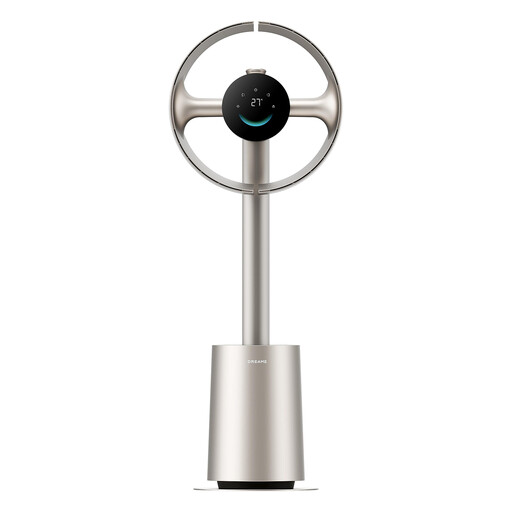
Dreame MF10 Air tower fan, Titan Gold
Worth considering if you want to direct airflow in different directions from the intended position to cover several seats.
180° horizontal and 90° vertical oscillation; Wi-Fi app control; 55 W power consumption.
View at Joybuy
 No image available
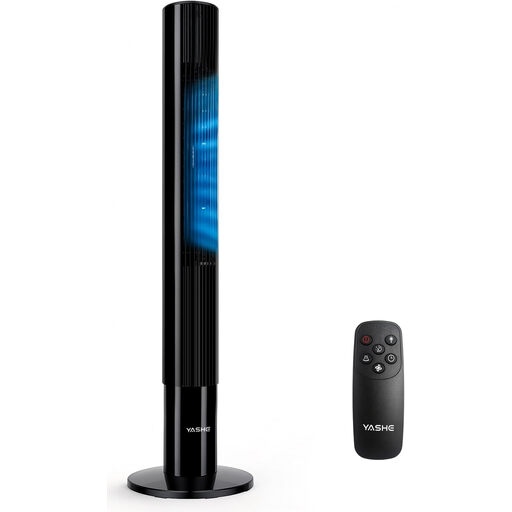
YASHE NDTFT17RH-S tower fan, 110 cm
This could suit you if you want to adjust the airflow from your seat using a remote control and an 85° oscillation range works for your seating layout.
Noise figure stated in the product name: 28 dB; check which setting this applies to. Three speeds, two modes, a 12-hour timer and an LED display.
View at Joybuy
 No image available
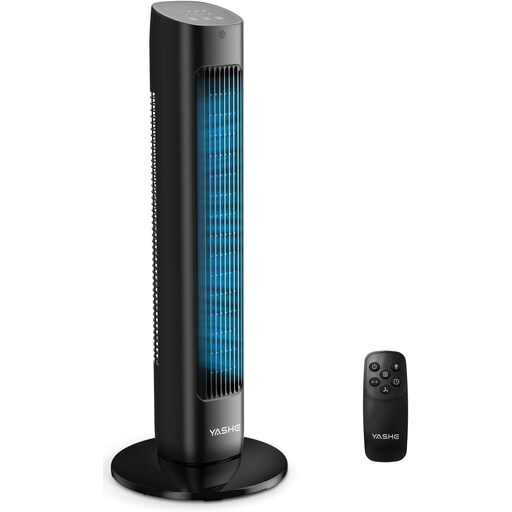
YASHE NDTFT21R tower fan, 80 cm
The remote control can be useful if you want to change the settings from the sofa.
Noise figure stated in the product name: 28 dB; check which setting this applies to. 80 cm tall.
View at Joybuy
 No image available
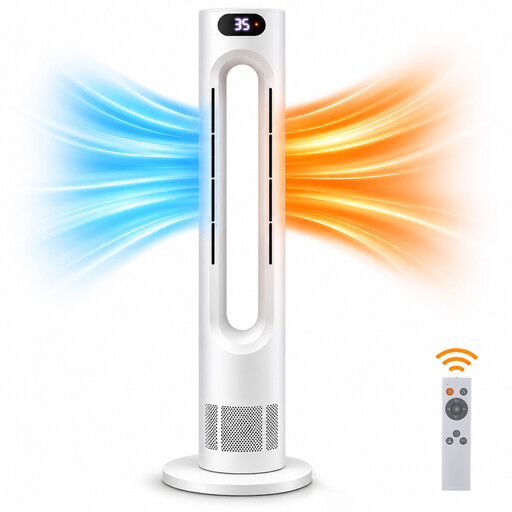
Rosnek tower fan with heater, white, 103 cm
If you also want a heater, this combination model could be a good option. If you only need airflow, bear the heating function in mind when choosing.
25 W fan power and a 1,700 W PTC ceramic heater; ten cooling settings, three heating settings and 75° oscillation. Nine-hour timer.
View at Joybuy
 No image available
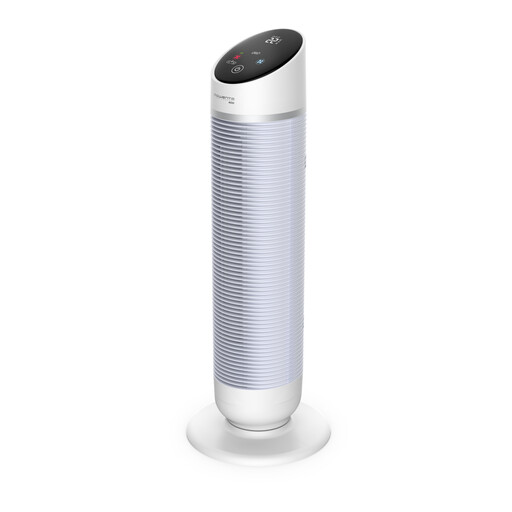
Rowenta 3-in-1 Tower Fan Silent Comfort HQ8120
This 3-in-1 model is worth considering if you want to take account of the heating and air-purifying functions mentioned in the product name as well as the fan.
The product name lists a remote control, timer and automatic shut-off.
View at Joybuy
Frequently asked questions
Will a tower fan cool down a large living room?
No. A tower fan does not lower the room temperature, but the airflow can make your skin feel cooler. The German Environment Agency therefore recommends focusing on airflow over the people who want to feel the cooling effect.
How should I position and clean a tower fan?
Choose a position from which the airflow can reach the seat you want to cool, and take the cable route into account. For the Dreo Nomad One, Dreo recommends unplugging the fan before cleaning it. For other models, follow the relevant instruction manual.
What applies if the fan develops a fault after purchase: a guarantee or your statutory rights?
Your statutory rights are against the retailer, while a manufacturer’s guarantee is an optional extra with its own terms and conditions. The consumer advice organisation Verbraucherzentrale distinguishes between these two types of claim. Keep your proof of purchase and the model name, and contact the retailer first if something is wrong.
What does the CE marking mean on a mains-powered tower fan?
Electrical equipment covered by the EU Low Voltage Directive — that is, equipment with a rated voltage of 50 to 1,000 V AC — must meet conformity requirements, including CE marking. EUR-Lex explains the scope of the directive. According to the European Union, the manufacturer uses the CE marking to declare that the product complies with the relevant rules. It is not an independent EU quality mark and does not confirm that a specific listing is compliant.


