People using a sofa with several seats
If you move between different seats, check whether the airflow can reach them and whether the oscillation range suits your seating arrangement.


For a regular spot on the sofa, directing the airflow where you need it is key. If you want to reach several seats, look for a suitable oscillation range too. Compare noise figures for the specific speed setting they refer to, and check the base, controls and power consumption for the way you plan to use the fan. A tower fan moves air, but unlike an air conditioner, it does not lower the room temperature.
If you move between different seats, check whether the airflow can reach them and whether the oscillation range suits your seating arrangement.
When you’re reading, studying or watching TV, a gentler breeze with finely adjustable settings may matter more than the highest speed.
As well as room for the fan, allow space for its base and a suitable cable route. Make sure you can keep the walkway clear while still directing the airflow towards the sofa.
First, decide whether you want a breeze for one regular seat or airflow across several seats. Then compare the noise level at your preferred setting and check how much space the fan and its base will take up.
| What matters | What to check before buying | Who it matters most to |
|---|---|---|
| Airflow at the sofa | Check the outlet height, direction and oscillation angle at the intended position. Rowenta states that the VU6670 has a 180° oscillation range. | If I want to reach one or more seats on the sofa, how the airflow is distributed is key; around 33% of consumers would make this their main consideration. |
| Noise while sitting | Check which speed setting the noise figure applies to. Philips states that the CX5550/01 produces 24 dB at its lowest speed. | When I’m watching TV or studying, I want an adjustable breeze that isn’t unnecessarily distracting; quiet operation would be the top priority for around 27% of consumers. |
| Footprint and positioning | Consider the base, distance from the sofa and cable route at the planned position. Rowenta states that the VU6670 has a 1.6 m power cord. | If space is tight, I want to keep the walkway clear while still directing the airflow where it’s useful; around 20% of consumers would prioritise the space available for the fan. |
| Power consumption | Check the model’s stated power consumption in watts and how long you expect to use it. | If I use the fan regularly, I want to know how much power it uses in practice; around 20% of consumers would place particular importance on power consumption. |
A fan moves air, but unlike an air conditioner, it does not lower the room temperature. If you want the actual room temperature to come down, a fan alone won’t do the job.
Choose a fan to circulate air around the sofa, not as a substitute for an air conditioner. The Verbraucherzentrale explains the difference between these functions in its information on portable air conditioners.
A noise figure may apply specifically to the lowest speed setting. For example, Philips states that the CX5550/01 produces 24 dB at its lowest speed; that figure alone doesn’t tell you how noisy it is at a higher setting.
Where possible, compare noise and airflow at the speed you actually plan to use beside the sofa.
A tower fan still needs a base and a position from which its airflow can reach your seat. The cable and positioning can also affect how much usable space is left.
Measure the available space, including room for the base, and check the cable route before choosing a model.
The details below relate to the specific models and test conditions mentioned, not to every product in each brand’s range.
COMPUTER BILD lists several settings and app control for the Dreo 519S.
The LTF-F422-WEU may be worth considering if you want adjustable operation with several speed settings and a remote control.
The 5000 Series is an option if you want to compare different settings for use beside the sofa.
The VU6670 may be of interest if you have several seats to cover and need a wide oscillation range.
The TurboBlade tested may be worth considering if you want to compare adjustable airflow direction and several speed settings.
This selection includes tower fans for circulating air around the home, including models with oscillation and combination appliances with additional functions.
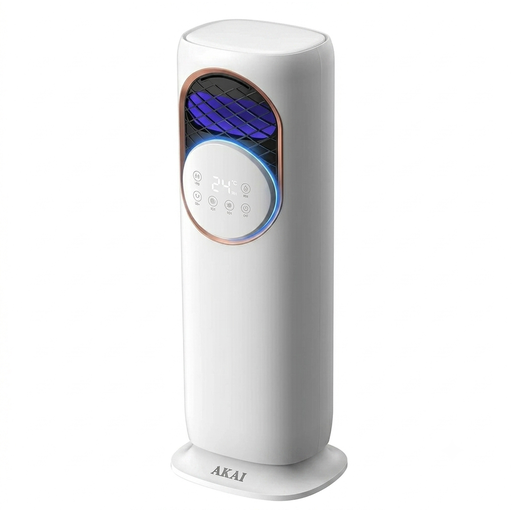 No image available
Worth considering if you’re looking for heating, air purification and humidifying functions as well as air circulation.
The product name describes a 4-in-1 appliance combining a tower fan, heater, air purifier and humidifier.
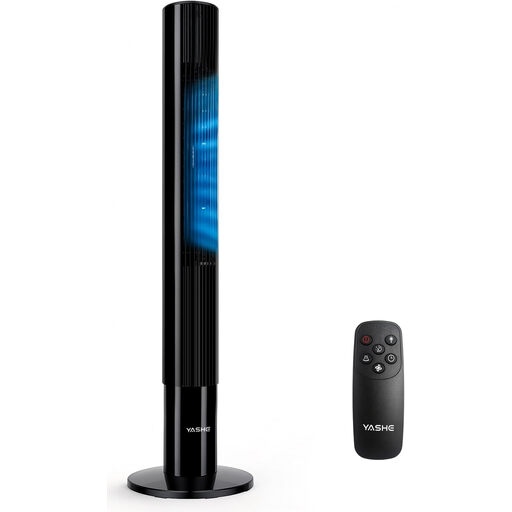 No image available
Worth considering if you want adjustable airflow with oscillation to cover several spots on the sofa.
The product name lists 85° oscillation, three speeds, two modes, a remote control, an LED display and a timer of up to 12 hours. It also quotes 28 dB; compare this figure only with results measured under comparable conditions.
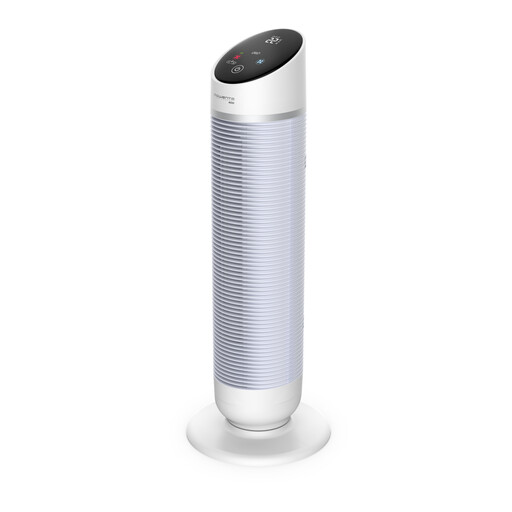 No image available
An option if you want to direct the airflow from your chosen position and are looking for extra functions.
The product name lists fan, heating and air purification functions, as well as a remote control and timer.
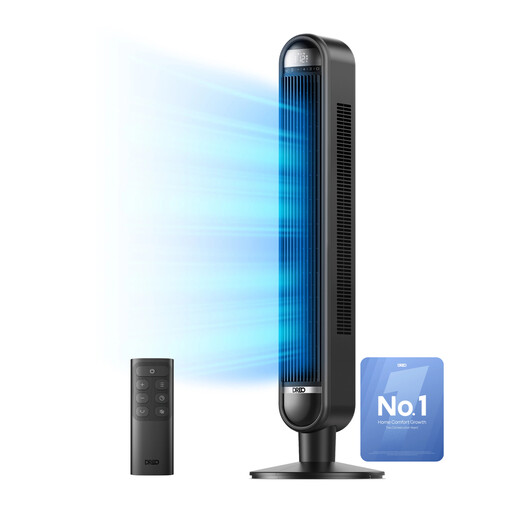 No image available
Worth considering if you want oscillating airflow and several settings to cover multiple seats on the sofa.
The product name lists 90° oscillation, six speeds, four modes, a timer of up to 12 hours, remote control and touch controls. The title also states 30 dB and 7.6 m/s; consider figures like these in light of the conditions under which they were measured.
No. A tower fan moves air, which can make you feel cooler, but unlike an air conditioner, it doesn’t lower the room temperature. The Verbraucherzentrale highlights this difference.
Check which speed setting and measurement conditions each noise figure refers to. For example, Philips states that the CX5550/01 produces 24 dB at its lowest speed; this figure doesn’t automatically describe how it performs with stronger airflow.
Choose a position from which the airflow can reach the seats you want to cool, without the base obstructing the walkway. Also plan the cable route, and follow the instructions for the specific model when cleaning it and using it safely.
For a typical online purchase, you generally have a 14-day right to cancel, and you must be informed about it. If a newly purchased product is faulty, you can generally assert your statutory consumer rights against the seller within two years. The Verbraucherzentrale distinguishes these rights from a voluntary guarantee; the applicable terms should be checked for your individual circumstances.
For an electrical appliance sold in Germany, check that it has the appropriate CE marking, identifiable manufacturer details and German-language instructions with any required warnings. Your Europe explains that the CE marking is the manufacturer’s declaration that the product complies with the relevant EU rules; it is not an independent certification of the individual product listing.