People sharing the sofa
When several people are sitting together, adjustable airflow across the seating area matters, without blowing directly on everyone all the time.


If several people share the sofa, an oscillating tower fan can be a good choice, provided its sweep and outlet height suit the seating area. For one favourite spot, a steady, directional breeze may work better. Compare noise and airflow at the same usable setting, and check the space it needs and how easy it is to clean. A fan moves air but does not lower the room temperature, as the German Environment Agency also explains.
When several people are sitting together, adjustable airflow across the seating area matters, without blowing directly on everyone all the time.
If you want to chat or watch TV, check whether the noise level is comfortable at an airflow setting you would actually use.
A slim design can be handy beside your furniture. Even so, the base, air outlet and oscillation range all need to fit the space you have in mind.
First check whether the airflow reaches the seats you want it to, then compare noise, footprint and cleaning requirements. IMTEST points out that wattage alone tells you little about a fan’s airflow.
| What matters to you | What to look for | Who is it important to? |
|---|---|---|
| Airflow across several seats | Outlet height and adjustable settings; a sweep that suits the seating area. | If several people are sitting on the sofa, I want to spread the airflow between the seats rather than direct it at just one person all the time; around 36% of consumers prioritise airflow across multiple seats. |
| Quiet, adjustable operation | Compare noise and airflow at the same intended setting; don’t assume minimum noise figures apply at higher airflow levels. | When chatting or watching TV, I want a pleasant breeze without the fan drowning out the conversation; around 29% of consumers prioritise quiet, adjustable operation. |
| Footprint and positioning | Check the dimensions of the casing and base, as well as the oscillation range, at the planned position. | With little free space beside my sofa, I need a suitable position that doesn’t block walkways; around 21% of consumers pay particular attention to footprint and positioning. |
| Cleaning and ongoing upkeep | Check the model’s cleaning instructions and power consumption; calculate electricity costs using your own usage time and electricity tariff. | If I use the fan frequently, I want to know how easy it is to clean and what day-to-day upkeep involves; around 14% of consumers put these considerations first. |
A fan moves air, which can make your skin feel cooler, but it does not cool the air in the room. The German Environment Agency recommends opening windows in the evening or at night when the air outside is cooler.
Check how the airflow feels where you sit. If the room gets hot, consider using shading and opening the windows when the air outside is cooler.
According to IMTEST, wattage alone gives only a limited indication of a fan’s airflow. A manufacturer’s noise figure may also refer to the lowest setting: Philips explicitly quotes 24 dB for this setting, not for higher airflow levels.
Compare airflow and noise at the setting you expect to use, and check the measurement distance and operating level.
The enclosed casing on a tower fan can make it harder to reach the inside. Rowenta highlights this difference from fans with accessible grilles in its cleaning instructions.
Check the cleaning instructions for the specific model before buying. Only dismantle the fan if the instructions say you can.
The brand offers tower fans with a range of operating modes and control options.
Levoit’s range includes tower fans with adjustable settings, including the TempSence 42DC.
Philips lists several modes and control options for its CX5550/01 tower fan.
The Eole Silence Force VU7050F0 is described as having a remote control and timer.
The 303143 tower fan is a useful point of comparison for airflow distribution and slim design.
This selection includes tower fans for living spaces, as well as a bladeless pedestal fan. Compare the design and listed features with the space beside your sofa and the airflow you want.
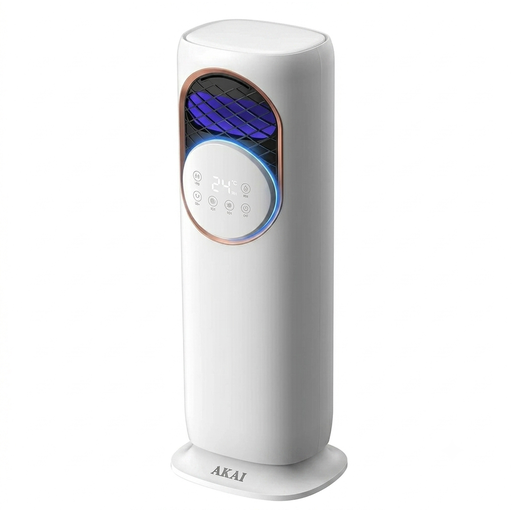 No image available
For anyone comparing a tower fan with additional features for the living space.
The product name lists heating, air purification and humidifying functions. Check which of these you need.
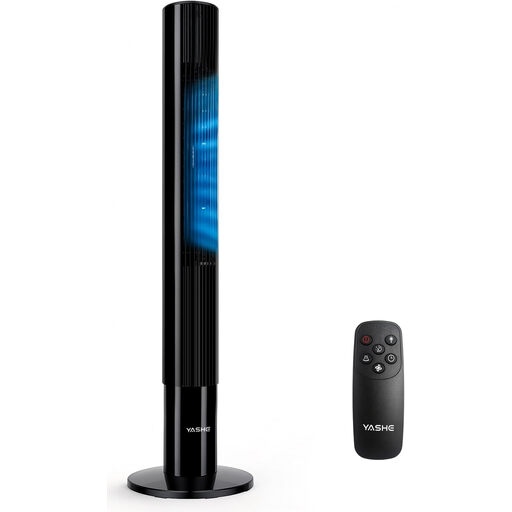 No image available
For several seats, the stated oscillation and selectable speeds are useful points of comparison.
Listed features include 85° oscillation, three speeds, two modes, a 12-h timer and a remote control.
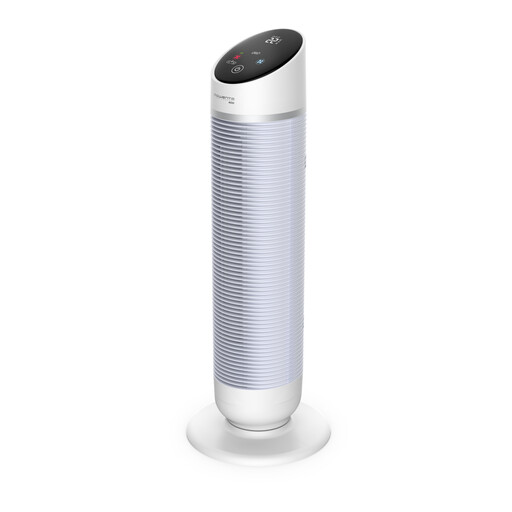 No image available
An option for anyone considering a tower fan with additional features for the living space.
The product name lists heating and air purification functions, as well as a remote control and timer. Compare the specific version and its operating modes with your needs.
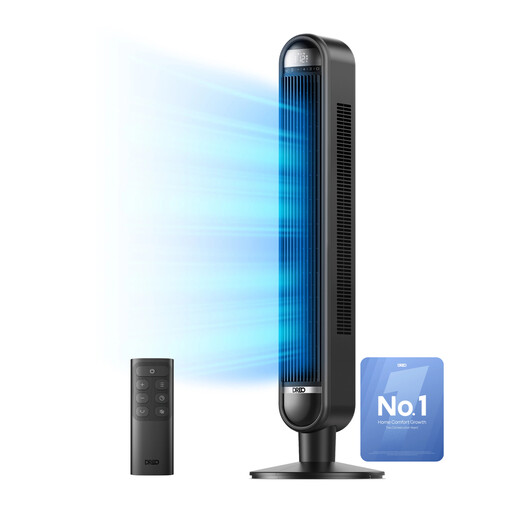 No image available
For several seats, the stated oscillation and selectable settings can help you direct the airflow.
Listed features include 90° oscillation, six speeds, four modes, a 12-h timer, remote control and touch controls.
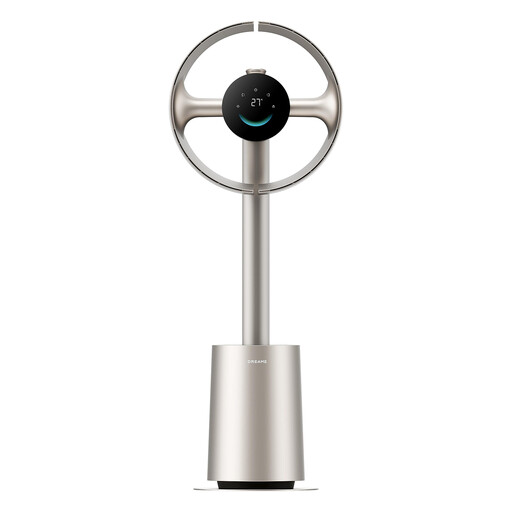 No image available
This model is described as a bladeless fan, not a tower fan. Bear this difference in mind when choosing a design for the space beside your sofa.
Listed features include 180° horizontal and 90° vertical oscillation, ten speed settings and 55 W.
No. Moving air can make your skin feel cooler, but it does not remove heat from the room. The German Environment Agency recommends opening windows in the evening or at night when it is cooler outside than indoors.
Direct the airflow towards the seats you want to cool and check the gentler settings from those spots. Oscillation spreads the air between seats, while a fixed direction provides a steadier flow to one spot. Make sure there is room for the fan to oscillate and that it stands securely.
Unplug the fan before cleaning and follow the instructions for your specific model. An enclosed tower casing can restrict access to the inside, so don’t take the fan apart unless the instructions say you can.
Compare both at the same usable operating setting and take the measurement distance into account. A figure for the lowest setting doesn’t tell you how loud the fan will be at a higher airflow level.
Mains-powered equipment or power supplies with a rated voltage of 50 to 1,000 V AC are subject to relevant requirements under the scope of Germany’s Electrical Equipment Ordinance. The German Federal Network Agency lists CE marking, manufacturer details and German-language instructions with warnings among its checks. Check the details on the specific appliance and power supply.