
Lieferung heute & morgen

Qualitätsgarantie

Willkommens-Angebote freischalten: KOSTENLOSE Lieferung | Bis zu 80 % RABATT | Kostenlose 30-Tage-JoyPlus-Testphase
App herunterladen
As a Joybuy Product Recommendation Officer, I see every day just how diverse the market for toy airplanes is. From simple push-along models for toddlers to complex building sets and remote-controlled aircraft, the selection can be overwhelming. Many products overpromise and underdeliver, which often leads to disappointment. This guide will help you avoid the common pitfalls and find a model that truly brings joy.
Before we look at recommended models, it's important to understand the three most common problems that can lead to a purchase you'll regret:
To make an informed decision, you should check three key aspects. These will help you objectively evaluate the quality and suitability of a toy airplane.
The material is the foundation for durability and safety. High-quality ABS plastic is often the right choice here. It is robust, impact-resistant, and free of harmful plasticisers. Always look for the CE marking. This symbol confirms that the manufacturer declares compliance with the applicable EU safety requirements. It is a fundamental indicator that the product has been assessed for mechanical risks and chemical substances.
The type of airplane must match the child's motor and cognitive skills.
Consider which features genuinely contribute to the play experience. A rescue plane toy with a working winch or a fire-fighting plane with a water tank function offers a concrete play incentive. For a passenger airplane toy, a detailed interior with figures can deepen the role-playing. Less is often more: a well-thought-out, functional design is more valuable than a multitude of flashing lights with no real play purpose.
Here are some models that represent a considered choice for different user profiles, based on objective criteria.
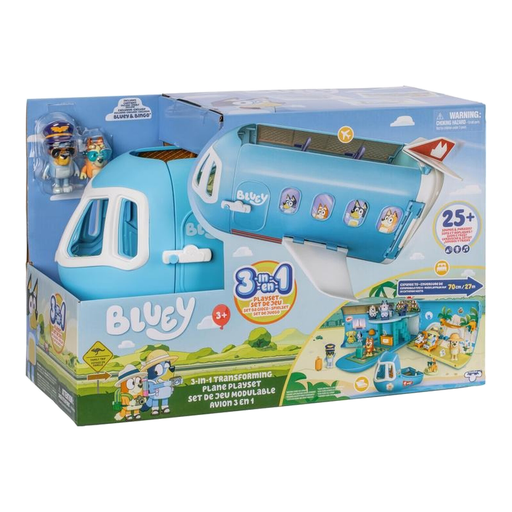
Why It's a Great Fit: It combines a character popular with children with a versatile play concept. The plane transforms into a hotel and a beach club, promoting long-lasting, imaginative role-play for children aged 3 and up.
The set is made from durable plastic designed for its target audience. The functions are intuitive and enhance the play experience rather than just being short-lived gimmicks.
3-in-1 design for high play value; over 25 sound effects from the show; includes exclusive character figures.
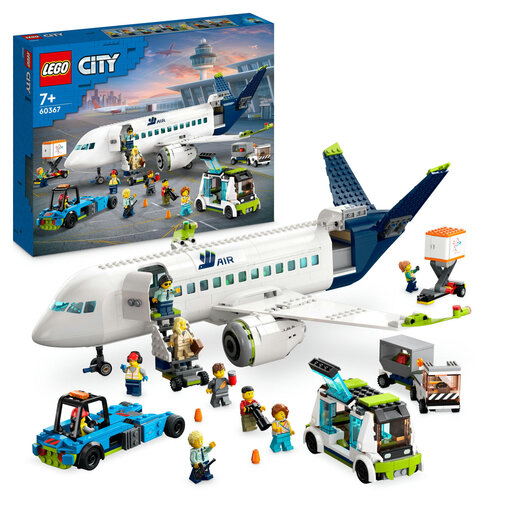
Why It's a Great Fit: Ideal for children aged 7 and up who enjoy building and re-enacting detailed scenarios. The set depicts a complete airport playset with a passenger plane, apron bus, and baggage cart, fostering creativity and fine motor skills.
The age rating is appropriate for the complexity of the build. The high quality of LEGO's ABS plastic ensures that the pieces fit precisely and the model is sturdy enough for active play.
Detailed interior (cockpit, cabin, lavatory); extensive accessories with 4 ground vehicles and 9 minifigures for a complete play experience.

Why It's a Great Fit: This model offers a great entry point into the world of remote-controlled airplanes. It is specifically designed for beginners and helps avoid the typical frustration caused by overly complex controls.
It addresses the problem of being overwhelmed by incorporating an integrated gyro stabilisation system and three adjustable speed levels. This makes it easier to get started and allows for controlled first flights.
Beginner-friendly controls with stabilisation aids; durable foam material that forgives minor crashes; two batteries for extended flight time.
We've compiled a complete, up-to-date list of products that fully meet these strict selection criteria and UK/EU safety regulations.
This heavily depends on the model. Simple indoor helicopters or drones with altitude hold functions and gyro stabilisation can be suitable for children from around 8 years old. More complex RC airplanes that require more finesse to control are often recommended for teenagers aged 12 or 14 and up, as well as adults. Pay attention to manufacturer recommendations and beginner-friendly features.
The CE marking is a self-declaration by the manufacturer that its product complies with the applicable requirements of the European Union. For toys, this means, among other things, that it has been tested for mechanical safety (e.g., no sharp edges, no small parts that can be swallowed on toys for children under 3) and compliance with limits for chemical substances. It is a fundamental but important safety feature for all toys sold in the EU.
Models from brand-name manufacturers like LEGO are made from high-quality ABS plastic, which is very resilient. The designs are intended for play. Even if they can break apart into their individual pieces upon impact, they are designed to be reassembled—this is part of the play and learning concept. Compared to cheap, thin-walled plastic models, they are generally much more robust and durable.