
Lieferung heute & morgen

Qualitätsgarantie

Willkommens-Angebote freischalten: KOSTENLOSE Lieferung | Bis zu 80 % RABATT | Kostenlose 30-Tage-JoyPlus-Testphase
App herunterladen
A toy bus for children can be many things: a small model vehicle for on the go, a detailed collector's item, a bus construction kit or a versatile role-play toy. The range extends from a simple children's bus toy to a LEGO bus, PLAYMOBIL bus and classic VW T1 model bus.
It's precisely this wide variety that makes the decision difficult. Product images often show many features, but don't always reveal whether the model suits the child's age, fine motor skills and intended style of play. Three typical buying mistakes occur particularly often:
The manufacturer's age recommendation is a key point to check. A toy bus for ages 3 and up should be easy to grip and contain no small parts that are difficult to access. From age 4 and up, sets often include figures, accessories and small components. These increase the play value but require appropriate supervision.
For older children aged 7, 8 or 10 and above, more complex construction sets are suitable. A LEGO City Double-Decker Bus is recommended for children aged 7 and above according to the product description and contains 384 pieces. The LEGO Fortnite Battle Bus is aimed at fans aged 10 and above and contains 954 pieces. When building, allow enough time and ensure a stable, well-lit surface.
For a frequently used toy vehicle, rolling wheels, sturdy connections and easily accessible functions are important. Metal and plastic models differ in weight and feel. A SIKU VW T5 Minibus, for example, is made of metal with plastic parts and has an opening rear door.
Also pay attention to the dimensions. Large play sets require more storage space, while compact models fit easily into a bag. A LEGO City Double-Decker Bus measures 21 cm long and 11 cm high when built. The PLAYMOBIL Volkswagen T1 Camper measures 14.2 × 14.2 × 10 cm according to product details.
A double-decker bus toy is ideal for city scenes, passenger stories and collection worlds. A coach bus toy with figures can support role-play around holidays and day trips. A bus construction kit, on the other hand, is aimed at children who enjoy building from instructions and then displaying or playing with the finished model.
A clear categorisation is practical:
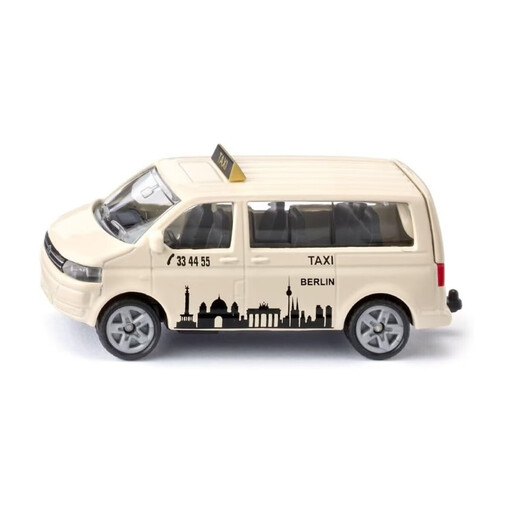
Why this product suits the profile: This compact model is recommended for children aged 3 and above and requires no batteries. It is ideal for short play sessions, on the go, or as an addition to a vehicle world.
The age recommendation, compact dimensions and manual operation make the choice straightforward. Small parts should still be kept in mind.
Metal and plastic construction, rubber tyres and opening rear door; no batteries required.
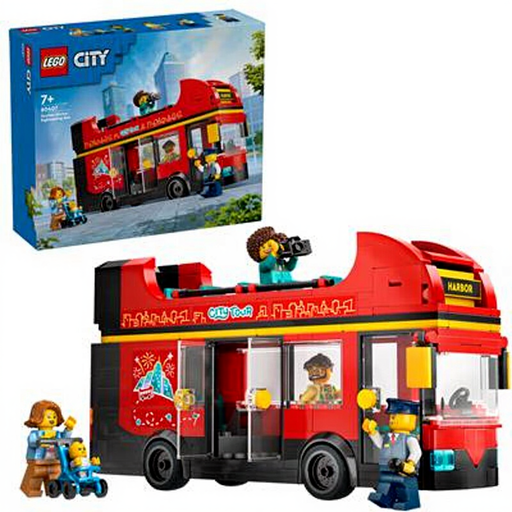
Why this product suits the profile: This set combines a structured build with subsequent role-play. It is aimed at children aged 7 and above and includes five minifigures.
The piece count and age recommendation make the complexity transparent. This model is not a pure decorative item but is designed for building and play.
384 pieces, open top deck, adjustable destination sign and compatibility with other LEGO City sets.
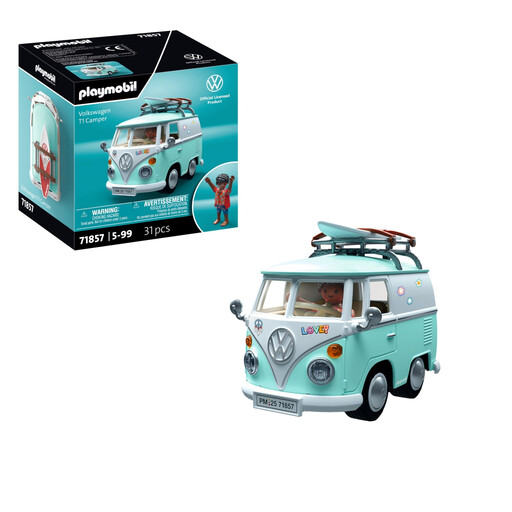
Why this product suits the profile: The VW T1 combines a compact toy vehicle with a potential display function. The roof can be opened, and it also includes a figure and a surfboard.
The product description clearly states the recommended age of 4 and above, manual operation and dimensions. This allows you to assess the space needed in advance.
Opening roof, surfboard as accessory and retro camper design; no batteries and no assembly required.

Why this product suits the profile: This model is aimed at fans aged 10 and above who are looking for an extensive bus construction kit with play and display functions.
The high piece count and age rating prevent it from being mistakenly categorised as a simple bus toy for younger children.
954 pieces, nine figures, rotating wheels, removable roof and a stated model size of 28 × 28 × 13 cm.
For younger children from 12 months, the PLAYMOBIL JUNIOR Travel Bus is designed with four figures, colour-coordinated luggage pieces and a sorting function. For fans of classic vehicles, a VW T1 model bus in 1:36 scale or a compact 1:56 die-cast bus could be suitable. According to details, these models are sometimes only recommended from age 14.
A PLAYMOBIL bus with a beach theme or a coach bus toy can offer children aged 4 and above additional role-play scenarios. With electric or remote-controlled models, parents should also check the battery compartment, range, storage and the supervision required.
We have put together a complete, regularly updated list of products that fully meet these strict selection criteria and the safety regulations in force in the EU.
Compact, manually operated models with manageable accessories are often suitable. The specific manufacturer's recommendation remains decisive. A SIKU VW T5 Minibus is recommended for children aged 3 and above according to the product description. Small accessory parts should still not be accessible without supervision.
The lifespan depends on the material, mechanics and usage. Regularly check wheels, doors, roofs and plug connections. Damaged parts should not be used further. For construction kits, a sealable storage container is recommended so that individual elements do not get lost.
Many models work completely manually and require no batteries. With remote-controlled or illuminated variants, batteries and possibly replacement batteries are needed. Before buying, check the battery type, what is included in the delivery and the intended use.