
Lieferung heute & morgen

Qualitätsgarantie

Willkommens-Angebote freischalten: KOSTENLOSE Lieferung | Bis zu 80 % RABATT | Kostenlose 30-Tage-JoyPlus-Testphase
App herunterladen
The search for the perfect toy car can quickly become overwhelming. The selection ranges from simple push cars for toddlers to complex, remote-controlled stunt vehicles. But not every shiny model lives up to its promises. Many buyers face disappointment due to exaggerated marketing claims, hidden defects, or unsuitable features. This guide will help you spot the common pitfalls and make an informed decision.
Before you make a decision, be aware of the most common issues that can quickly put an end to the fun.
To avoid these traps, it's helpful to check a few key parameters. These objective criteria provide insight into the true quality and suitability of a toy vehicle.
The material is a crucial indicator of durability and safety.
The type of drivetrain significantly determines the play value and the target audience.
For electrically powered models, the power supply details are crucial.
Instead of making a one-size-fits-all recommendation, we've curated products for different user profiles and requirements.
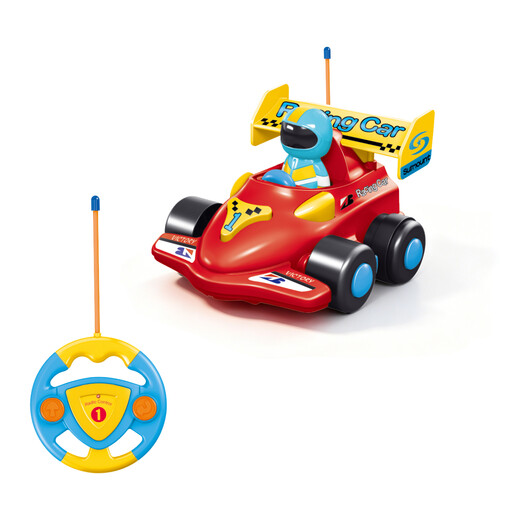
Why it's a good fit: This vehicle is specifically designed for the needs of toddlers. Its chunky build is robust enough for rough play, and the remote with just two buttons (forward and turn) is intuitively easy to understand. The removable driver figure also helps develop fine motor skills.
It bypasses the frustration trap with its ultra-simplified controls. The sturdy construction counteracts the durability trap.
The combination of simple remote control and a tactile toy (the driver figure) provides an age-appropriate introduction to the world of RC vehicles.
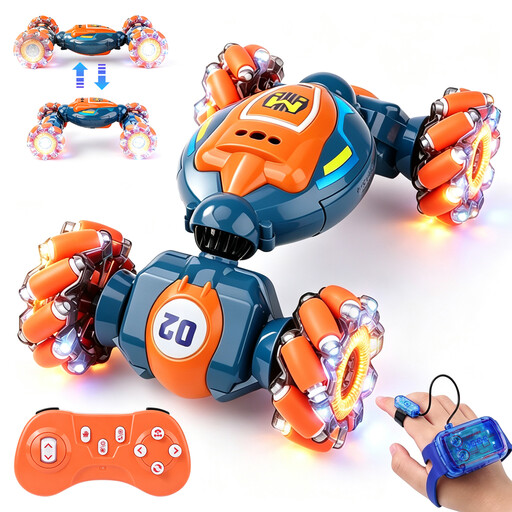
Why it's a good fit: For kids who want more than just driving in a straight line. This stunt car, with its omnidirectional Mecanum wheels, can drift sideways and perform 360-degree spins. The two control options—a classic remote and an innovative gesture-control watch—ensure long-lasting and varied fun.
It avoids the hidden costs trap, as rechargeable batteries for the car (3.7V 500mAh) and the gesture watch are included. The diverse stunt functions prevent boredom from setting in too quickly.
The dual control modes offer both an easy entry point and an advanced, interactive way to play. The all-terrain wheels allow it to be used on various surfaces.
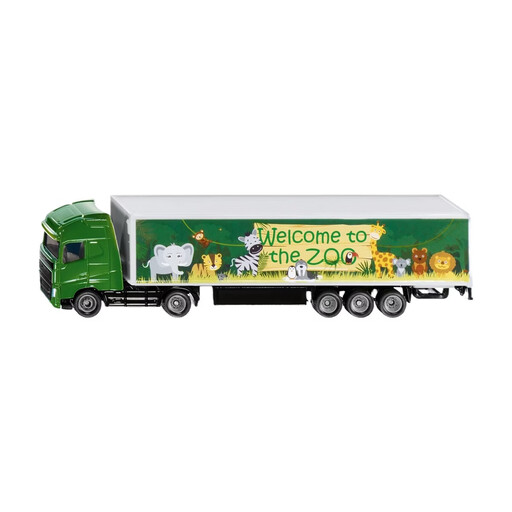
Why it's a good fit: Ideal for children who enjoy recreating realistic scenarios. This detailed 1:87 scale model features a metal body, a detachable trailer, and an opening rear door. It encourages imaginative play centered around transport and logistics.
It avoids the durability trap thanks to its robust metal body. As a battery-free toy, it also sidesteps the pitfalls of short runtimes and hidden costs.
The high level of detail and functional elements (detachable trailer, opening door) offer long-lasting, creative play value that goes beyond simple action.
We have compiled a complete, up-to-date list of products that fully meet these strict selection criteria and relevant safety regulations.
What should I look for in an RC car's battery life? Pay attention to the battery capacity, listed in milliampere-hours (mAh)—a higher number generally means a longer runtime. A 500 mAh battery is a common value. Also, compare the stated playtime to the charging time. Models with included, USB-rechargeable batteries are often the more practical choice.
Are metal or plastic toy cars a better choice? It depends on the intended use. Lightweight plastic (like ABS) is well-suited for fast, agile stunt cars. Metal (die-cast) is heavier, more robust, and ideal for detailed model cars or a toy truck. For younger children, high-quality, shatterproof plastic with rounded edges is often a safer and more practical choice.
From what age is a remote-controlled car suitable? Very simple models with two-button controls are available, designed for children as young as 18 months. More complex vehicles with multi-channel remotes, high speeds, or advanced stunt functions are typically recommended for children aged 6 or 8 and up. Always check the manufacturer's age recommendation on the packaging.