
Lieferung heute & morgen

Qualitätsgarantie

Willkommens-Angebote freischalten: KOSTENLOSE Lieferung | Bis zu 80 % RABATT | Kostenlose 30-Tage-JoyPlus-Testphase
App herunterladen
Toy cars may seem straightforward at first glance. In practice, however, toy cars for children, model cars, RC cars and diecast models can differ considerably in their materials, age recommendations, controls and care requirements. A low price tells you little about how a car will be used. A vehicle with delicate small parts may not be suitable for little hands, while a highly detailed collectible may not be built for outdoor play.
Many model cars contain small wheels, accessories or building pieces. These can pose a choking risk for children under three. For older children, it’s still worth checking whether the stated age range is suitable for their fine motor skills and the kind of play you have in mind.
Check:
A car with lots of features isn’t automatically right for every child.
Terms such as ‘Premium’, ‘High Speed’ or ‘All-Terrain’ can create different expectations. What matters are the features actually listed: drive type, battery voltage, scale, material, dimensions and what’s included.
For RC cars, for example, check whether a battery is included, which batteries the remote control needs and whether a charging cable comes with it. For model cars, opening doors, a metal body or a pull-back motor are features that are easier to verify.
A small SIKU vehicle is ideal for role play on a table and easy to take with you. A remote-controlled stunt car, on the other hand, needs a suitable space, room to manoeuvre around furniture and, depending on the model, a flat or sturdy surface.
Before buying, consider:
Traditional toy vehicles are often made from metal, plastic or a combination of the two. Metal bodies can feel reassuringly solid on small toy cars, while plastic is used for complex shapes, lights and RC car bodies. However, knowing the material doesn’t replace checking the build quality: there should be no sharp edges, loose parts or poorly fitted wheels.
For diecast model cars, scale and moving parts also matter. A 1:36 or 1:42 model needs considerably more display space than a 1:64 car.
Non-motorised model cars don’t need batteries. Pull-back cars use a simple spring mechanism. Remote-controlled cars usually have a rechargeable battery in the vehicle and batteries in the remote control.
Check:
For a ride-on electric car for children, also check that it’s designed for a child to sit in, and find out what remote-control or safety features it has.
Scale describes a model’s size in relation to the real vehicle; it doesn’t automatically indicate quality. For collectible cars, accurate proportions, paintwork and moving parts are often more important than a larger size. For children’s cars, it matters whether the vehicle is easy to hold and sturdy enough for play.
For LEGO racing cars, also consider the number of pieces, recommended age range and finished model size. Small pieces aren’t suitable for younger children and should be stored safely after building.
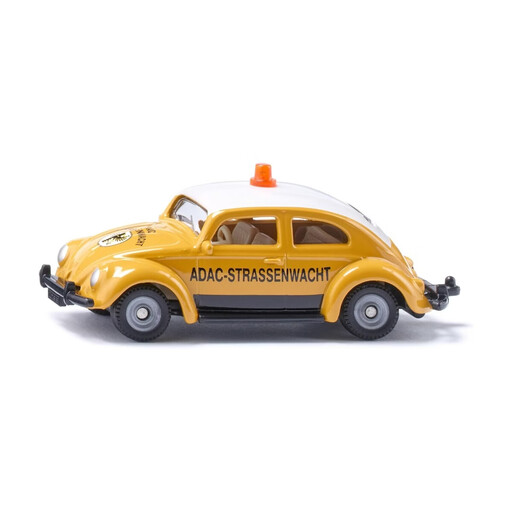
Why this product suits this profile: This compact model is recommended for children aged 3 and over and doesn’t need batteries. It’s ideal for role play, taking out and about, or adding to a collection of SIKU toy vehicles.
The age recommendation and material combination are clearly stated, and no batteries are needed. That means no ongoing battery costs or unclear extra features to contend with.
Metal body, rubber tyres, 1:64 scale and compact dimensions of approximately 7.8 cm in length.
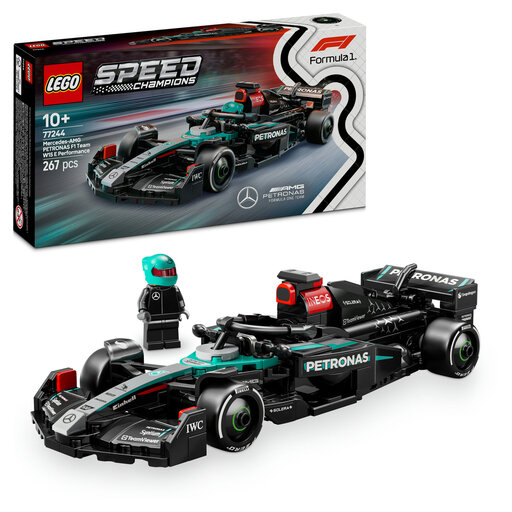
Why this product suits this profile: Designed for fans aged 10 and over, this building set combines model-making with a Formula 1 car that’s made to be displayed. It includes 267 pieces and a driver minifigure.
The piece count, age recommendation, model dimensions and included minifigure are all specified. This makes it easier to estimate how long the build will take and how much space you’ll need.
Opening cockpit with Halo element, front and rear wings, and a finished model length of 20 cm.
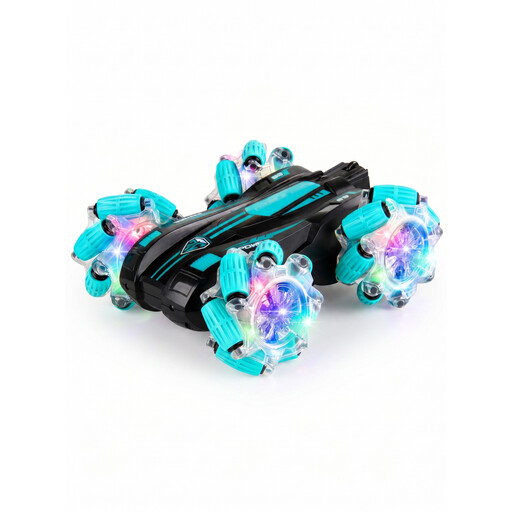
Why this product suits this profile: Built for stunts, this remote-controlled car features four-wheel drive, sideways drifting, 360-degree spins and LED lights for indoor and outdoor use.
Its intended uses and control functions are clearly listed. You can check in advance whether you have enough space and a suitable surface.
4WD, drives on both sides, LED wheels and a rechargeable battery, according to the product description.

Why this product suits this profile: According to the product details, this diecast model is intended for people aged 14 and over. It combines display-worthy details with a pull-back function.
The scale, material, age recommendation and features are all specified. This makes it less likely you’ll mistake a collector’s model for a sturdy toy for a young child.
Alloy body, opening doors, pull-back mechanism and a detailed design for display in a cabinet or on a desk.
We’ve put together a complete, regularly updated list of products that meet these strict selection criteria and fully comply with the safety regulations in force in the EU.
It depends on the model. Many simple metal cars and toy vehicles are recommended for children aged 3 and over. Models with small parts, building pieces or intricate moving parts may have a higher age recommendation. Always follow the manufacturer’s guidance and warnings.
How long it lasts depends on the battery, charging habits, the surface it’s used on and how the car is handled. After play, store the RC car somewhere dry and charge the battery according to the manufacturer’s instructions. Collisions, sand and moisture put more strain on the body and drive system of stunt cars than gentle driving on a flat surface.
For children aged 3 and over, choose simple models that are easy to hold and don’t have unnecessarily complicated controls. Fire engine toys, SIKU vehicles and basic pull-back cars are great for role play. Older children may enjoy LEGO racing cars, remote-controlled cars or racing cars with a particular theme. Before buying, make sure the age recommendation, intended play space and type of play are a good fit.