
Lieferung heute & morgen

Qualitätsgarantie

Willkommens-Angebote freischalten: KOSTENLOSE Lieferung | Bis zu 80 % RABATT | Kostenlose 30-Tage-JoyPlus-Testphase
App herunterladen
Toy cars for children vary considerably in terms of material, scale, operation and intended use. A small metal model car is ideal for role play and collecting, while a LEGO racing car also provides a building challenge. A police toy car with lights and sound appeals to different children than a remote-controlled toy car.
To avoid disappointment after a short time, parents and relatives should avoid three common pitfalls in particular.
“From 3 years” does not automatically mean that a vehicle is suitable for every child in this age group. Small parts, stickers, removable figures or accessories may require additional care. With a LEGO car building kit for ages 9 and over, patience, fine motor skills and the ability to follow building instructions are more important.
For younger children, larger vehicles that can be played with straight away are usually more straightforward. For toy cars for ages 9 and over, the construction can be more challenging, provided the child enjoys building and can handle small parts safely.
A detailed model can be perfect for displaying on a shelf, but delicate attachments or stickers are not always designed for intensive play. When choosing model cars for children, you should therefore check whether doors, tailgates or wheels are actually designed for regular play.
A SIKU model car made from metal and plastic also serves a different purpose from a large Bruder emergency vehicle. Scale, material and moving functions reveal more than marketing terms such as “realistic” or “sturdy”.
Lights, sound, battery requirements and remote control should be stated explicitly in the product details. A LEGO Speed Champions model is built and then pushed; it does not become a remote-controlled vehicle. With a racing car toy, you should also clarify whether it is designed for free racing, a specific track or display only.
The manufacturer’s age recommendation is the first filter. Several LEGO Speed Champions sets in this selection are intended for children aged 9 and over, while the LEGO set featuring Jaguar Project 7 and Land Rover Defender is intended for children aged 10 and over. According to the product details, the Red Bull F1 model is intended for people aged 18 and over.
Warnings about small parts are particularly important. Products marked “not suitable for children under 36 months” must not be given to children under three. Direct adult supervision may be advisable for younger children or complex building kits.
Pay attention to the material information and how the vehicle is intended to be used:
The “1:64” specification for the Hot Wheels Mario Kart range indicates a small scale. A Bruder vehicle at a scale of 1:16 is considerably larger, providing more space for figures and functions.
A car without batteries is ready to use straight away and does not incur ongoing battery costs. This applies, for example, to the SIKU 1548 VW T5 Special Forces Command model and the Hot Wheels Mario Kart vehicles. With a police toy car featuring lights and sound, you also need to consider the battery compartment, volume and storage.
For a building kit, the number of parts and the building time are important. The LEGO Porsche 911 GT3 RS contains 348 components, while the LEGO Bugatti Centodieci has 291. A higher number of parts is not proof of quality, but it may indicate a longer building process and more construction details.
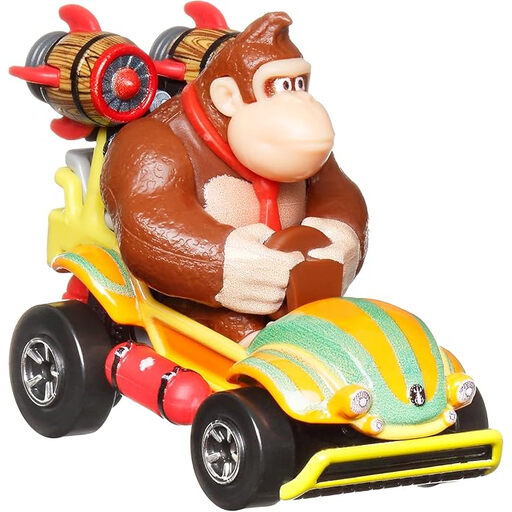
Why this product matches the profile: The 1:64-scale vehicles are compact, require no batteries and can be played with individually or collected. According to the product details, the model is intended for children aged 3 and over.
The product details specify the scale, weight, battery status and recommended age group. This makes it easier to assess how the vehicle can be used before buying.
1:64 scale, metal components, no assembly required and compatibility with Hot Wheels tracks according to the product description.
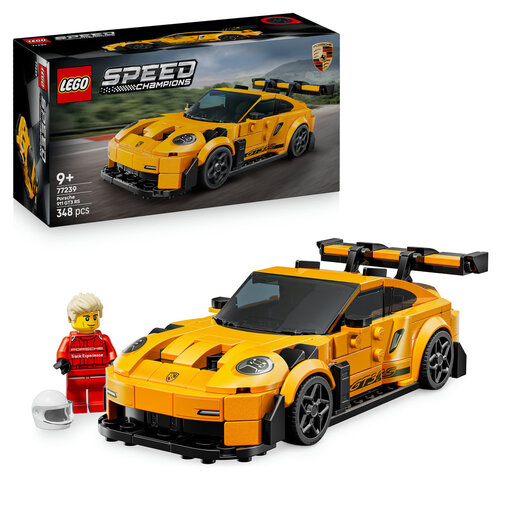
Why this product matches the profile: This LEGO car building kit combines step-by-step construction with a model that is suitable for play and display. According to the product details, it is aimed at fans aged 9 and over.
The description states the number of parts—348—as well as the dimensions of the completed model and includes a warning about small parts.
Porsche details such as the rear wing and air intakes, a driver minifigure and use of the LEGO Builder app.
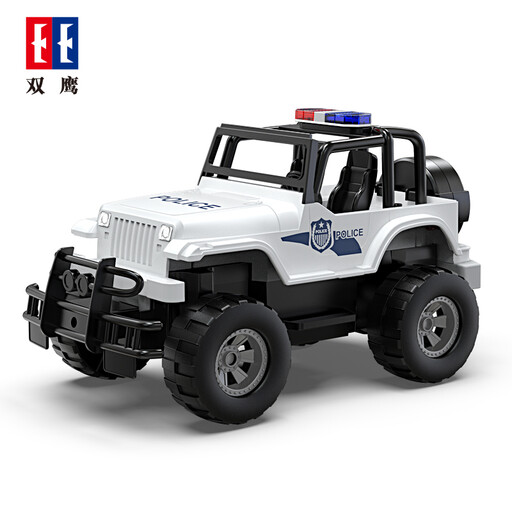
Why this product matches the profile: The police toy car is specified for children aged 6 and over and moves using friction power. It is suitable for role play without a remote control.
The drive system is clearly described as friction-powered. Buyers therefore know not to expect remote control and do not need to plan for battery operation.
Off-road Jeep design, siren sound, flashing lights and a body described as impact-resistant in the product name.
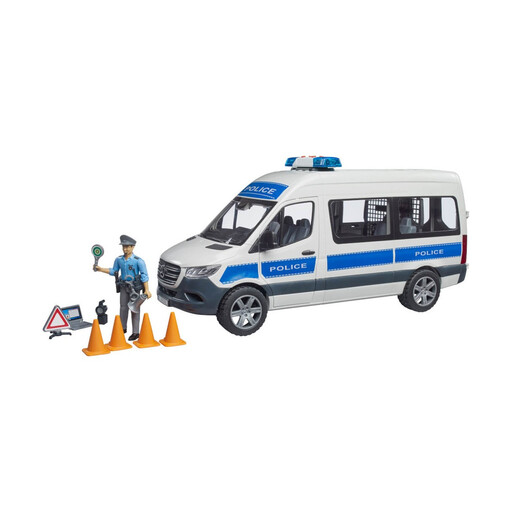
Why this product matches the profile: The 1:16 scale, an included police figure and light and sound module create a larger play world for children aged 4 and over.
The product details list the age recommendation, scale, battery requirements and warnings separately. This makes it easier to plan for regular role play.
Openable vehicle sections, an included figure and integrated light and sound module according to the product description.
We have compiled a complete, regularly updated list of products that fully meet these strict selection criteria and the safety regulations applicable in the EU.
For children aged 3 and over, compact models that can be played with straight away and do not require complex assembly may be suitable, provided the manufacturer’s age recommendation and warnings are followed. According to the product details, the Hot Wheels Mario Kart range is intended for children aged 3 and over. The Bruder MB Sprinter police vehicle is specified for ages 4 and over and includes additional functions and a figure. Small parts should be kept away from children under three.
A model car often places greater emphasis on scale, vehicle details and collectability. A toy car is generally more focused on rolling play, figures, sounds or everyday scenarios. However, the boundaries are fluid: a SIKU model car can be played with as well as displayed, while a LEGO racing car can also become a collector’s item after it has been built.
Vehicles without batteries or remote control generally do not incur regular running costs. With light and sound modules, batteries need to be checked and replaced when necessary. A remote-controlled toy car also requires batteries or rechargeable batteries for both the vehicle and the remote control. Before buying, you should therefore check the power supply, availability of replacement parts and care instructions in the product details.