
Lieferung heute & morgen

Qualitätsgarantie

Willkommens-Angebote freischalten: KOSTENLOSE Lieferung | Bis zu 80 % RABATT | Kostenlose 30-Tage-JoyPlus-Testphase
App herunterladen
Toy cars make versatile gifts for babies, toddlers and children up to around eight years old. Depending on the model, they’re ideal for imaginative play, little races or realistic building-site and farm scenarios. The choice ranges from simple push-along vehicles and an RC car for toddlers to a race track for children.
To avoid a vehicle being left unused in a corner after just a short time, parents, grandparents and other family members should steer clear of a few common buying mistakes.
A product may be described as suitable for a particular age and still contain small parts. For example, the F1 remote-control car is listed as suitable from 18 months, while the product information also warns that it contains small parts and is suitable only from age three. In cases like this, always follow the specific warnings on the packaging and product page.
So, check:
Lights, music and sounds can make play more engaging, but they don’t replace controls that are suitable for a child’s age. Toddlers generally need just a few clearly identifiable controls. Older children, on the other hand, may enjoy a vehicle with more features or a more complex track.
Check that the features really suit the child’s age and fine motor skills. A larger set isn’t automatically more practical for everyday use.
A large race track needs a flat surface to set it up on, as well as somewhere to store it after playtime. For vehicle sets with lots of parts, check that the accessories can be stored safely too. Compact models, foldable tracks or individual vehicles are often more practical for smaller homes or when travelling.
The age recommendation is the first thing to check. Toy cars for children aged 1 and over should be easy to grip and push. For interactive models, look for secure battery compartments and easy-to-reach buttons. Vehicles for children aged three and over can be more complex, but may contain small parts.
The surface matters too: vehicles with small wheels work most reliably on smooth floors. Depending on their design, a toy tractor or construction vehicle toy with larger wheels may also be suitable for carpets or sand. The product description is the best source of information.
For regular play, sturdy bodies, securely attached wheels and smooth-running moving parts are important. A metal body may be part of the design of model vehicles such as the SIKU lorry, while other products are made entirely or mainly from plastic.
Moving parts such as a tipper, fire engine ladder, digger arm or trailer hitch should have no sharp edges and must not come loose accidentally. Check the vehicle regularly for cracks, loose parts and damage to the battery compartment.
Check whether batteries are included. The VTech race track set requires four AA batteries, which the product information says are included. The F1 remote-control car requires three AA batteries, which are not included. For battery-operated toys, it’s also worth considering:
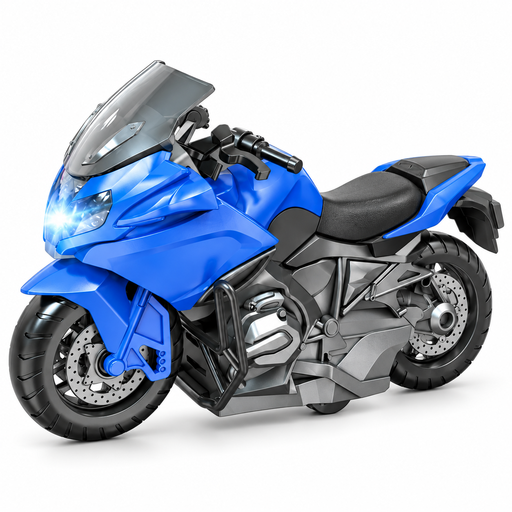
Why this product suits this profile: The friction-powered mechanism means there’s no need for a remote control. Your child can push the model along and watch it move.
The controls are simple, and no extra controller is needed. Check the packaging for battery information before buying.
Friction-powered mechanism, lights and sound, with one motorcycle included.
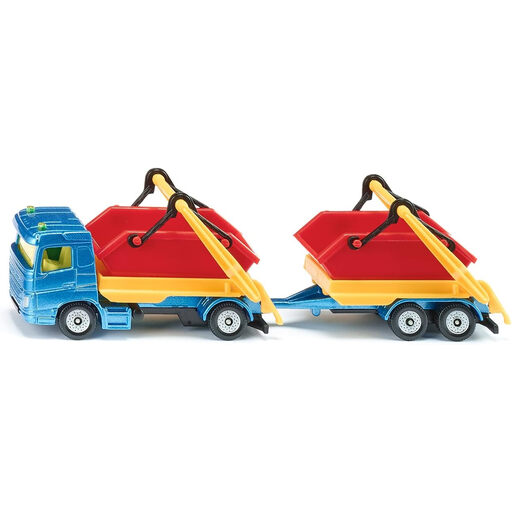
Why this product suits this profile: The model combines a metal body with plastic tyres, a trailer and a working tipper for loading and transport play.
The product description gives specific details about the materials, dimensions and moving container system, rather than making vague claims about durability.
Metal body, trailer and moving tipper; listed as suitable from age three.

Why this product suits this profile: The moving digger arm and handle are designed for building-site play indoors, in the garden or in the sandpit.
The description says that no assembly is required and there are no electronic features, so there’s no risk of overlooking battery requirements.
Reinforced plastic, a moving digger arm and listed as suitable from age two.

Why this product suits this profile: The set combines two vehicles, a track you can build and interactive sensors. According to the product information, it’s intended for children aged one and over.
The dimensions of both the packaging and assembled track are provided, making it easier to work out how much space you’ll need before buying.
Two vehicles, 11 sensor signals, a variety of track sections and four AA batteries included, according to the product information.
We’ve put together a comprehensive, regularly updated list of products that meet these strict selection criteria and fully comply with the safety regulations in force in the EU.
Choose models with a clear age recommendation, large parts that are easy to grip and a secure battery compartment. Check for warnings about small parts before buying. If you’re unsure, choose a product with a higher age recommendation.
Their lifespan depends on the materials, play environment and how well they’re cared for. Regularly checking the wheels, axles, moving parts and battery compartment can help you spot damage early. Keep electronic models away from moisture.
This depends on the type of battery, how often it’s used and whether it has an automatic shut-off. Check whether batteries are included and how many are needed. Rechargeable batteries can be a practical alternative if the vehicle is used regularly, as long as they’re suitable for that product.