
Lieferung heute & morgen

Qualitätsgarantie

Willkommens-Angebote freischalten: KOSTENLOSE Lieferung | Bis zu 80 % RABATT | Kostenlose 30-Tage-JoyPlus-Testphase
App herunterladen
Toy cars for children are available in many different versions, from small learning vehicles for children aged 1 and over and remote-controlled cars for children to electric ride-on vehicles for outdoor use. Product images often look similar, but the requirements can vary considerably. The key factors are not just lights, music or high speed, but also age suitability, ease of use, space requirements and safety features.
A vehicle with a remote control, small accessories or fast movements may be unsuitable for younger children. A toy car for children aged 1 and over should be large, stable and easy to grip. A stunt car for children with 360-degree spins, on the other hand, is more suitable for older children who can operate the remote control safely.
Even with a toy car for children aged 3 and over, parents should check whether the child can accelerate and brake independently or whether an adult needs to operate the remote control.
Manufacturers' battery-life specifications depend on the surface, weight, driving style and temperature. With an RC Drift Car, frequent drifting can drain the battery more quickly than slow driving. With an electric ride-on car, motor power, inclines and the load carried also affect the actual operating time.
It is therefore important to check:
A toy car with lights and music can add to the play value. However, these features say little about the tyres, suspension or stability. With an off-road children's car, grippy wheels, suspension and controlled acceleration are more important than additional sound effects.
For remote-controlled models, you should also check whether replacement tyres, batteries or clear operating instructions are available.
For children aged roughly 1 to 3, compact push-along or learning vehicles with large controls are generally suitable. According to the product information, the VTech Tut Tut Baby Flitzer Fire Engine is intended for children aged 1 and over and features moving elements, lights, sounds and songs. Its dimensions are approximately 5.77 × 8.97 × 8.09 cm.
For an electric ride-on car for children, parents should also check the seat height, access, vehicle width and available space. A two-seater is versatile, but requires more storage space and may be harder to move because of its own weight.
A children's ride-on vehicle with remote control should have clearly identifiable forward, reverse and stop functions. For larger electric vehicles, a remote control for adults, a safety belt and a slow-start function are practical features.
2.4 GHz remote controls are common with RC models. This technology is suitable for operating several vehicles at the same time, provided that the relevant systems are paired correctly. Proportional steering allows finer control than a simple left-right switch.
With an electric ride-on car for children, the maximum load capacity and recommended age group should be considered together. A higher load capacity does not automatically mean that the vehicle is equally suitable for every child. The seating position, belt and ease of operation must also be right.
Look out for:
The CE mark is a manufacturer's declaration of conformity, not an independent quality seal. With used vehicles, the battery, charger, tyres and cables should be checked particularly carefully before purchase.
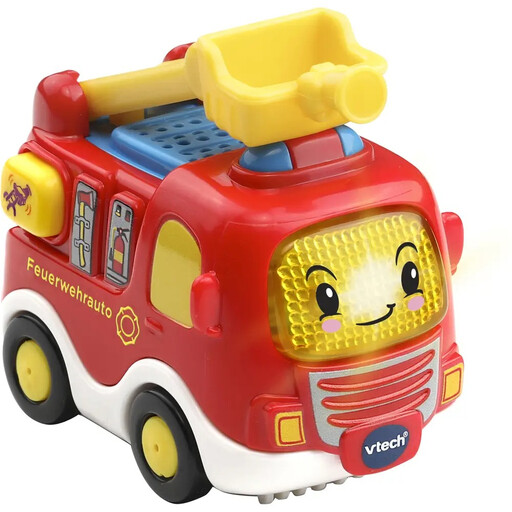
Why this product suits the profile: According to the product information, this compact learning toy is designed for children aged 1 and over and is suitable for use in a child's bedroom.
It does not require a drive battery and is not designed for high speed or large outdoor areas. The age rating and warning notices should still be observed.
Lights, sounds, three songs, six melodies and a movable ladder; according to the product information, two AAA batteries are included.
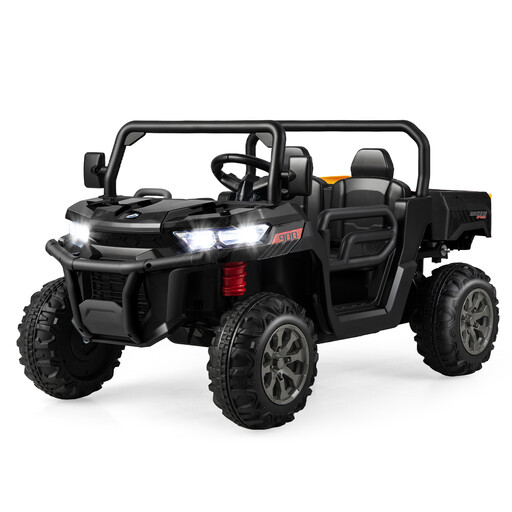
Why this product suits the profile: According to the product information, this two-seater vehicle is intended for children aged 3 to 8 and gives parents an additional way to control it.
The specifications list a 2.4 GHz remote control, safety belt, soft start and a load capacity of up to 50 kg. Check the dimensions and available space before buying.
Two seats, two motors, suspension, LED headlights, music functions and a stated speed of 3 to 8 km/h.
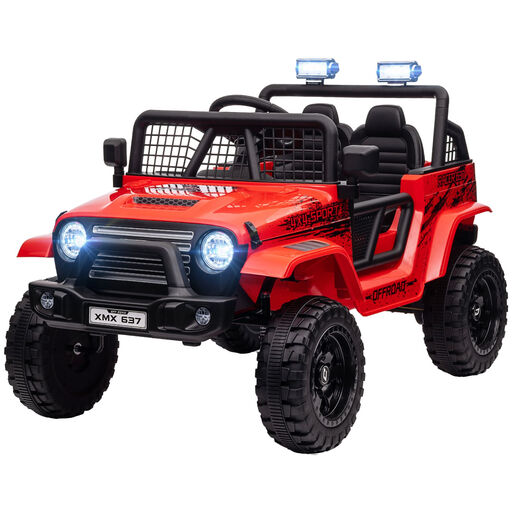
Why this product suits the profile: The Jeep-style design with 12 V drive will appeal to families looking for an electric ride-on car for level paths and supervised play.
The remote control, safety belt and stated age range of 3 to 7 years make it easier for adults to maintain control. The surface remains a decisive factor, however.
Dual drive, lights, music and a safety belt combine the key features of an electric ride-on car for children.
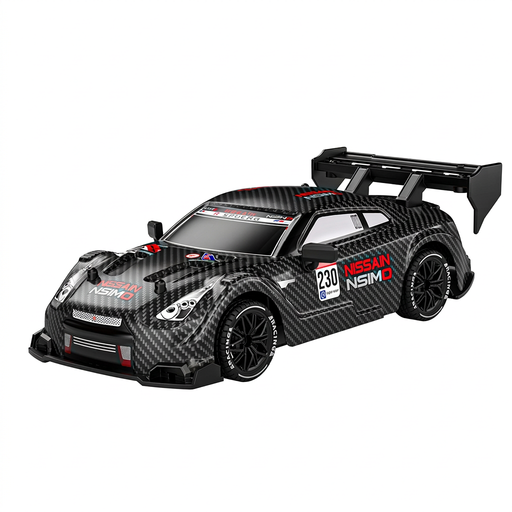
Why this product suits the profile: According to the product information, this model is intended for children and young people aged 8 and over and is designed for indoor surfaces and level outdoor paths.
Two sets of tyres allow you to switch between drifting and racing. This means the car is not limited to just one driving function.
All-wheel drive, proportional controls, shock-absorbing chassis, LED lighting and a stated driving time of approximately 20 to 40 minutes per charge.
We have put together a complete, regularly updated list of products that fully meet these strict selection criteria and the safety regulations applicable in the EU.
For this age group, compact, sturdy learning vehicles without small parts that could be swallowed are worth considering. Clear age labelling, a secure battery compartment and adult supervision are important. Always assess the specific product against the manufacturer's warnings.
This depends on the battery, motor, load, surface and driving style. The RC Drift Car mentioned above has a stated driving time of approximately 20 to 40 minutes. According to the product information, a 12 V children's ride-on vehicle may take around 8 to 12 hours to charge. For longer play sessions, a compatible replacement battery may be useful, provided the manufacturer offers one.
The electricity cost per charge is usually manageable, but it should not be considered in isolation. You may also need to budget for replacement batteries, remote-control batteries, tyres and chargers. For a realistic estimate, battery capacity, charging frequency and the availability of replacement parts are key factors.