
Lieferung heute & morgen

Qualitätsgarantie

Willkommens-Angebote freischalten: KOSTENLOSE Lieferung | Bis zu 80 % RABATT | Kostenlose 30-Tage-JoyPlus-Testphase
App herunterladen
Toy cars for children vary considerably in terms of operation, recommended age, power supply and features. Eye-catching design alone says little about whether a vehicle is suitable for your child’s everyday play. For parents, grandparents and other family members, three common purchasing misconceptions are particularly relevant:
First, check the age rating for the specific model and the manufacturer’s safety instructions. A toy car for children aged 1 and over should be easy to operate with simple movements and should not contain small parts that can come loose easily. For vehicles with remote controls, it is also important to consider whether the child can already understand direction and speed.
The VTech 80-514004 Tut Tut Baby Flitzer – Fire Truck is listed as suitable for children aged 1 and over. At the same time, the safety information states that the vehicle must not be used by children under 1 year and that younger children should be supervised. This particular model has a secure battery compartment, moving elements and buttons for interaction.
A toy car for children aged 3 and over may include more complex functions, larger vehicle bodies and smaller accessories. This applies, for example, to a tipper truck with a movable skip. Age recommendations are therefore not just marketing information, but an important selection criterion.
Manually operated vehicles do not require batteries and are suitable for children who want to discover cause and effect by pushing the toy themselves. An interactive toy car also responds to buttons, wheel movements or sensors. This can make play more varied, but it also results in higher battery consumption.
A remote-controlled car for children should have straightforward controls. For toddlers, a small number of directions and an easy-to-recognise remote control are useful. An RC stunt car with drifting, spinning and flipping functions, on the other hand, is more suitable for older children. The 2.4G RC stunt car listed in the range is intended for children aged 6 and over and uses a handheld remote control as well as additional tilt control.
For frequent use, rounded edges, sturdy wheel mounts and a well-protected body are important. ABS plastic is listed as the main material for several of the vehicles featured. However, this alone does not guarantee unlimited durability. Regularly check the wheels, hinges, screws, battery compartment and moving parts.
The size should also suit the play area. A large tipper truck can be practical in a sandpit, but requires more space in a child’s bedroom. A compact fire engine is easier to hold and store. After playing in sand, remove dust and grains from the vehicles to prevent moving mechanisms from becoming blocked.
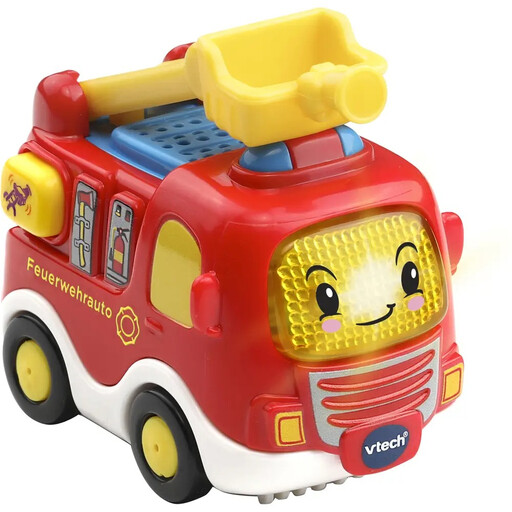
Why this product suits the profile: This compact fire engine is listed as suitable for children aged 1 and over and can be operated using buttons or by pushing it. It is suitable as a first vehicle toy with a manageable range of functions.
The age recommendation, secure battery compartment and simple operation make the choice more transparent than with a vehicle featuring complex remote controls.
Lights, sounds, three songs and six melodies; a movable fire ladder and compatibility with Tut Tut Baby Flitzer playsets.
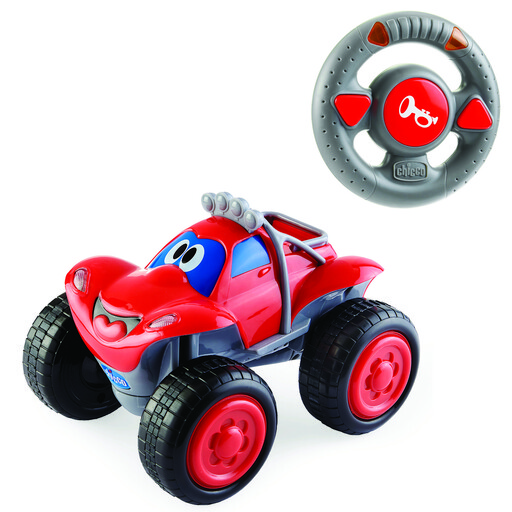
Why this product suits the profile: This remote-controlled vehicle is listed as suitable for children aged 2 and over and combines large wheels with a steering-wheel-style remote control. It is operated by tilting it to the left or right.
The controls are clearly focused on steering and driving. However, the guidance regarding supervision, hair, loose clothing and batteries should still be followed.
Large wheels, functional headlights, engine sounds and an ABS plastic body according to the product details.
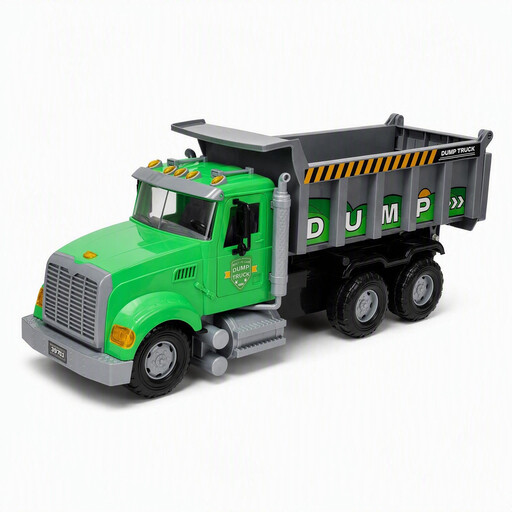
Why this product suits the profile: This large tipper truck is intended for children aged 3 and over and can be used indoors or in a sandpit. The skip can be raised manually and loaded with small objects.
The friction drive does not require batteries. This eliminates ongoing battery consumption; the hinge and tipping mechanism should be checked regularly for damage.
Large dimensions, a movable tipping skip, soft plastic tyres and a thick-walled ABS body according to the product details.
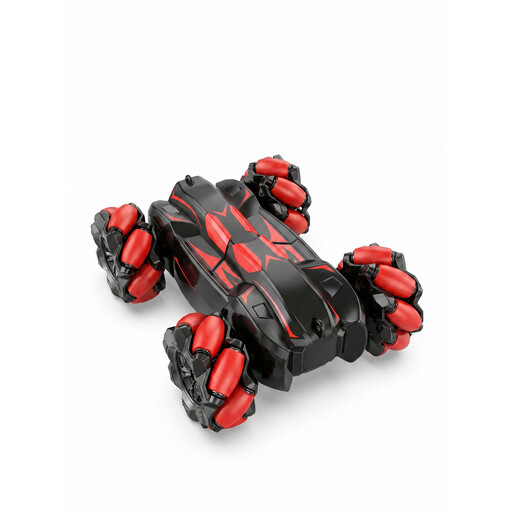
Why this product suits the profile: According to the product details, this RC stunt car is aimed at children aged 6 and over. It will appeal to older children who want to try out drifting, spinning and flipping functions.
The clear age rating prevents a complex stunt vehicle from being bought for a toddler. A manually controlled model is more suitable for younger children.
4WD drive, Mecanum wheels, LED lighting and two control modes; the battery is rechargeable.
A toy fire engine is ideal for role play and may feature a ladder, lights or sounds. A toy police car appeals to children who want to recreate emergency scenarios; when choosing one, check the volume and battery consumption. A toy digger or toy tipper truck is suitable for children who enjoy loading, pushing and moving things. A toy tractor can be a suitable addition to farm and vehicle play worlds.
When choosing a gift for children, you should pay particular attention to age, available play space, volume and batteries. For rechargeable RC models, charging time and battery care should be included in your purchasing decision. For battery-powered vehicles, check whether batteries are included and whether the compartment must be opened by an adult.
We have put together a complete, regularly updated list of products that fully meet these strict selection criteria and the safety regulations applicable in the EU.
For children aged 1 and over, compact vehicles that are easy to grip and feature push, press or simple sensor functions are a natural choice. Pay attention to the specific age recommendation, a secure battery compartment and the safety warnings. Supervision remains advisable with interactive models.
The service life depends on the materials, play environment and how the toy is handled. Vehicles without delicate electronics are often easier to maintain with careful use. Check the wheels, stickers, hinges and battery compartment regularly. If there are cracks, sharp edges or loose parts, the vehicle should no longer be used.
In addition to the purchase price, you may need to pay for batteries, charging accessories and, where applicable, replacement batteries. A friction-powered vehicle such as a tipper truck does not require batteries. With a battery-powered RC model, however, you should check the charging time, battery capacity and whether the battery can be replaced at a later date.