
Lieferung heute & morgen

Qualitätsgarantie

Willkommens-Angebote freischalten: KOSTENLOSE Lieferung | Bis zu 80 % RABATT | Kostenlose 30-Tage-JoyPlus-Testphase
App herunterladen
Toy cars for children are among the most popular gifts. However, eye-catching packaging and a host of features reveal little about whether a children's vehicle is genuinely suitable for everyday family life. Before buying, parents, grandparents and other family members should therefore check the recommended age, controls, materials and power supply above all else.
A car with lights and sound may seem more entertaining at first glance. For younger children, however, a large number of buttons can be confusing. A simple push-and-go car, which moves when pushed or activated by a pressure mechanism, is often more intuitive to use. The key consideration is whether the controls match the child's stage of development.
A model vehicle with small accessories may be intended for a three-year-old, while a toy vehicle for children aged 1 year and over must meet different requirements. An age recommendation such as “3 years and over” is not merely a marketing message: small parts can present a choking hazard for younger children. Before placing an order, checking the warnings and recommended age group is therefore essential.
When buying an interactive children's car, shoppers should check whether batteries are included, which type is required and whether the battery compartment is secure. An RC buggy usually needs several batteries for the vehicle and remote control. This ongoing expense does not apply to purely mechanical vehicles. Cleaning is also important: wipe-clean surfaces are practical for frequent play, while electronic products must not be immersed in water.
The recommended age must match the child's actual play habits. For children aged 1 year and over, models with easy-to-grip shapes and straightforward functions are suitable. Older children may enjoy vehicles with accessories, figures or remote control.
Size is important too. A large model vehicle for children needs enough space in the bedroom. An off-road buggy for children with suspension or larger wheels may be suitable for role play on different surfaces, while small vehicles tend to work best on smooth floors.
Look for details such as the type of plastic, metal frames and moving parts. The Bruder RAM 2500 Power Wagon, for example, is described as featuring ABS plastic, opening doors, a load bed, sprung axles and a detachable tow bar. Specific product features like these are more informative than general terms such as “particularly robust”.
For a doll's buggy, on the other hand, the frame construction, handle height, folding mechanism and weight are important. According to the product description, the AM Doll Buggy has a folding metal frame, a handle height of approximately 58 cm and a weight of 900 g. It is intended for children aged 3 years and over and is not a vehicle for toddlers aged 1 year and over.
For a car with lights and sound, check the information on batteries, speaker functions and cleaning. The VTech Tut Tut Baby Flitzer Fire Truck requires two AAA batteries, which are included according to the product information, and is suitable for children aged 1 year and over. The listed features also include a movable fire ladder, buttons, light sensors, songs and melodies.
Batteries should be kept out of children's reach, and the compartment should be checked regularly to ensure it closes securely and is not damaged. This applies to all models: keep the packaging information and inspect the toy for loose or damaged parts before use.
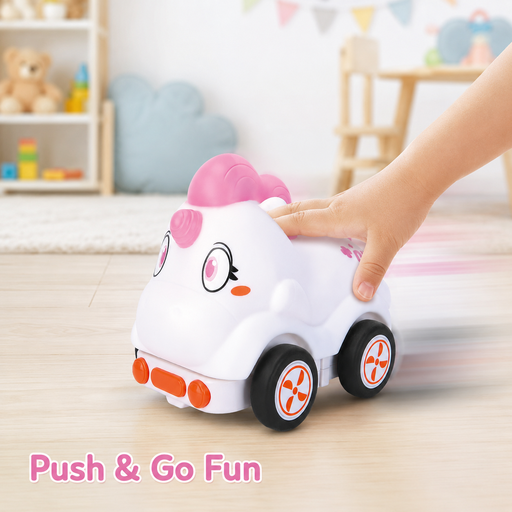
Why this product suits this profile: This push-along car combines simple forward movement with lights and sound effects. It is sold as a single pack and is suitable for creative play or as a gift.
It is designed to be pushed and does not require a remote control. Before buying, check whether batteries are included and which colour or version will be supplied.
Push-and-go mechanism, lights and sound functions, and easy integration into role play.
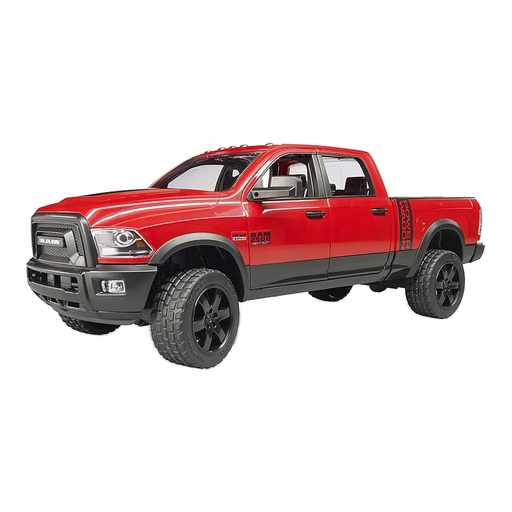
Why this product suits this profile: This 1:16 scale model is aimed at children from 36 months to 8 years. The doors, load bed, steering-wheel control and tow bar offer several hands-on ways to play.
The product description lists specific components and dimensions. As it contains small parts, the model is expressly not intended for children under 3 years.
ABS plastic, sprung front and rear axles, 50 × 19 × 17 cm and no batteries required.
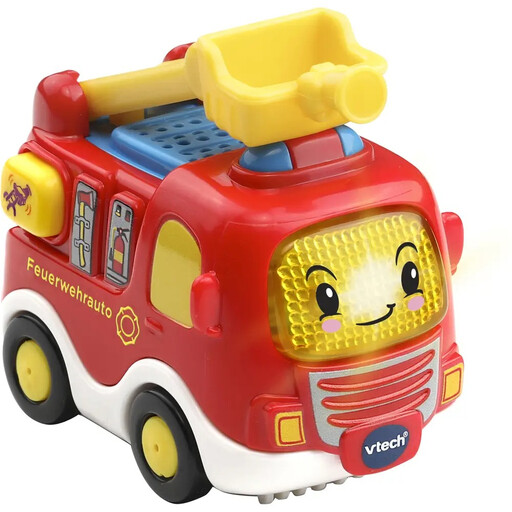
Why this product suits this profile: According to the product information, this fire engine toy is suitable for children aged 1 year and over. It combines buttons, wheel movement, lights, sounds and a movable ladder.
The age recommendation, battery type and included batteries are clearly stated. This makes preparation easier and avoids surprises when unpacking.
Suitable from 1 year, two AAA batteries included and compatible with other Tut-Tut-Baby-Flitzer playsets.
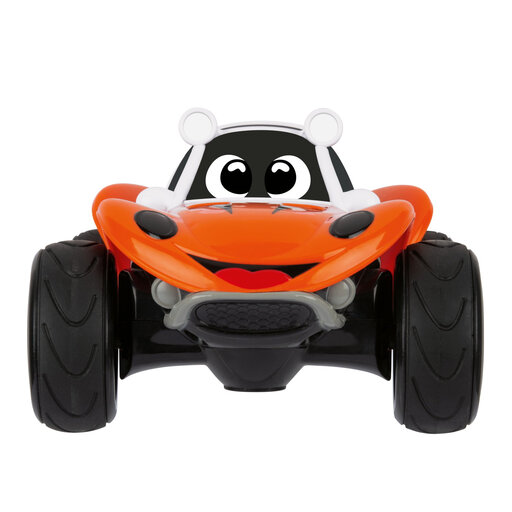
Why this product suits this profile: This RC buggy is designed for children aged 24 months and over. It moves in four directions and features off-road wheels and a steering-wheel-shaped remote control.
The product details state the age recommendation, battery requirements and cleaning instructions. The remote control must not come into contact with liquids, and batteries are not included.
Four driving directions, off-road wheels, obstacle function and separate batteries for the vehicle and remote control.
We have put together a complete, regularly updated list of products that fully meet these strict selection criteria and the safety regulations applicable in the EU.
For children aged 1 year and over, models with straightforward controls, easy-to-grip shapes and few loose small parts are suitable. According to the product information, a VTech Tut Tut Baby Flitzer is intended for children aged 1 year and over. The age recommendation on the packaging remains the decisive guidance, and play should be supervised.
Their lifespan depends on the materials, play environment and care. Vehicles without electronics have fewer components that can fail. With electronic models, batteries should be removed if the vehicle will not be used for an extended period. Regularly checking for cracks, loose wheels and damaged battery compartments helps you remove unsuitable products from use in good time.
Mechanical push-and-go models and many model vehicles do not require batteries. Vehicles with lights and sound need AAA or AA batteries, depending on the model. An RC buggy may require several sets of batteries because both the remote control and the vehicle need to be powered. These ongoing costs should be taken into account when comparing prices.