
Lieferung heute & morgen

Qualitätsgarantie

Willkommens-Angebote freischalten: KOSTENLOSE Lieferung | Bis zu 80 % RABATT | Kostenlose 30-Tage-JoyPlus-Testphase
App herunterladen
Toy cars for children may seem straightforward at first glance. In practice, however, they can differ considerably in terms of age recommendation, scale, material, functions and build quality. A small metal vehicle may be suitable for a child aged 3 and over, while a similar-looking model car may be intended for older children because of its small accessories.
This guide helps parents, families and collectors assess marketing claims and choose a vehicle that suits its intended use.
Elaborately printed car miniatures or die-cast cars can be visually appealing, but they are not automatically intended for younger children. Doors, figures, trailers or removable accessories expand the play possibilities, but may also constitute small parts. That is why the age marking on the product page and packaging is crucial, rather than appearance alone.
A scale such as 1:16 describes the ratio compared with the real vehicle. A 1:16 model is considerably larger than a 1:64 vehicle. Larger models with moving functions may be easier for small hands to operate. Compact Siku toy cars in the region of 1:55 to 1:64, on the other hand, are easy to take along and combine with other miniature vehicles.
Metal toy cars and die-cast cars often have a metal body, but may also contain plastic parts, rubber tyres or small attachments. For a toy intended for children aged 3 and over, parents should check whether the specific product is explicitly approved for this age group. For adult collectors, a model with fine details and moving parts may be more appealing than a robust vehicle designed for everyday play.
Most of the models mentioned here are not intended for children under 3 because they may contain small parts that could be swallowed. When choosing a gift for children aged 3 and over, check the age recommendation for the specific item. According to the product information, several SIKU models are suitable for children aged 3 and over. Various Bruder vehicles, such as larger emergency vehicles, are recommended for children aged 4 and over.
Direct supervision is advisable when using police vehicles with figures, light and sound modules or accessories. Small batteries must be kept out of the reach of younger children.
A metal body with plastic parts is commonly specified for small SIKU models. These may also feature rubber tyres and, depending on the vehicle, opening doors, a tailgate or a trailer coupling. Larger Bruder vehicles, by contrast, usually focus on a robust plastic body with functional components.
Before buying, it is worth checking:
Compact model cars are suitable for taking along or for smaller children's bedrooms. Larger models in 1:16 scale require more storage space, but often offer functions that support role play. For example, a Bruder tow truck toy with an extendable crane is better suited to a play world featuring a building site, workshop or emergency station than to a small bag for taking it along.
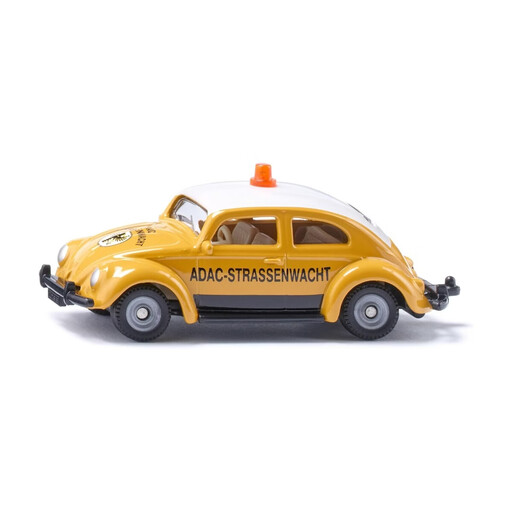
Why this product suits the profile: According to the product information, this compact vehicle is suitable for children aged 3 and over and does not require batteries. Its yellow ADAC design makes it suitable for simple rescue and traffic scenarios in the playroom.
The product data clearly states the material, size, age approval and warning notice. This makes it easier to distinguish the model from collector cars intended for older users.
Metal body, rubber tyres, compact dimensions and no battery operation.
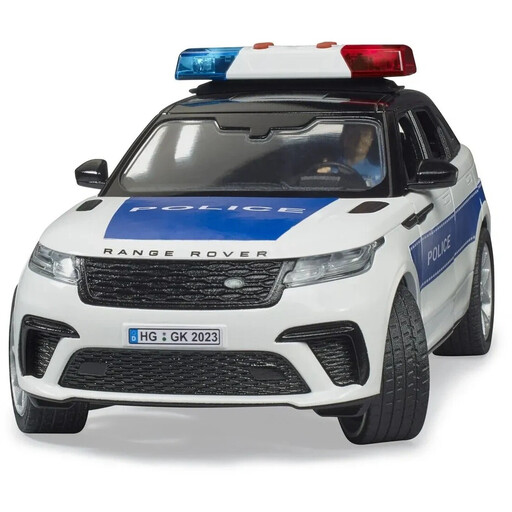
Why this product suits the profile: This 1:16-scale model combines a larger build with opening doors, a steerable front axle, tailgate and police figure. According to the product information, it is intended for children aged 3 and over.
The product description lists the specific moving elements and states that it is made from plastic. Buyers can therefore check in advance whether the size and functions suit the intended play.
Opening doors, steerable front axle, sprung axles and included police figure.

Why this product suits the profile: This 1:16-scale tow truck toy is intended for children aged 4 and over and offers several manual functions for workshop, breakdown assistance and recovery scenarios.
Rather than offering only the appearance of a tow truck, the product description specifically lists the crane, loading equipment, supports and wheel chocks.
Extendable and swivelling crane, tilting driver's cab and an additional off-road vehicle.
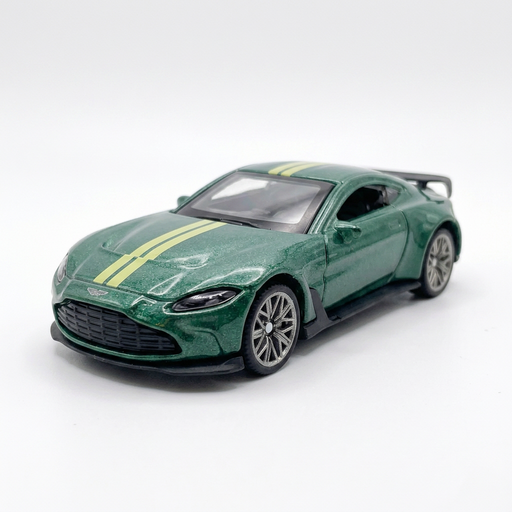
Why this product suits the profile: The product information recommends it for ages 14 and over. This compact alloy die-cast model is therefore better suited to older users, desk decoration or a collection of highly detailed model cars.
The age approval of 14 and over clearly distinguishes this model from toy cars for younger children. The scale and intended use as a collector's item are also specified.
1:64 scale, alloy construction, compact shape and detailed Aston Martin design.
We have put together a complete, regularly updated list of products that fully meet these strict selection criteria and the safety regulations applicable in the EU.
Depending on their play interests, the following categories may also be suitable:
Only models whose product information explicitly states that they are suitable from the age of 3 are appropriate. According to the relevant product information, SIKU vehicles such as the VW Beetle ADAC and certain metal toy cars are intended for this age group. Small accessories should nevertheless not be used without supervision.
A 1:16-scale vehicle is considerably larger and usually offers more room for moving functions. 1:64-scale models are more compact, require less storage space and are often well suited to building an extensive collection. Scales from different ranges are not always fully compatible with one another.
Their lifespan depends on the material, construction and play environment. Metal bodies and rubber tyres may be suitable for regular pushing, while crane arms, ramps, doors or figures are subject to greater strain when handled roughly. Dry storage, regular checks for loose parts and following the care instructions can help keep use safe and predictable.