
Lieferung heute & morgen

Qualitätsgarantie

Willkommens-Angebote freischalten: KOSTENLOSE Lieferung | Bis zu 80 % RABATT | Kostenlose 30-Tage-JoyPlus-Testphase
App herunterladen
The range of toy cars for children includes everything from small metal vehicles and model kits to electric ride-on cars. But with so much choice, it’s easy to end up with the wrong product. A vehicle with lots of features isn’t automatically right for every child. Age, play environment, materials, spare-part availability and intended use all matter.
Small parts, detachable accessories and delicate attachments may not be suitable for children under three. What’s more, a ‘from 3 years’ label doesn’t replace supervision, especially if a product has lots of moving parts. Depending on the model, LEGO Speed Champions and LEGO Technic cars are generally aimed at older children, as they contain numerous small pieces.
Toy cars and collector’s models can have realistic proportions, metal bodies or elaborate attachments. That doesn’t necessarily mean they’re designed for regular outdoor play. Before buying, check whether the vehicle is intended as a play model, a construction set or a display piece.
With electric ride-on cars, it’s not just motor power and top speed that count. Charging time, battery type, remote control, spare parts, storage space and suitable surfaces all affect how practical the vehicle will be. Extra trailers and attachments for Siku vehicles, Bruder tractors and construction vehicles may also be sold separately.
The age recommendation on the packaging and product page should match your child’s stage of development. For toy cars with small parts, warnings about choking hazards are particularly important. Look for a clear CE marking and check the manufacturer’s information. For toys sold in Europe, the requirements of the EU Toy Safety Directive 2009/48/EC and relevant standards such as EN 71 are also useful points of reference. However, markings don’t replace checking the specific product.
Metal bodies can feel different and weigh more than all-plastic models, especially on smaller vehicles. Plastic, on the other hand, is often lighter for larger play models and allows for moving features. Check that:
A 1:16 scale model needs considerably more storage space than a 1:64 vehicle. For large construction vehicles, also consider the width of shelves, play mats and doorways. For an electric ride-on car, turning circle, seat width, total weight and the load-bearing capacity of the surface are also relevant.
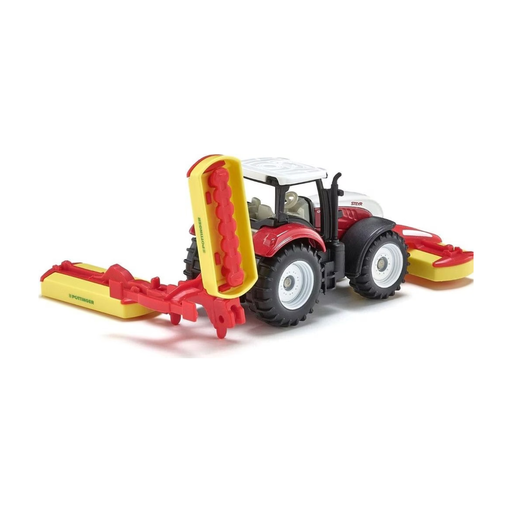
Why this product suits this profile: This compact model is suitable for children aged 3 and over and doesn’t need batteries. It combines a metal body with plastic tyres and fits into smaller play areas.
The functions are clearly explained: the mower units can be detached, and the rear mower folds up for transport.
Assembled model measures approximately 11.3 × 11.8 × 4.3 cm; mower units are detachable and moveable.
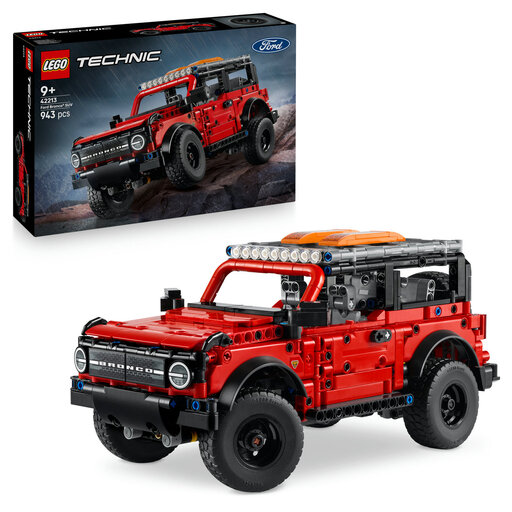
Why this product suits this profile: For children aged 9 and over and anyone interested in engineering, this set offers working features rather than being purely decorative.
The product description lists specific components, including suspension, a V6 engine, rear axle, doors and roof rack.
943 pieces; model measures approximately 28 × 13 × 13 cm; steering via the spare wheel at the rear.
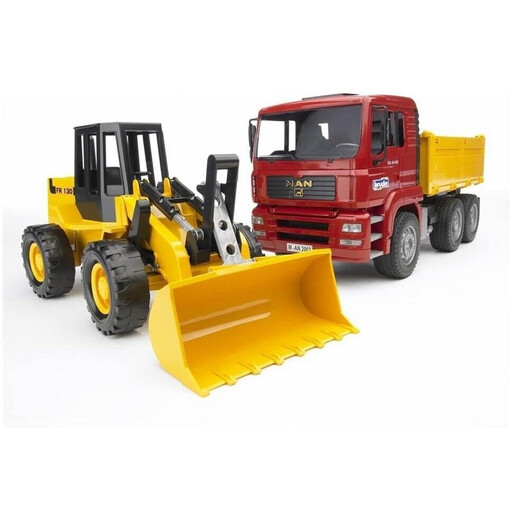
Why this product suits this profile: This set is aimed at children aged 3 and over who enjoy construction vehicles and imaginative role play with several vehicles.
The tipping skip, folding sides, movable loading arm and oscillating front axle are all listed as specific features.
Two vehicles in one set; locking tipping skip; 1:16 scale and set length of approximately 40 cm.
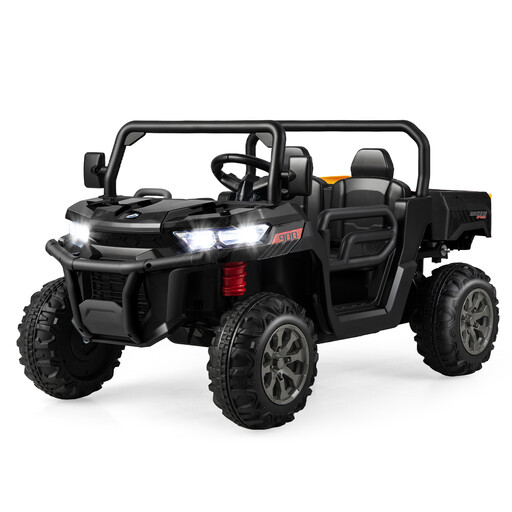
Why this product suits this profile: Suitable for children aged 3 to 8, provided there’s enough space, a level surface and appropriate supervision.
Speed, charging time, load limit and remote control are all specified. Check they’re suitable for where the vehicle will be used before buying.
Two seats, 12-volt battery, 3–8 km/h, 2.4 GHz remote control and a stated load limit of 50 kg.
We’ve put together a complete, regularly updated list of products that meet these strict selection criteria and fully comply with the safety regulations in force in the EU.
For children aged 3 and over, consider clearly labelled models without loose small parts, such as certain Siku vehicles, Bruder tractors or sturdy toy fire engines. The manufacturer’s specific age recommendation should always take priority. LEGO sets with lots of small pieces are often intended for older children.
Lifespan depends on the materials, how often the toy is played with, the surface it’s used on and how well it’s cared for. Check metal and ABS plastic models regularly for loose wheels, cracks and damaged attachments. For electric ride-on cars, battery charge cycles, storage and the availability of spare parts all affect how long they’ll last.
As well as the purchase price, you’ll have electricity costs for charging and may need to pay for batteries, chargers and spare parts. Before buying, check the battery capacity, charging time and the manufacturer’s usage information. For a ride-on car, safety measures, supervision and a suitable riding area are more important than the highest possible speed.