
Lieferung heute & morgen

Qualitätsgarantie

Willkommens-Angebote freischalten: KOSTENLOSE Lieferung | Bis zu 80 % RABATT | Kostenlose 30-Tage-JoyPlus-Testphase
App herunterladen
Toy cars and construction vehicles for children vary considerably in their materials, features, age recommendations and care requirements. Eye-catching design alone tells you little about whether a vehicle is right for your family’s day-to-day life. Check a few technical and practical details before you buy to avoid disappointment and find a model that suits your child’s age and play style.
RC cars for children are often advertised with four-wheel drive, LED lights, drift mode or off-road capability. What matters, though, is whether they come with an easy-to-use remote control and a suitable battery, and whether you have the right surfaces to drive them on. A powerful remote-controlled off-road car can be difficult to control indoors and needs plenty of space outdoors.
A remote-controlled stunt car is not automatically suitable for every child, either. Driving sideways, doing flips and making 360-degree turns require a certain level of hand-eye coordination. Check the recommended age, speed, charging time and battery type before placing your order.
A large model is not necessarily suitable for younger children. Small, detachable parts on model cars, construction sets and accessories can pose a choking risk. The manufacturer’s age recommendation and the warning ‘Not suitable for children under 36 months’ are therefore more important than the vehicle’s size alone.
Construction toys for ages 3 and up should contain as few loose small parts as possible. LEGO Speed Champions and LEGO Technic, by contrast, are often aimed at older children or adult fans, depending on the set. Recommendations such as ‘ages 9+’, ‘ages 10+’ or ‘ages 18+’ should be taken as a guide to the level of difficulty and the size of the small parts.
For toy cars designed for outdoor use, sturdy axles, a robust body and easy-to-clean surfaces are practical considerations. For vehicles made from metal and plastic, it should also be clear which parts move and whether they could break off on impact.
Battery-powered vehicles need extra care: don’t store the battery completely flat, follow the charging instructions and clean the vehicle after driving on sand or damp ground. Don’t assume a product is waterproof. You’ll need specific information from the manufacturer about using it in water or mud.
For RC vehicles, the drive system, battery and remote control are the key technical considerations. A 4WD model sends power to all four wheels, which can be an advantage on uneven ground. That doesn’t mean it’s suitable for every surface, though.
Check:
The scale helps you judge a model’s size and compatibility. Bruder vehicles in 1:16 scale are considerably larger than compact Siku models in 1:64 scale. Check that you have enough storage space and a suitable area for play.
Moving parts are especially important on construction vehicles: a crane that rotates 360 degrees, extendable supports, tipping load beds or a steerable front axle all offer different play scenarios. For LEGO models, consider the number of pieces, recommended building age, display space and level of detail you’re looking for.
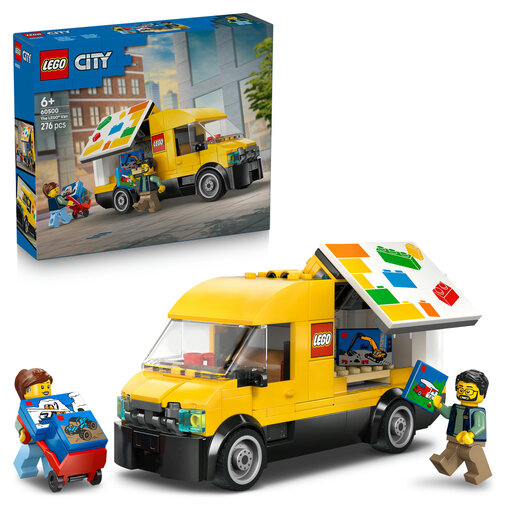
Why this product suits this profile: This set is for children aged 6 and over, combining vehicle building with everyday scenarios such as loading and making deliveries. With 276 building pieces, two minifigures and accessories, it offers a clear, structured introduction.
The age recommendation, number of pieces and vehicle features are all clearly stated. This makes it easier to gauge the level of building involved before you buy.
Opening side panels, a rear door, a hand trolley, a pallet and four small boxes encourage a variety of role-play scenarios.

Why this product suits this profile: This 1:16 scale model is designed for children aged 4 and over. It has several mechanical features for realistic construction site play, indoors and out.
The features are described in more than just visual terms: the crane arm, supports, grabber, fork and two pallets are all clearly listed.
The crane rotates through 360 degrees, extends and locks into position. According to the product information, the model is made from ABS plastic and requires no batteries.
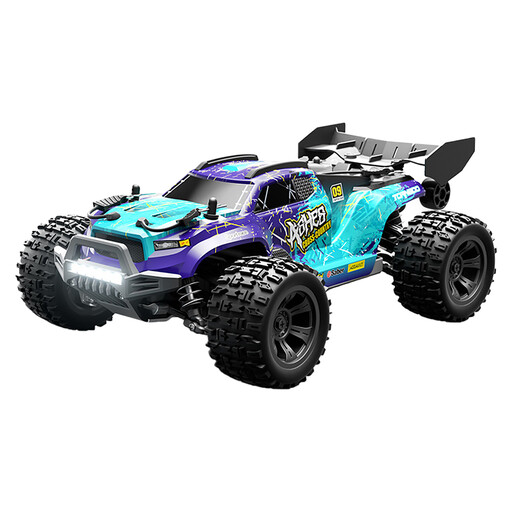
Why this product suits this profile: This RC vehicle is for anyone who wants to drive on different surfaces and is looking for a ready-to-use set with a battery, remote control and LED headlights.
The battery, voltage and batteries required for the remote control are all specified. This lets you check ongoing costs and any extra accessories you’ll need in advance.
The 4WD system, aluminium chassis, shock absorbers and large, non-slip tyres are designed for driving on sand, grass and uneven surfaces.
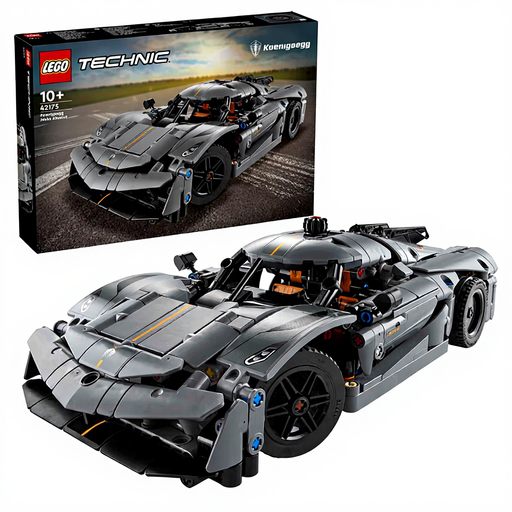
Why this product suits this profile: This set is aimed at fans aged 10 and over who want more than a toy racing car: it’s a technical vehicle-building set with 801 pieces.
The number of pieces, recommended age group and technical features make it clear that this is a more challenging building project.
The V8 engine, differential, steerable front axle and doors that open outwards are all convincing technical features.
We’ve put together a complete, regularly updated list of products that meet these strict selection criteria and the safety regulations in force across the EU.
For children aged 3 and over, simple model cars, sturdy Siku toy lorries and clearly designed construction vehicles can be suitable, provided the manufacturer confirms this. Keep small accessories out of reach of younger children. Close supervision is advisable, especially when they’re playing with moving crane arms, trailers or small parts.
Ongoing costs mainly depend on the battery, charger, replacement tyres and batteries for the remote control. A rechargeable battery reduces the need for disposable batteries. Before you buy, check whether the battery and charging cable are included and whether replacement parts are available separately.
LEGO City vehicles are generally designed around role play, figures and everyday scenarios. LEGO Technic cars focus more on mechanics, steering, engine replicas and moving parts. LEGO Speed Champions combines detailed vehicle models with a compact building project and is often aimed at older children, collectors and adult LEGO enthusiasts.