
Lieferung heute & morgen

Qualitätsgarantie

Willkommens-Angebote freischalten: KOSTENLOSE Lieferung | Bis zu 80 % RABATT | Kostenlose 30-Tage-JoyPlus-Testphase
App herunterladen
Toy cars for children are versatile toys that encourage role play, movement and imaginative everyday scenarios. They also vary considerably in their recommended age range, features, materials, size and accessories. A vehicle with lights and sounds may appeal to a toddler, while older children may get more out of toy vehicles they can steer and explore in detail.
It’s worth checking the product information carefully before you buy. Not every eye-catching feature is useful in everyday play, and not every toy car will suit a child’s abilities.
Lights, music, sensors and remote controls can all look appealing. But if you’re buying a gift for a child aged 1 or over, it’s best to choose something that’s easy to use. Push buttons, wheels that turn smoothly and simple sounds are usually a better fit for younger children than complex remote controls.
A remote-controlled car can be a good choice for children aged around 2 and over, provided the controls are designed for their age. Always check the specific age recommendation and consider the hand-eye coordination needed to use it.
Figures, tools, spare wheels, ropes and crates can add to imaginative play. However, they may pose a choking risk for younger children. Always check warnings such as ‘not suitable for children under 3 years’ or ‘small parts’ before buying.
Even with a seemingly simple toy car, check whether any small parts could come loose and whether the battery compartment closes securely.
A large vehicle with moving axles needs more room than a small push-along car. Compact toy cars are often more practical in homes with limited floor space. Models with large wheels and remote controls are better suited to a spacious, clear area. Keep them away from moisture unless the product is specifically described as suitable for wet conditions.
The age recommendation is an important guide, not just a decorative label. For children aged 1 and over, simple push-along or press-to-activate mechanisms may be suitable, as can interactive toy cars with a manageable number of features. Older children may enjoy more complex designs, accessories and controls.
Also consider whether your child would rather:
For plastic models, useful things to check include rounded edges, a sturdy chassis and a battery compartment that closes securely. Toys sold in the EU must meet the relevant toy safety requirements and carry the appropriate markings. Even so, always read the product description, as age limits and warnings vary from model to model.
The product information for the PLAYMOBIL Offroad Buggy mentions BPA-free plastic and declarations of conformity with REACH, RoHS and EN 71. However, the set includes small parts, and the recommended age is 4 years and over.
Before you buy, check:
A toy vehicle with lights and sounds will usually need batteries. If it’s used frequently, parents should check the battery compartment regularly and keep batteries out of reach of young children.
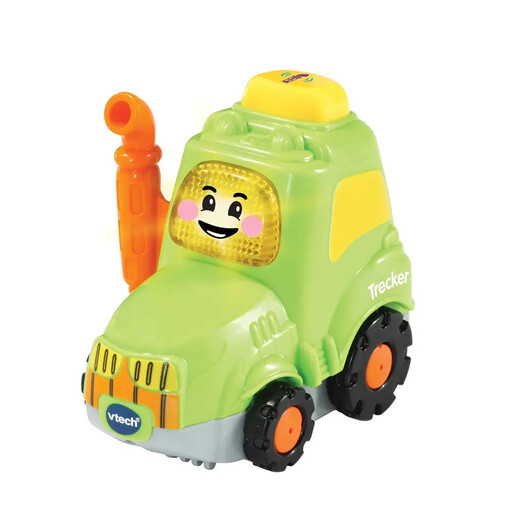
Why it suits this shopper: According to the product information, this vehicle is suitable for children aged 1 and over. It can be activated by moving its wheels or pressing an additional button.
The controls are built into the vehicle, so there’s no need for a separate remote. You should still follow the age recommendation.
A light-up button, wheel reaction, three nursery rhymes and six melodies. According to the product information, two AAA batteries are included.
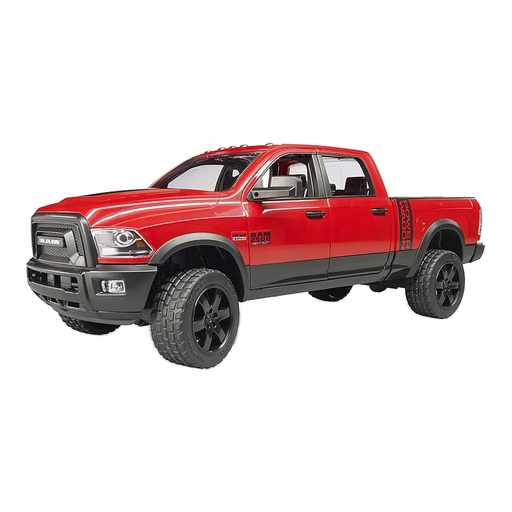
Why it suits this shopper: This Bruder toy car is made to a 1:16 scale and has several manually operated features for detailed imaginative play.
Play value comes from more than sound effects: the vehicle has opening doors, a loading area, suspension axles and a detachable tow bar.
According to the product information, it measures 50 × 19 × 17 cm, works without batteries and has a loading area for crates or other play cargo.
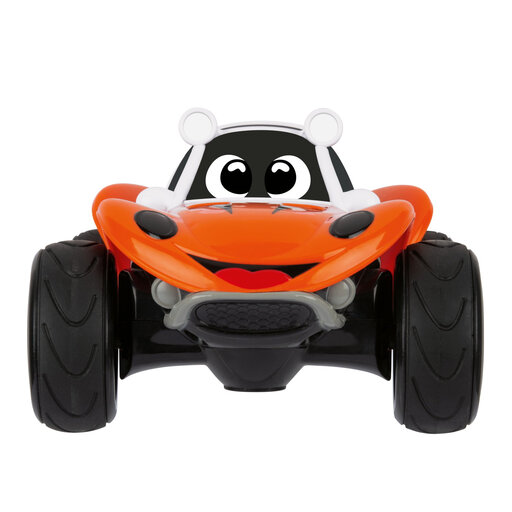
Why it suits this shopper: According to the product information, this remote-controlled buggy is suitable for children aged 24 months and over, and moves in four directions.
The age recommendation and requirement for four AA and two AAA batteries are clearly stated, so there are no surprises when you set it up.
Off-road wheels, four directions of movement and a steering-wheel-shaped remote control. The remote must not be immersed in water.
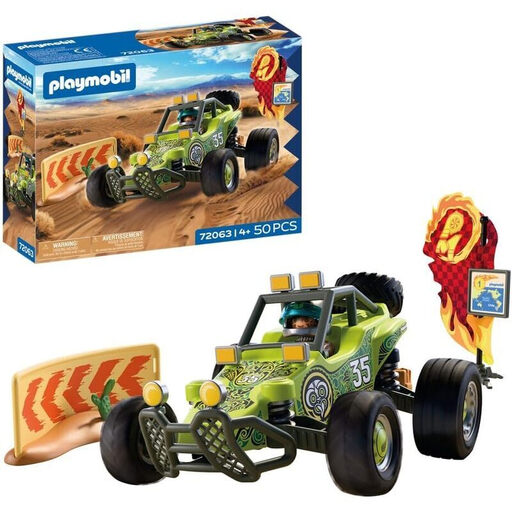
Why it suits this shopper: According to the product information, this set is for children aged 4 and over, combining a vehicle, figure, tools and racing accessories.
The set’s many accessories are clearly listed, so parents can check in advance whether their child can handle small parts safely.
A detachable spare wheel, moving rear axle, racing barrier and accessories for imaginative play scenarios. No batteries are needed.
We’ve put together a complete, regularly updated list of products that meet these strict selection criteria and the safety requirements in force across the EU.
Choose models with a clear age recommendation of 1 year and over, large features that are easy to use, and as few detachable small parts as possible. According to the product information, VTech’s Tut Tut Baby Flitzer range is suitable from age 1. Before giving the toy to a child, check the battery compartment, wheels and body for damage.
How long a toy lasts depends on its materials, how often and how roughly it’s played with, how it’s stored and the type of vehicle. Push-along cars without electronics have fewer technical parts. With interactive models, batteries, speakers and switches may be subject to more wear. Storing the toy in a dry place, cleaning it carefully and following the care instructions can help keep it in good working order.
As well as the purchase price, the main ongoing cost is batteries. Check how many are needed and whether they’re included. According to the product information, the Chicco Happy Buggy Remote Control needs four AA and two AAA batteries, which are not included. If the toy will be used regularly, suitable rechargeable batteries may be a practical option, provided they’re compatible with the device.